

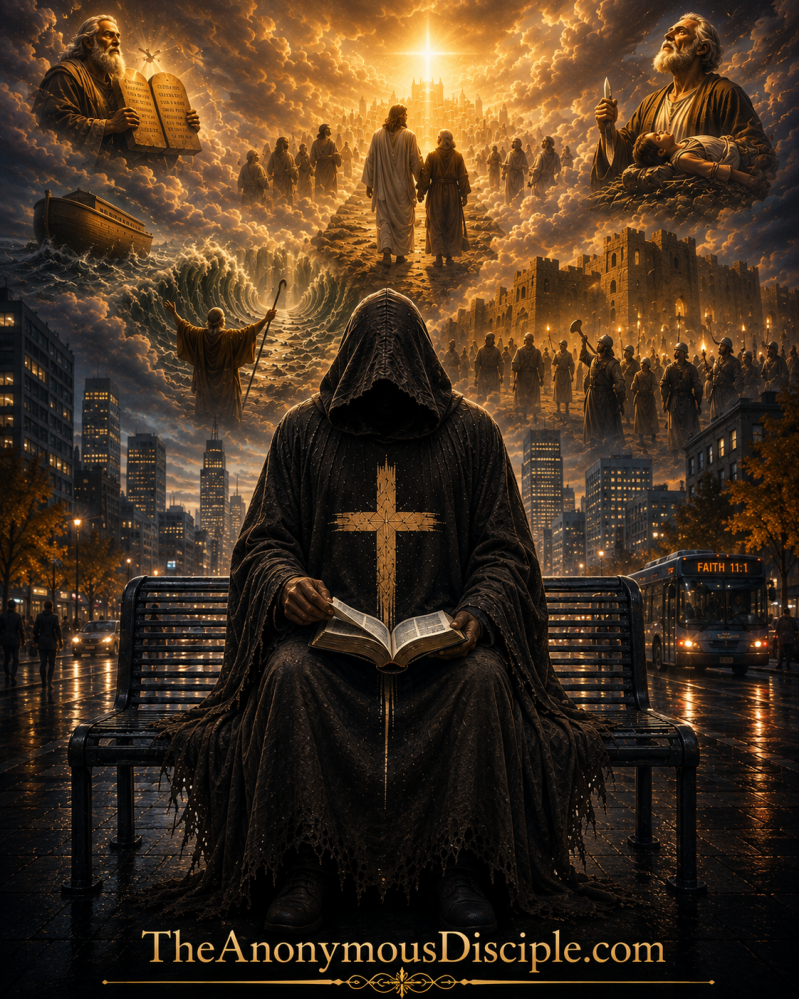
Hebrews 11 is often called the “Hall of Faith” or “Faith’s Hall of Fame.” Though it is much more than a collection of inspiring biographies. It shows us what genuine faith looks like when God’s promise is clear—but its fulfillment is still unseen. The writer is encouraging tired, pressured believers by showing them real people from the Old Testament who trusted God even when they couldn’t see the full picture.
The whole chapter hangs on one simple idea:
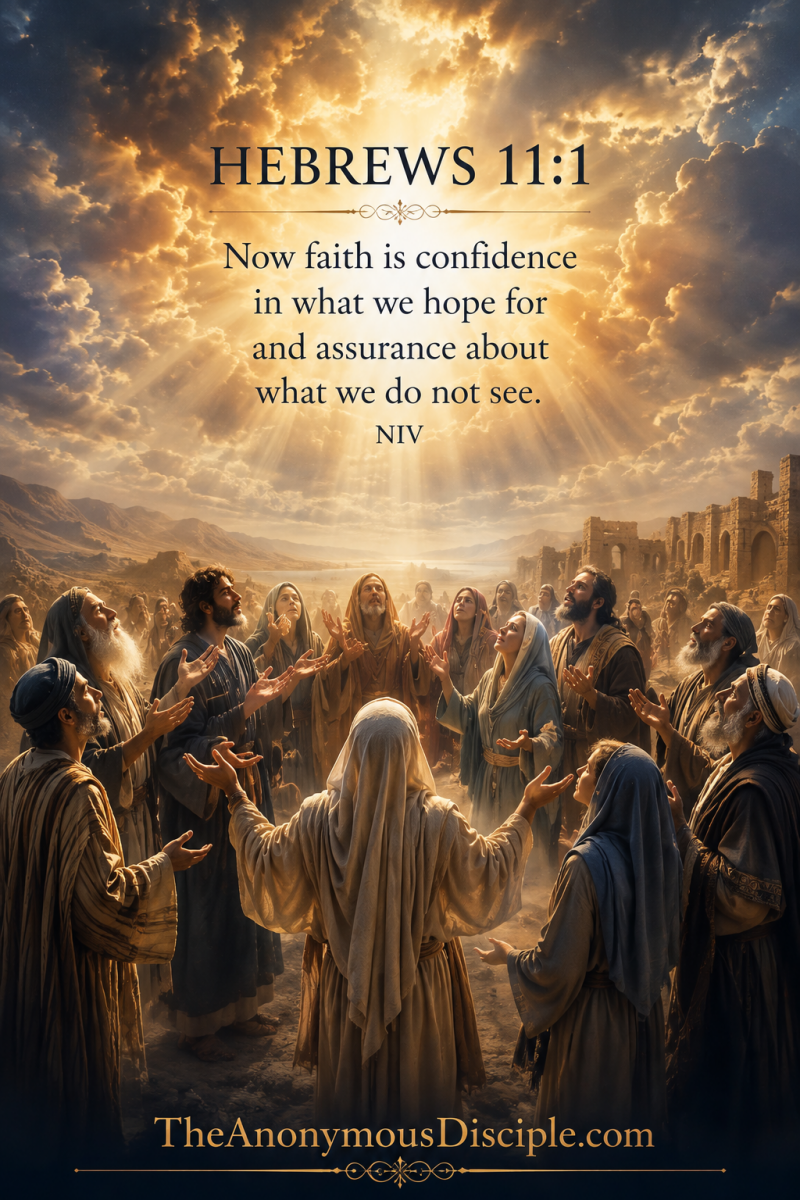
Faith is being sure of what we hope for and certain of what we do not see. (Hebrews 11:1, NIV)
In other words, faith is trusting God so much that you live as if His promises are already true—even when your eyes can’t see them yet.
⚓️ Anchor Verse
Hebrews 11:1 (NIV): “Now faith is confidence in what we hope for and assurance about what we do not see.”
The central message
Biblical faith trusts the character, Word, and promises of God so completely that it obeys Him before it can see the outcome.
Faith is not pretending something will happen merely because we want it to happen. It is confidence in what God has actually revealed and promised.
Faith begins by recognizing that God is Creator, we are His creatures, and reality is defined by His Word.
Faith is not wishful thinking. It is confident trust in God’s character and His promises. By faith we understand that the universe was made by God’s word—so the things we see were not made out of what was visible.
In simple terms: God spoke, and everything came into being. Faith starts by believing that God is the Creator and that He is in charge.
Hebrews 11 teaches us that faith is not merely believing that God can. It is trusting that God remains good, faithful, and worthy—even when He chooses a path we do not yet understand.
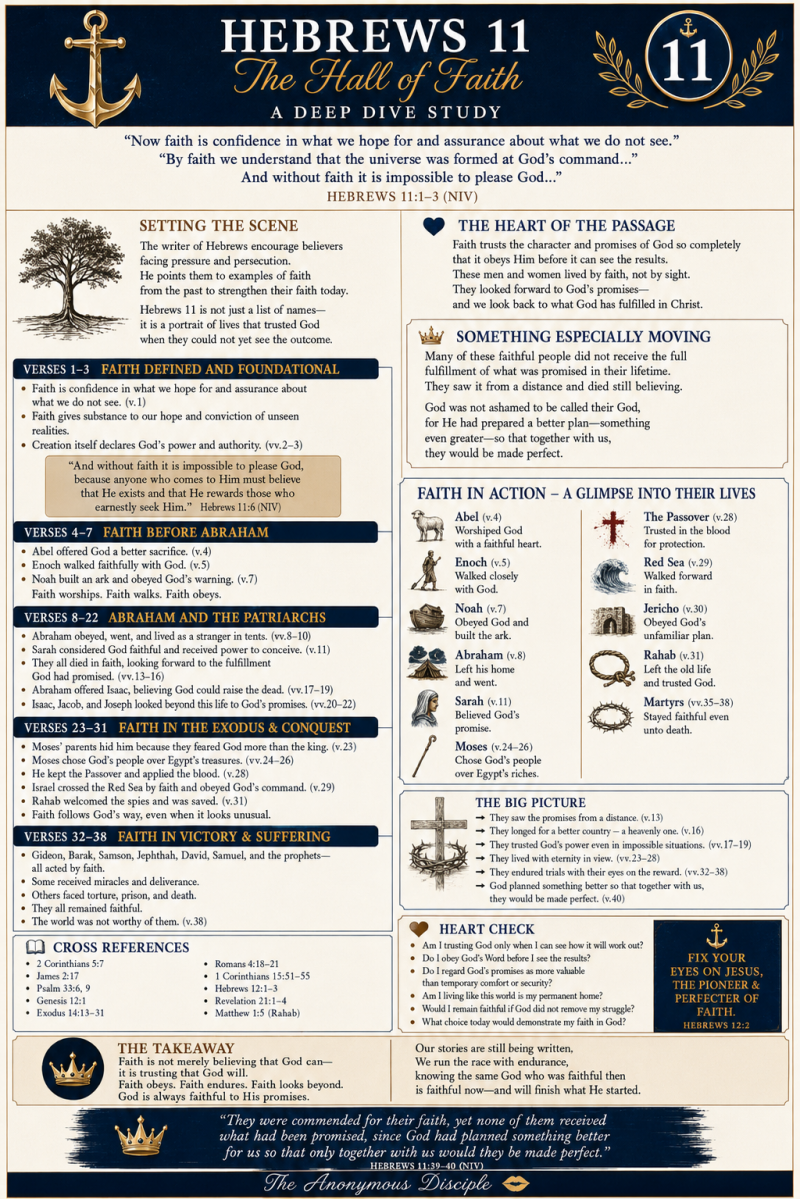
study notes
1. The Context: Why Hebrews 11 Was Written
Hebrews 11 flows directly from the warning and encouragement at the end of Hebrews 10.
Hebrews 10:35–36 (NIV): “So do not throw away your confidence; it will be richly rewarded. You need to persevere…”
These believers were experiencing pressure, persecution, loss, and discouragement. Some were tempted to retreat from Christ.
The writer tells them:
- Do not shrink back — Hebrews 10:38–39
- Remember those who trusted God before you — Hebrews 11
- Run your own race with endurance — Hebrews 12:1
- Keep your eyes fixed on Jesus — Hebrews 12:2–3
So Hebrews 11 is not primarily saying, “Look how wonderful these people were.”
It is saying:
“Look how trustworthy their God was—and we must keep trusting Him too.”
Hebrews 11:1–3 — The Foundation of Faith
Faith gives substance to hope
The word translated “confidence” in Hebrews 11:1 carries the idea of something firm beneath us—a foundation on which we can stand.
Faith treats God’s future promise as certain because God Himself is certain.
Hope says:
“God has promised.”
Faith responds:
“Then I will live as though His promise is true.”
Faith concerns what cannot yet be seen
“Assurance about what we do not see” does not mean believing without evidence. The evidence is found in:
- God’s revealed Word
- God’s proven character
- God’s past faithfulness
- Christ’s resurrection
- The Holy Spirit’s work
- God’s fulfilled promises
Faith does not deny visible circumstances. Faith simply refuses to believe that visible circumstances are the entire story.
2 Corinthians 5:7: “For we live by faith, not by sight.”
Creation itself requires faith
Hebrews 11:3: By faith we understand that the universe was formed at God’s command.
No human being witnessed creation. We receive God’s testimony that the visible world came from His invisible command.
Compare:
- Genesis 1:1–3
- Psalm 33:6, 9
- John 1:1–3
- Colossians 1:16–17
The chapter therefore begins with God—not humanity.
Faith begins by recognizing that God is Creator, we are His creatures, and reality is defined by His Word.
Faith is not wishful thinking. It is confident trust in God’s character and His promises. By faith we understand that the universe was made by God’s word—so the things we see were not made out of what was visible.
In simple terms: God spoke, and everything came into being. Faith starts by believing that God is the Creator and that He is in charge.
Hebrews 11:4–7 — Faith Before Abraham
The Earliest Examples:
- Abel – Offered a better sacrifice than his brother Cain because he trusted God. Even though Abel is dead, his faith still “speaks.”
- Enoch – Walked so closely with God that God simply took him home without him tasting death.
- Noah – Believed God’s warning about a flood that had never happened before. He built the ark in obedience, and that same faith saved his family and condemned the world that refused to listen.
Abel: Faith worships God His way
Hebrews 11:4: Abel offered God a better sacrifice than Cain.
See Genesis 4:3–10.
Abel’s sacrifice was not accepted because Abel was sinless. It was offered by faith. His offering reflected a heart that trusted and honored God.
Cain brought something to God, but Abel came to God in faithful submission.
Lesson from Abel
It is possible to practice religion without trusting God.
True worship is not merely giving God something. It is approaching Him with reverence, faith, and obedience.
Even after Abel died, his faith still “speaks.” His life was short, but his testimony was not wasted.
Enoch: Faith walks with God
Hebrews 11:5: Enoch was taken from this life so that he did not experience death.
See Genesis 5:21–24.
Genesis repeatedly says, “and then he died,” but Enoch’s account suddenly breaks the pattern:
Genesis 5:24: “Enoch walked faithfully with God; then he was no more, because God took him away.”
Enoch’s faith was not demonstrated through one dramatic event. It was demonstrated through a continuing walk with God.
Lesson from Enoch
Faith is not only believing something about God. It is living in fellowship with Him.
Enoch’s life teaches us that God values the quiet, daily walk:
- Continuing in prayer
- Listening to His Word
- Obeying in ordinary decisions
- Seeking to please Him
- Remaining faithful over time
The essential truth of Hebrews 11
Hebrews 11:6 (NIV): “And without faith it is impossible to please God…”
The verse continues by identifying two foundational beliefs:
- God exists.
- God rewards those who earnestly seek Him.
This does not mean we earn salvation or manipulate God into giving us material rewards. It means genuine faith believes God is real, approachable, trustworthy, and worth seeking.
Faith says:
“God is there, God sees, God cares, and seeking Him is never wasted.”
Noah: Faith obeys before the evidence appears
Hebrews 11:7: Noah built an ark after being warned about things not yet seen.
See Genesis 6–9.
Noah prepared for a flood before there was visible evidence that judgment was coming.
His faith was demonstrated through decades of costly obedience.
Every board placed on that ark testified:
“God has spoken, and I believe Him.”
Lesson from Noah
Faith often looks foolish to a world that judges only by what it can presently see.
Noah did not wait until rain began to obey. By then, it would have been too late.
Faith responds to God’s warning while the door of mercy is still open.
Hebrews 11:8–22 — Abraham and the Patriarchs
Abraham and the Patriarchs: This is the heart of the chapter. Abraham becomes the great example of faith:
- He left his homeland when God called, even though he didn’t know where he was going.
- He lived as a foreigner in the land God promised, waiting for a city with foundations that God Himself would build.
- He and Sarah believed God for a child long after it seemed impossible—Isaac was born when Abraham was about 100 and Sarah was 90.
- Later Abraham was willing to offer Isaac back to God, trusting that God could even raise the dead.
- Isaac, Jacob, and Joseph all followed in the same faith, blessing the next generation and looking ahead to God’s bigger plan—even when they were dying.
Abraham: Faith goes without knowing every detail
Hebrews 11:8: Abraham obeyed and went, even though he did not know where he was going.
See Genesis 12:1–9.
God gave Abraham enough information to obey, but not enough information to control the journey.
That is often how God leads us. He may reveal the next step without revealing the entire road.
Faith does not require a complete map. Faith requires confidence in the One leading.
Abraham lived as a stranger
Hebrews 11:9–10: Abraham lived in tents while looking forward to the city whose architect and builder is God.
Abraham received the land promise, yet he lived in it as a foreigner. His tent represented temporary residence. He was waiting for something greater than earthly property.
The “city” points beyond Canaan toward God’s eternal dwelling and kingdom.
Compare:
- Hebrews 12:22
- Hebrews 13:14
- Revelation 21:2–3
Abraham was not merely looking for a better neighborhood.
He was looking for the world made right under the rule and presence of God.
Sarah: Faith recognizes the Promiser as faithful
Hebrews 11:11: Sarah received power to bear a child because she considered God faithful.
See Genesis 18:9–15; 21:1–7.
Sarah had laughed when she first heard the promise. Her faith was not flawless or instantaneous. But God patiently brought her to trust Him.
That is encouraging: Hebrews 11 does not contain people who never struggled. It contains people whose struggles did not have the final word.
Lesson from Sarah
Faith is not confidence in our own ability.
Sarah’s body could not produce the promise—but God could.
Faith looks away from human impossibility and toward divine faithfulness.
They lived and died still trusting
Hebrews 11:13: “All these people were still living by faith when they died.”
Some promises were partially fulfilled during their lives:
- Abraham received Isaac.
- His descendants began to multiply.
- God preserved the covenant family.
But they did not see the complete fulfillment:
- The nation fully established
- The Messiah’s arrival
- Christ’s finished work
- The worldwide family of faith
- The final heavenly city
- Bodily resurrection
- The restored creation
They saw the promises “from a distance.”
Faith does not always mean receiving everything before death. Sometimes faith means dying while still saying:
“God will keep His Word.”
A better country
Hebrews 11:16: “They were longing for a better country—a heavenly one.”
This does not mean creation is unimportant or that believers will remain disembodied in heaven forever. Their ultimate hope was life in God’s eternal kingdom—the heavenly reality God will fully bring to His people.
God was not ashamed to be called their God because they wanted Him more than they wanted earthly security.
What a beautiful statement:
The people who claimed God as their God were people God gladly claimed as His own.
Abraham and Isaac: Faith surrenders the promise to God
Hebrews 11:17–19: Abraham offered Isaac, reasoning that God could even raise the dead.
See Genesis 22:1–18.
Isaac was not just Abraham’s beloved son. He was the son through whom God had promised descendants.
Abraham faced an apparent contradiction:
- God promised the covenant would continue through Isaac.
- God commanded Abraham to offer Isaac.
Abraham did not understand how the two could fit together, but he trusted that God would remain faithful—even if resurrection were required.
This passage foreshadows Christ:
- A beloved son
- Wood carried toward the place of sacrifice
- A father willing to surrender his son
- God providing the sacrifice
- Life figuratively received back from death
See Genesis 22:8, 13–14 and John 3:16.
Isaac, Jacob, and Joseph: Faith looks beyond death
Isaac — Hebrews 11:20
Isaac blessed Jacob and Esau concerning their future. See Genesis 27:27–40; 28:1–4.
Jacob — Hebrews 11:21
Jacob blessed Joseph’s sons while worshiping. See Genesis 48:13–20.
Joseph — Hebrews 11:22
Joseph spoke about the Exodus and gave instructions concerning his bones. See Genesis 50:24–25.
Joseph died in Egypt but did not consider Egypt his true home. His burial instructions were a prophetic testimony:
“God will bring His people out, and I want my bones to go with them.”
See the fulfillment in Exodus 13:19 and Joshua 24:32.
Hebrews 11:23–31 — Faith in the Exodus and Conquest
Moses and the Exodus Generation
- Moses’ parents hid him as a baby because they trusted God more than they feared the king’s order.
- Moses himself chose to suffer with God’s people rather than enjoy the temporary pleasures of Egypt. He “saw” the invisible God and refused to be called the son of Pharaoh’s daughter.
- By faith the people crossed the Red Sea on dry land while the Egyptians drowned.
- By faith the walls of Jericho fell after the people marched around them in obedience.
Moses’ parents: Faith fears God more than rulers
Hebrews 11:23: Moses’ parents hid him because they were not afraid of the king’s command.
See Exodus 1:22–2:10.
Their faith did not mean they felt no fear. It meant fear did not determine their obedience.
Moses: Faith chooses eternal reward over temporary pleasure
Hebrews 11:24–26: Moses refused to be known as Pharaoh’s daughter’s son and chose mistreatment with God’s people.
Moses had access to:
- Wealth
- Status
- Education
- Comfort
- Political influence
- Temporary pleasures
But he chose identification with God’s oppressed people.
The passage says he regarded disgrace connected with Christ as greater wealth than Egypt’s treasures. Moses lived long before Jesus’ incarnation, but he chose God’s covenant promise and God’s anointed people—the promise that ultimately reaches its fulfillment in Christ.
A major contrast
Moses saw two rewards:
- Egypt’s immediate reward
- God’s future reward
Faith allowed him to recognize that what appeared valuable was temporary and what appeared costly was eternal.
The Passover: Faith shelters beneath the blood
Hebrews 11:28: Moses kept the Passover and applied the blood.
See Exodus 12:1–30.
The Israelites were not spared because they were morally superior to the Egyptians. They were spared because they trusted God’s provision and sheltered beneath the blood.
This points directly toward Jesus:
1 Corinthians 5:7: “For Christ, our Passover lamb, has been sacrificed.”
See also:
- John 1:29
- 1 Peter 1:18–19
- Revelation 5:9
The Red Sea: Faith steps forward
Hebrews 11:29: Israel passed through the Red Sea on dry land.
See Exodus 14:10–31.
They had an army behind them and water before them. God made a way where no human way existed.
Yet the Egyptians attempting the same crossing were drowned.
Why the difference?
Israel crossed in response to God’s promise and command. Egypt crossed in opposition to God.
Faith is not recklessness. Faith acts in response to God’s Word.
Jericho: Faith obeys an unusual strategy
Hebrews 11:30: Jericho’s walls fell after the people marched around them for seven days.
See Joshua 6:1–21.
Marching around a fortified city did not make military sense. But victory would clearly belong to God rather than Israel’s strategy.
Faith sometimes obeys God when His method does not resemble ours.
Rahab: Faith changes allegiance
Hebrews 11:31: Rahab welcomed the spies and was not killed with the unbelieving inhabitants of Jericho.
See Joshua 2:1–21; 6:22–25.
Rahab had a sinful past and lived among a condemned people. But she had heard what God had done, confessed that He was the true God, and acted on that belief.
Joshua 2:11: “The Lord your God is God in heaven above and on the earth below.”
Rahab reminds us:
- Faith is available to outsiders.
- A sinful past does not disqualify a repentant believer.
- Genuine faith produces action.
- God can place a redeemed life into the line of the Messiah.
See Matthew 1:5 and James 2:25.
Hebrews 11:32–38 — Faith in Victory and Suffering
The Judges, Kings, Prophets, and Everyday Heroes: The writer lists a rapid-fire group of people who trusted God in very different situations: Gideon, Barak, Samson, Jephthah, David, Samuel, and the prophets. Some conquered kingdoms, administered justice, shut the mouths of lions, quenched the fury of flames, escaped the sword, and turned weakness into strength. Others were tortured, mocked, flogged, put in prison, stoned, sawn in two, or wandered in deserts and caves—yet they still held on to God’s promise.
The writer is honest: faith does not always lead to an easy, comfortable life. Sometimes it leads to suffering. But these people were still “commended” for their faith.
The writer rapidly mentions:
- Gideon — Judges 6–8
- Barak — Judges 4–5
- Samson — Judges 13–16
- Jephthah — Judges 11–12
- David — 1 Samuel 16–1 Kings 2
- Samuel — 1 Samuel 1–25
- The prophets
These were not perfect people. Several made serious mistakes.
Hebrews 11 celebrates their faith—not every decision they made.
That is important because the chapter is not teaching that faithful people become flawless. It is teaching that God works through imperfect people who rely upon Him.
Some experienced miraculous deliverance
Through faith, people:
- Conquered kingdoms
- Administered justice
- Received promises
- Shut lions’ mouths — Daniel 6:16–23
- Quenched flames — Daniel 3:16–27
- Escaped the sword
- Became strong in weakness
- Defeated armies
- Received dead loved ones back — 1 Kings 17:17–24; 2 Kings 4:18–37
This is the side of faith we naturally celebrate.
But the passage does not stop there.
Others remained faithful without deliverance
Hebrews 11:35–38: Others were tortured, imprisoned, mistreated, persecuted, and killed.
Some escaped the sword.
Others were put to death by the sword.
Both groups had faith.
This corrects a dangerous misunderstanding: faith is not measured by whether suffering is removed.
Sometimes faith results in miraculous escape.
Sometimes faith gives a person strength to endure without escaping.
One believer trusts God and walks out of the prison.
Another believer trusts God and dies inside it.
God has not necessarily loved one more or honored one more.
“A better resurrection” — Hebrews 11:35
Some refused release because faith looked beyond temporary survival toward bodily resurrection and eternal life with God.
Their persecutors could kill the body, but they could not cancel God’s promise.
The reference to torture likely includes Jewish martyrs known to the original readers, while “sawn in two” reflects the ancient tradition concerning the prophet Isaiah.
Then comes this breathtaking statement:
Hebrews 11:38: “The world was not worthy of them.”
The world treated them as worthless.
God declared the world unworthy of them.
Human opinion and God’s verdict can be complete opposites.
Hebrews 11:39–40 — The Promise Completed in Christ
The Big Conclusion: All these people were still living by faith when they died. They did not receive the full promise in their lifetime. Why? Because God had planned something better—so that only together with us would they be made perfect.
In other words, their story was not complete without Jesus and without the church. We are part of the same story of faith.
Hebrews 11:39: They were commended for faith, yet none received the complete fulfillment of what had been promised.
They received real answers, victories, children, land, deliverances, and glimpses of fulfillment—but the central promise was still coming:
Jesus Christ and everything accomplished through His death, resurrection, priesthood, covenant, kingdom, and future return.
Hebrews 11:40: God planned something better so that only together with us would they be made perfect.
“Made perfect” means brought to completion—not becoming morally flawless through us.
The Old Testament faithful and New Testament believers form one redeemed people of God, all completed through Christ.
They looked forward to Christ’s work.
We look back to Christ’s finished work.
Together, we look forward to:
- Christ’s return
- The resurrection of the body
- Final judgment
- The heavenly city
- The restored creation
- Eternal life in God’s presence
See:
- 1 Corinthians 15:51–55
- 1 Thessalonians 4:16–17
- Revelation 21:1–4
- Revelation 22:1–5
The Great Pattern of Hebrews 11
Nearly every example follows the same movement:
God speaks → the person believes → faith obeys → the promise remains certain.
- Abel offered
- Enoch walked
- Noah built
- Abraham went
- Sarah considered God faithful
- Moses chose
- Israel crossed
- Rahab welcomed
Faith is inward trust that produces outward obedience.
We are not saved by our works:
Ephesians 2:8–9: We are saved by grace through faith, not by works.
But living faith does not remain alone:
James 2:17: “Faith by itself, if it is not accompanied by action, is dead.”
Works do not purchase salvation. They reveal that faith is alive.
Five Powerful Truths from Hebrews 11
1. Faith rests upon God’s character
The strength of faith is not found in the person believing. It is found in the trustworthiness of the God being believed.
Even trembling faith can cling to a mighty God.
2. Faith obeys without possessing every answer
Abraham did not know where he was going. Noah had never seen the coming judgment. Moses could not see a path through the sea.
They knew enough: God had spoken.
3. Faith may wait longer than a lifetime
Some promises were not completed during the believer’s earthly life.
Delay does not mean denial, and death does not cancel God’s promise.
4. Faith does not guarantee an easy life
Hebrews 11 includes both miracles and martyrdoms.
Faith is not a tool for controlling outcomes. Faith is surrendering the outcome to God while remaining loyal to Him.
5. Faith ultimately looks toward Jesus
Hebrews 11 leads directly into:
Hebrews 12:2: “Fixing our eyes on Jesus, the pioneer and perfecter of faith.”
The heroes of faith are witnesses, but Jesus is the focus.
They encourage us—but He saves us.
The Prophetic Hope Within Hebrews 11
Hebrews 11 contains a strong future-facing hope:
- Hebrews 11:10: The city designed and built by God
- Hebrews 11:13: Promises seen from a distance
- Hebrews 11:16: A better, heavenly country
- Hebrews 11:26: The coming reward
- Hebrews 11:35: A better resurrection
- Hebrews 11:40: God’s people completed together
Faith looks back at what God has done, stands firmly in what God is doing, and looks forward to what God has promised to finish.
The chapter assures us that history is moving toward God’s appointed conclusion—not chaos.
The city is prepared.
The resurrection is coming.
Christ will return.
The faithful will not be forgotten.
God’s promises will be completed.
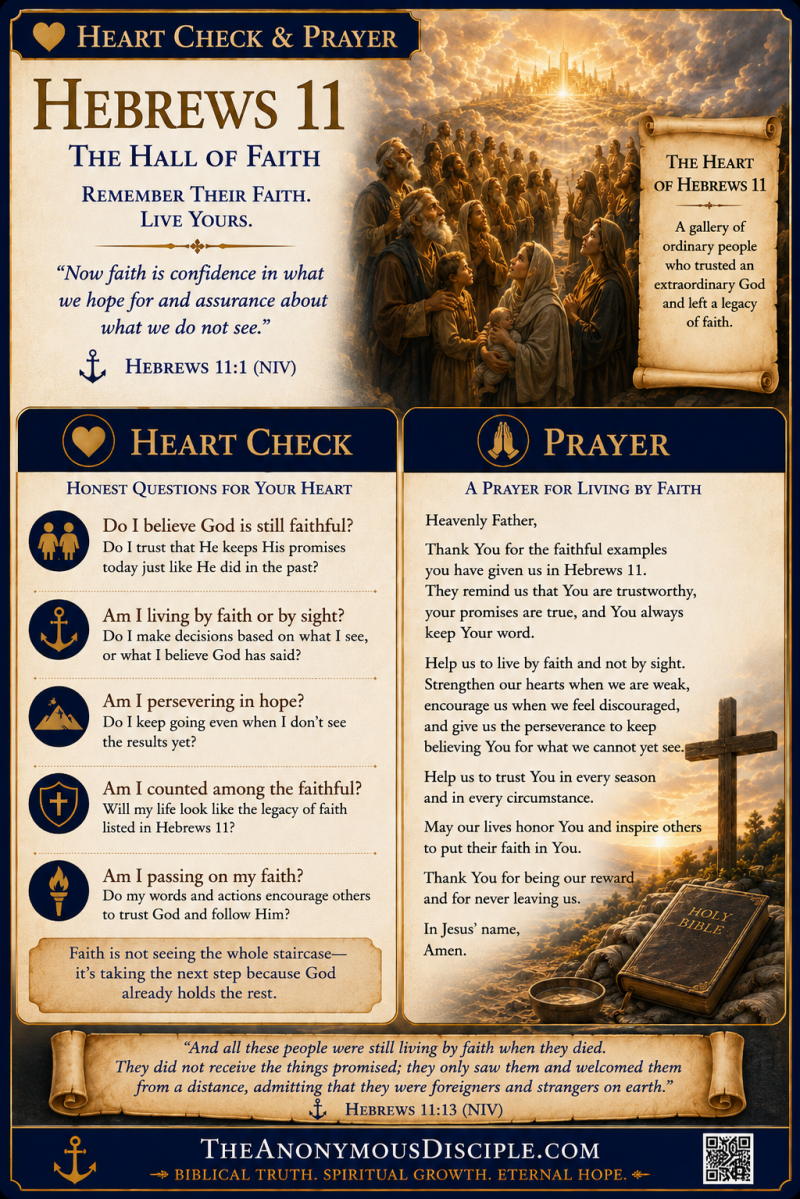
❤️ Heart Check
- Am I trusting God only when I can see how things will work out?
- Has God already shown me a step of obedience that I keep postponing?
- Do I mistake delayed fulfillment for God’s unfaithfulness?
- Am I seeking God Himself—or only the outcome I want from Him?
- Would I remain faithful if God did not remove my present difficulty?
- Am I living like this world is my permanent home?
- What choice today would demonstrate that I truly believe God’s promises?
🙏 Morning Prayer
Father, thank You that faith does not rest upon my ability to understand everything, but upon Your perfect and unchanging character. Help me trust You when the road ahead is hidden, when the promise seems distant, and when obedience feels costly. Give me the faith of Abel to worship You sincerely, Enoch to walk closely with You, Noah to obey before I see, Abraham to follow wherever You lead, Moses to choose eternal treasure over temporary comfort, and Rahab to leave the old life behind.
When You provide deliverance, help me praise You. When You ask me to endure, help me remain faithful. Keep my eyes fixed on Jesus, the pioneer and perfecter of faith. Remind me that this world is not my permanent home, that resurrection is coming, and that not one promise You have spoken will fail. May my life testify that You are faithful, even when I cannot yet see what You are doing.
In Jesus’ name, amen. ❤️
Hebrews 11 teaches us that faith is not merely believing that God can. It is trusting that God remains good, faithful, and worthy—even when He chooses a path we do not yet understand.
🔗cross-references🔗
The Definition of Faith (Hebrews 11:1)
“Now faith is confidence in what we hope for and assurance about what we do not see.”
Key cross-references that help explain this:
- 2 Corinthians 5:7 – “For we live by faith, not by sight.”
- 2 Corinthians 4:18 – We fix our eyes not on what is seen, but on what is unseen. What is seen is temporary; what is unseen is eternal.
- Romans 8:24-25 – Hope that is seen is no hope at all. Who hopes for what they already have?
- Hebrews 10:39 – We do not belong to those who shrink back, but to those who have faith and are saved.
- Hebrews 3:14 – We share in Christ if we hold firmly till the end the confidence we had at first.
These verses show that biblical faith is not blind guessing. It is confident trust in what God has promised, even when we cannot yet see it with our eyes.
2. Faith That Pleases God (Hebrews 11:6)
“And without faith it is impossible to please God…”
Helpful cross-references:
- James 2:17-26 – Faith without works is dead. True faith shows itself in action.
- Romans 4:3, 20-22 – Abraham believed God, and it was credited to him as righteousness. He did not waver through unbelief.
- John 3:16 & Ephesians 2:8-9 – Salvation comes through faith in Jesus, not by our own efforts.
3. Key People and Their Stories (the main Old Testament links)
Here are the clearest connections between Hebrews 11 and the original stories:
Abel Genesis 4:3-10 His offering was accepted because of faith
Enoch Genesis 5:21-24 Walked with God and was taken without dying
Noah Genesis 6:9–9:17 Built the ark when no flood was yet in sight
Abraham Genesis 12:1-9; 15:1-6; 17; 22:1-18 Left home, waited for a son, offered Isaac
Sarah Genesis 18:9-15; 21:1-7 Believed God for a child past childbearing age
Isaac, Jacob, Joseph Genesis 27; 48; 50:24-25 Blessed the next generation by faith
Moses Exodus 2–14 (especially 2:1-10; 12; 14) Chose God’s people over Egypt’s riches
The people at the Red Sea Exodus 14:21-31 Crossed on dry ground by faith
Jericho’s walls Joshua 6 Fell after the people obeyed in faith
Rahab Joshua 2 & 6:22-25 Protected the spies and was saved
Gideon, Barak, Samson, Jephthah, David, Samuel Judges 4–16; 1 Samuel Various acts of courage and trust
Looking Ahead to Jesus (the big connection)
Hebrews 11 ends by saying these people did not fully receive the promise in their lifetime. Then chapter 12 opens with:
- Hebrews 12:1-2 – Therefore, since we are surrounded by such a great cloud of witnesses… let us run with perseverance… fixing our eyes on Jesus, the pioneer and perfecter of faith.
This is the most important cross-reference of all. All the examples in chapter 11 point forward to Jesus. Their faith looked ahead to Him; our faith looks back to what He has already done and forward to His return.
Add comment
Comments