

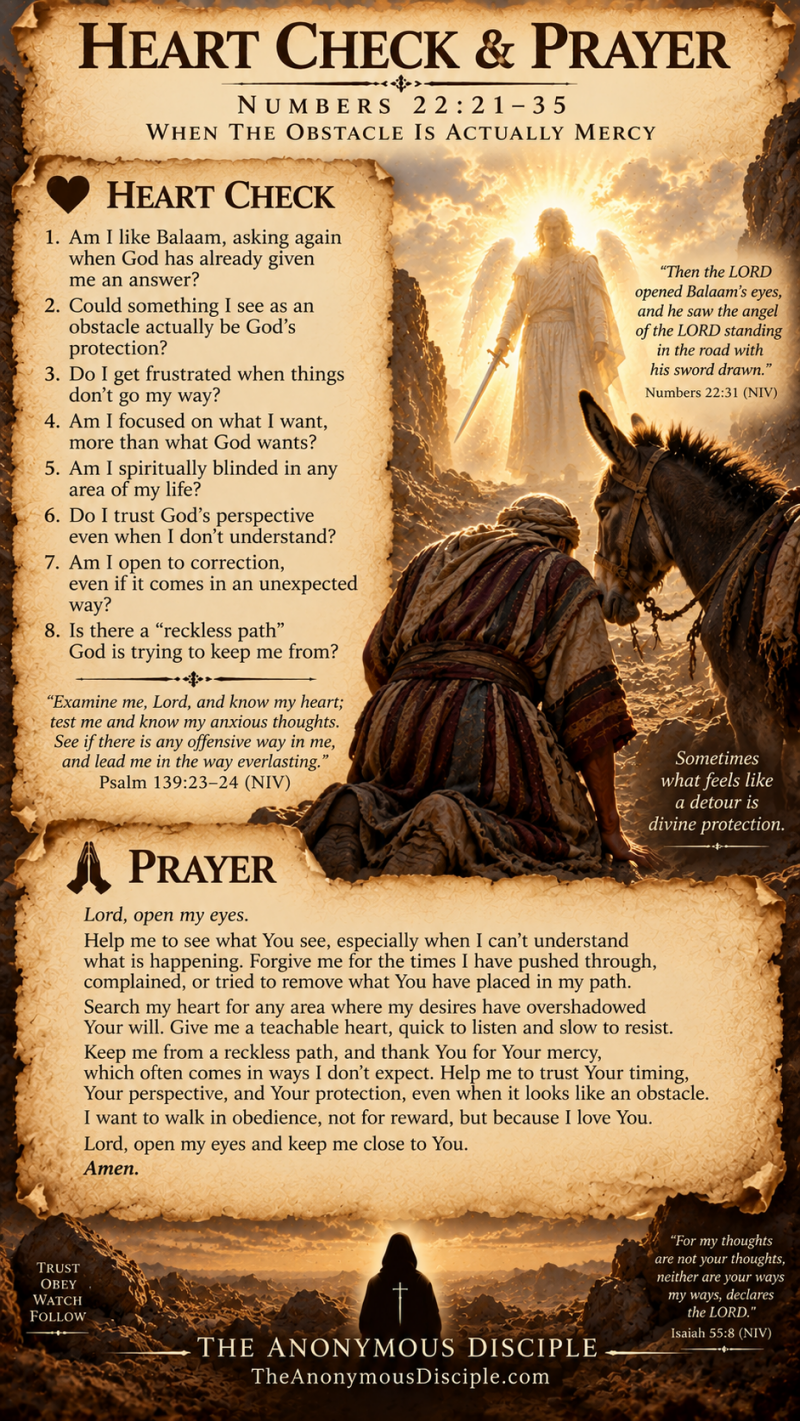
When the Obstacle Is Actually Mercy
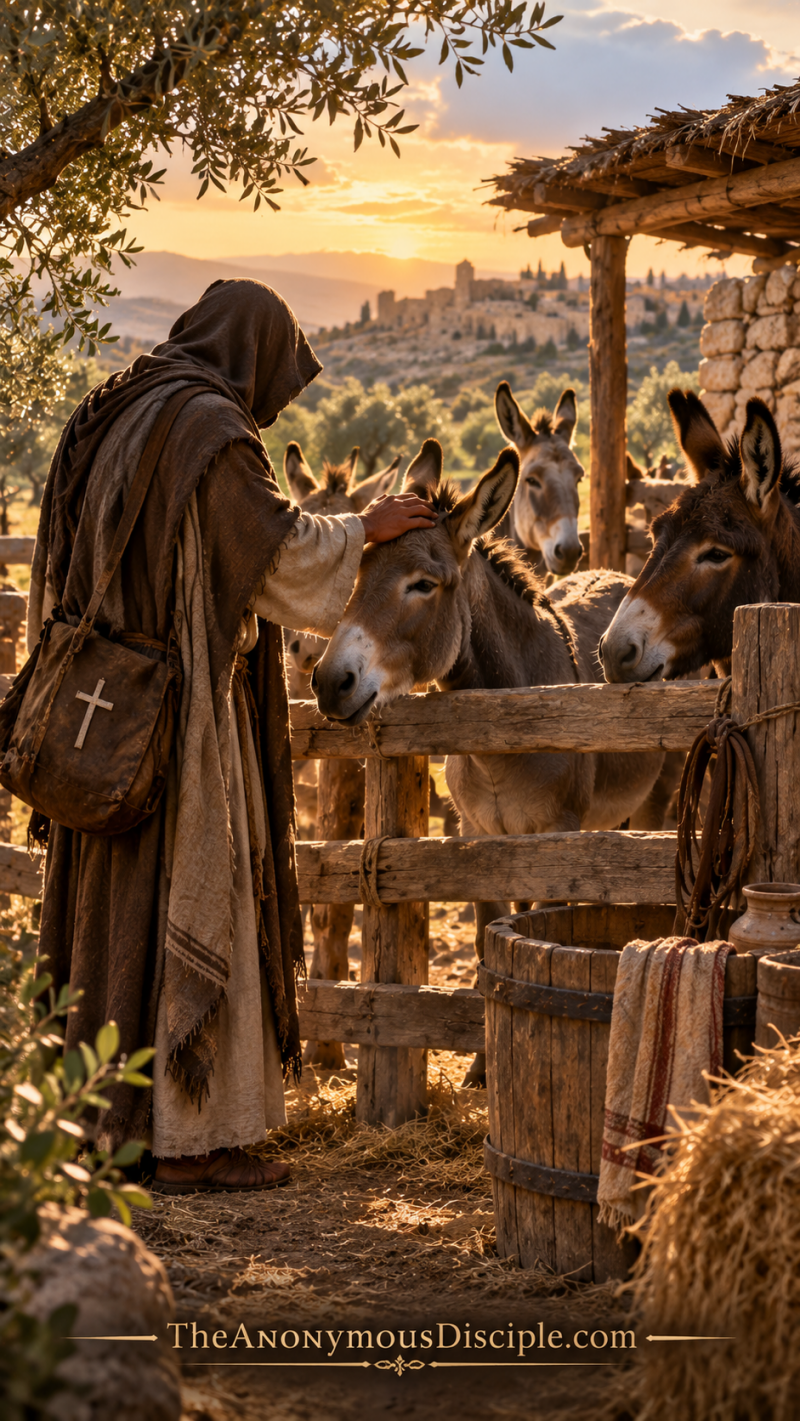
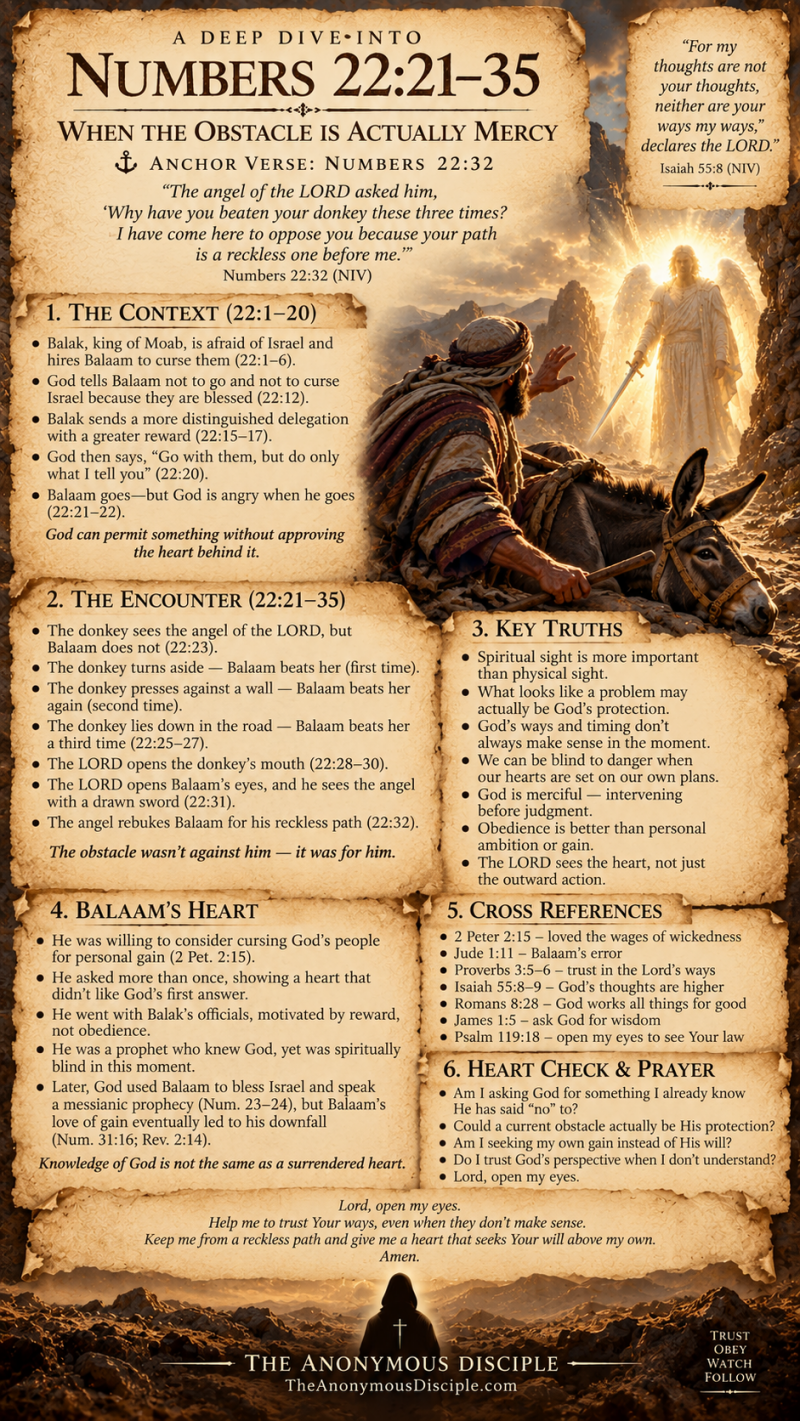
Balaam thought his donkey was standing in his way. What he couldn’t see was the angel of the LORD standing ahead with a drawn sword. Three times the donkey stopped, three times Balaam became angry, and three times the very thing frustrating him was actually protecting him.
Our study of Numbers 22:21–35, anchored in verse 32, looks beyond the talking donkey to the condition of Balaam’s heart. God had already made His will concerning Israel clear, yet Balaam was still drawn toward the reward Balak offered. God permitted him to continue, but confronted the reckless path he was pursuing.
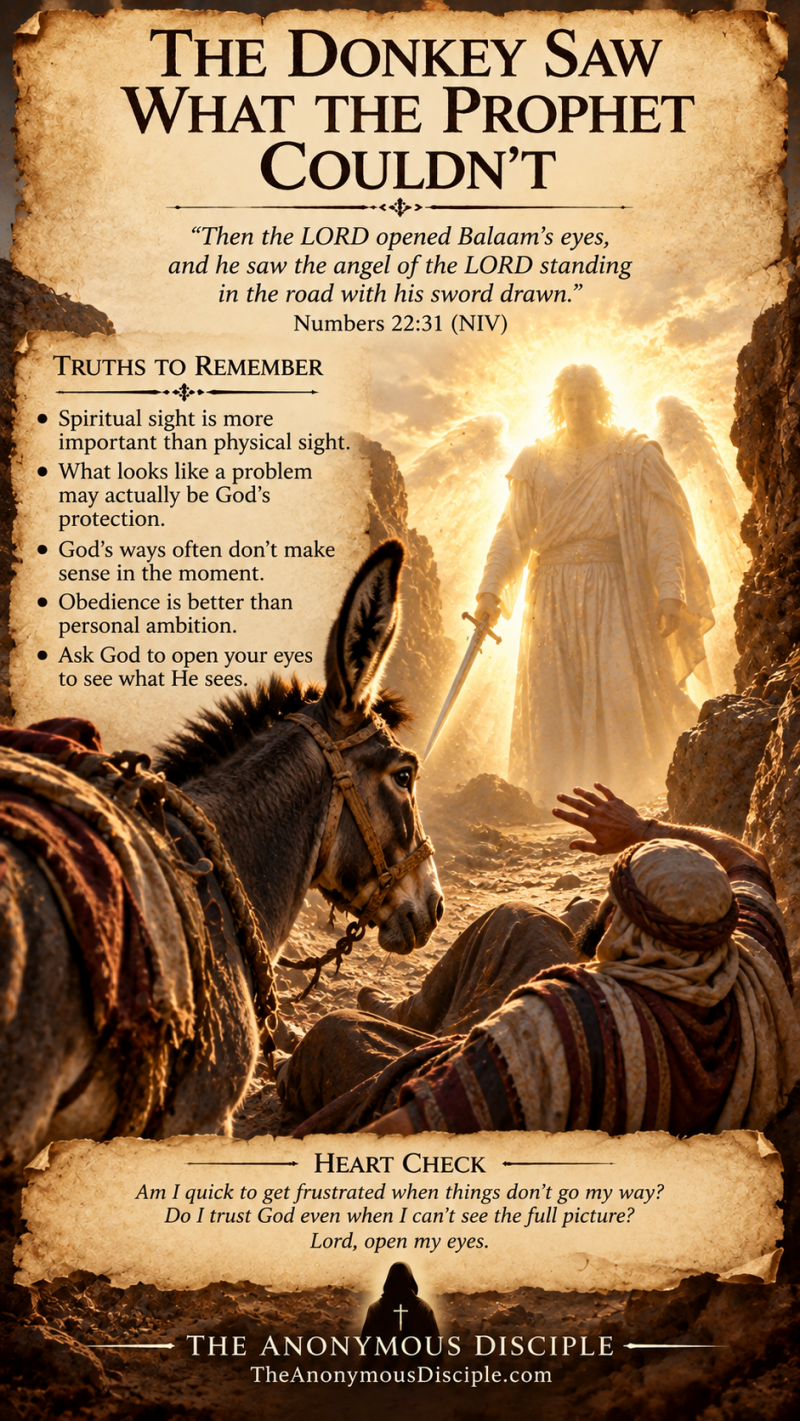
Then comes one of the most striking reversals in the passage: the donkey could see what the prophet could not.
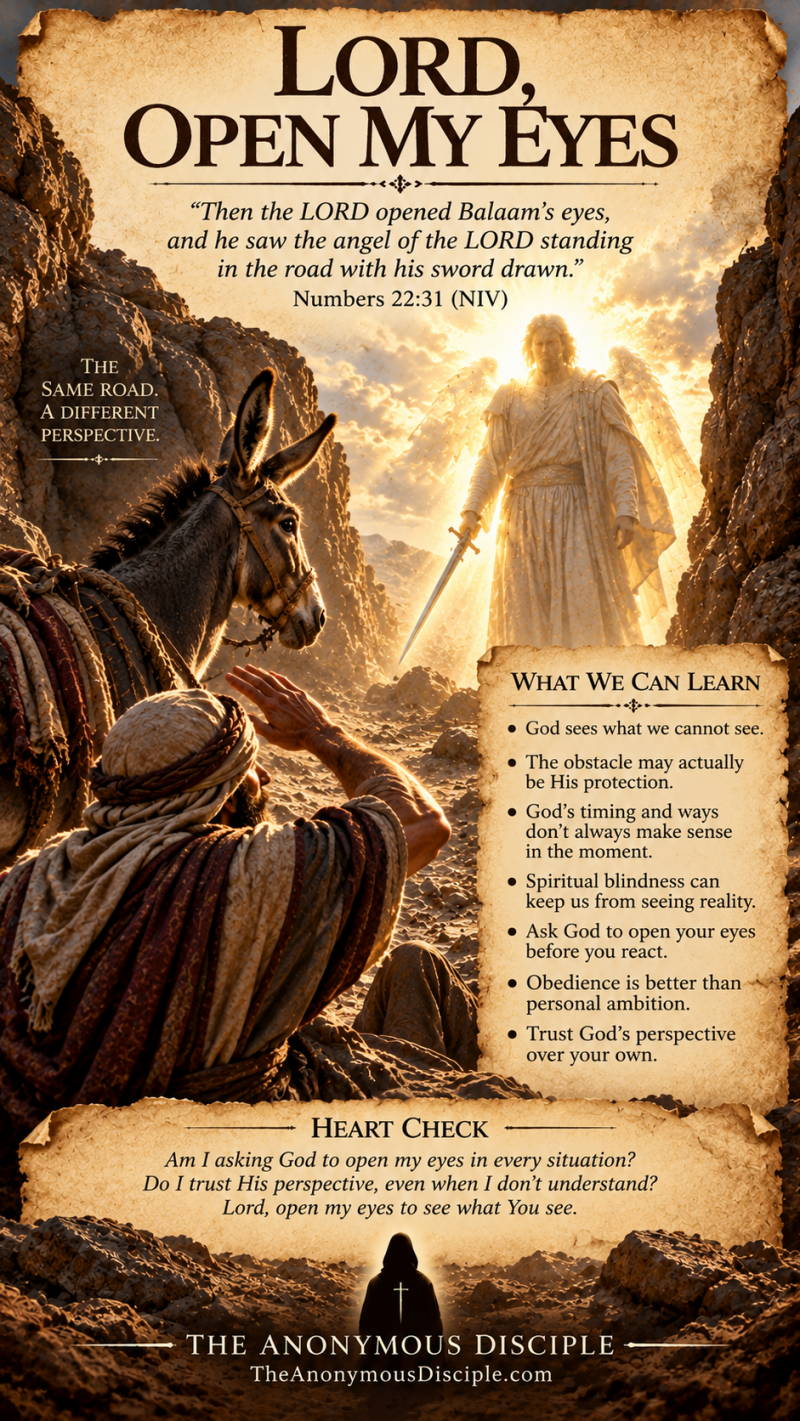
Numbers 22:31 (NIV) — “Then the LORD opened Balaam’s eyes, and he saw the angel of the LORD standing in the road with his sword drawn.”
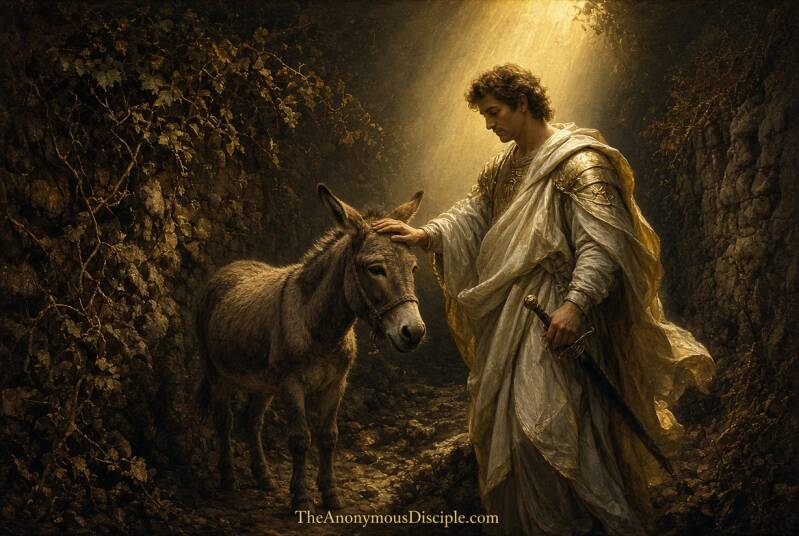
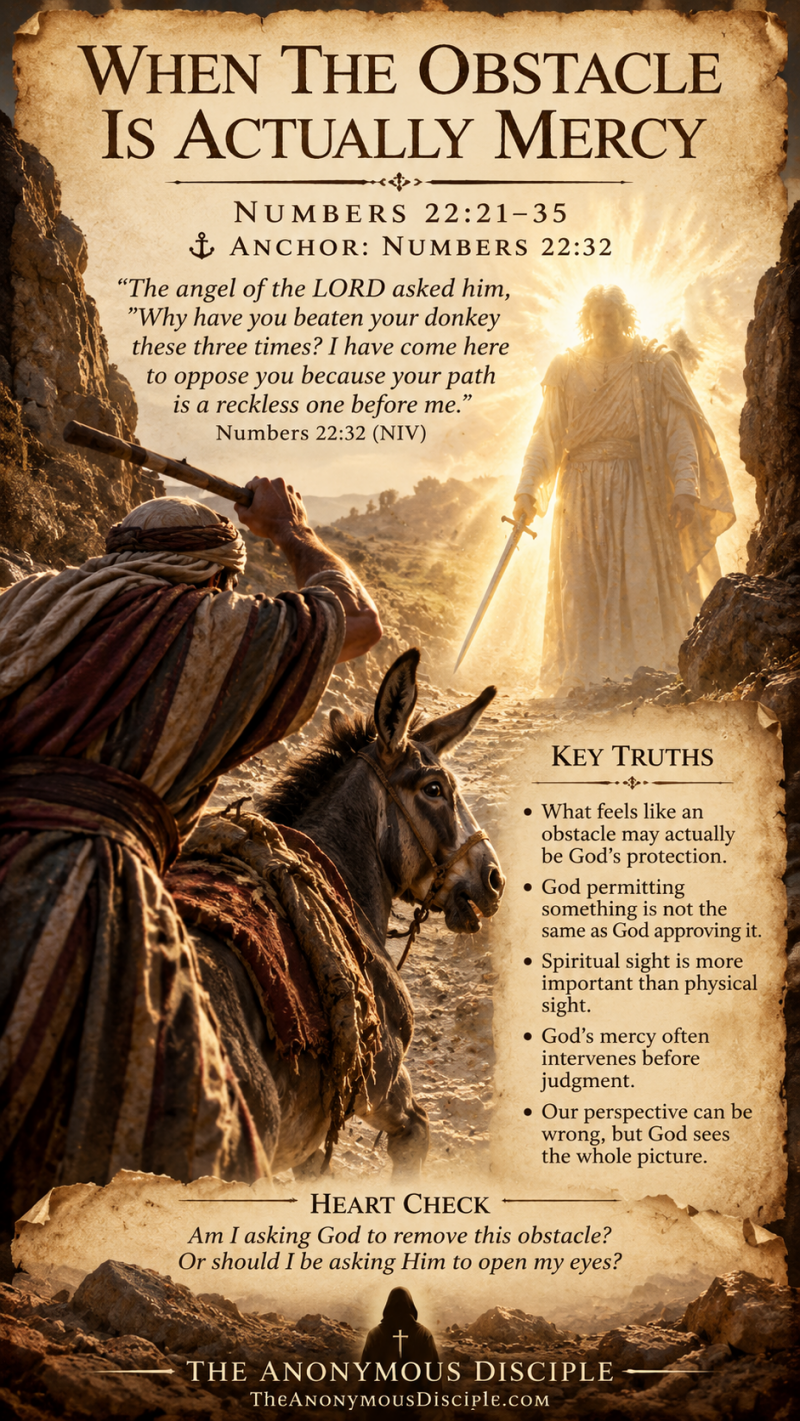
What Balaam interpreted as resistance was actually protection. What felt like an inconvenience was mercy. And what looked like a stubborn donkey was being used by God to keep him from walking blindly into judgment.
That leaves us with a powerful question for our own walk:
When something stands in my way, is my first response frustration—or prayer?
Sometimes we need to ask God to remove the obstacle. But sometimes our prayer needs to be:
“Lord, before You move it, open my eyes. Help me see whether You placed it there.” 🕊️
Because the God who sees the entire road ahead may lovingly stop us from taking another step down a path we cannot yet see. ❤️🙏
King James Version (KJV)
21 And Balaam rose up in the morning, and saddled his ass, and went with the princes of Moab.
22 And God's anger was kindled because he went: and the angel of the LORD stood in the way for an adversary against him. Now he was riding upon his ass, and his two servants were with him.
23 And the ass saw the angel of the LORD standing in the way, and his sword drawn in his hand: and the ass turned aside out of the way, and went into the field: and Balaam smote the ass, to turn her into the way.
24 But the angel of the LORD stood in a path of the vineyards, a wall being on this side, and a wall on that side.
25 And when the ass saw the angel of the LORD, she thrust herself unto the wall, and crushed Balaam's foot against the wall: and he smote her again.
26 And the angel of the LORD went further, and stood in a narrow place, where was no way to turn either to the right hand or to the left.
27 And when the ass saw the angel of the LORD, she fell down under Balaam: and Balaam's anger was kindled, and he smote the ass with a staff.
28 And the LORD opened the mouth of the ass, and she said unto Balaam, What have I done unto thee, that thou hast smitten me these three times?
29 And Balaam said unto the ass, Because thou hast mocked me: I would there were a sword in mine hand, for now would I kill thee.
30 And the ass said unto Balaam, Am not I thine ass, upon which thou hast ridden ever since I was thine unto this day? was I ever wont to do so unto thee? And he said, Nay.
31 Then the LORD opened the eyes of Balaam, and he saw the angel of the LORD standing in the way, and his sword drawn in his hand: and he bowed down his head, and fell flat on his face.
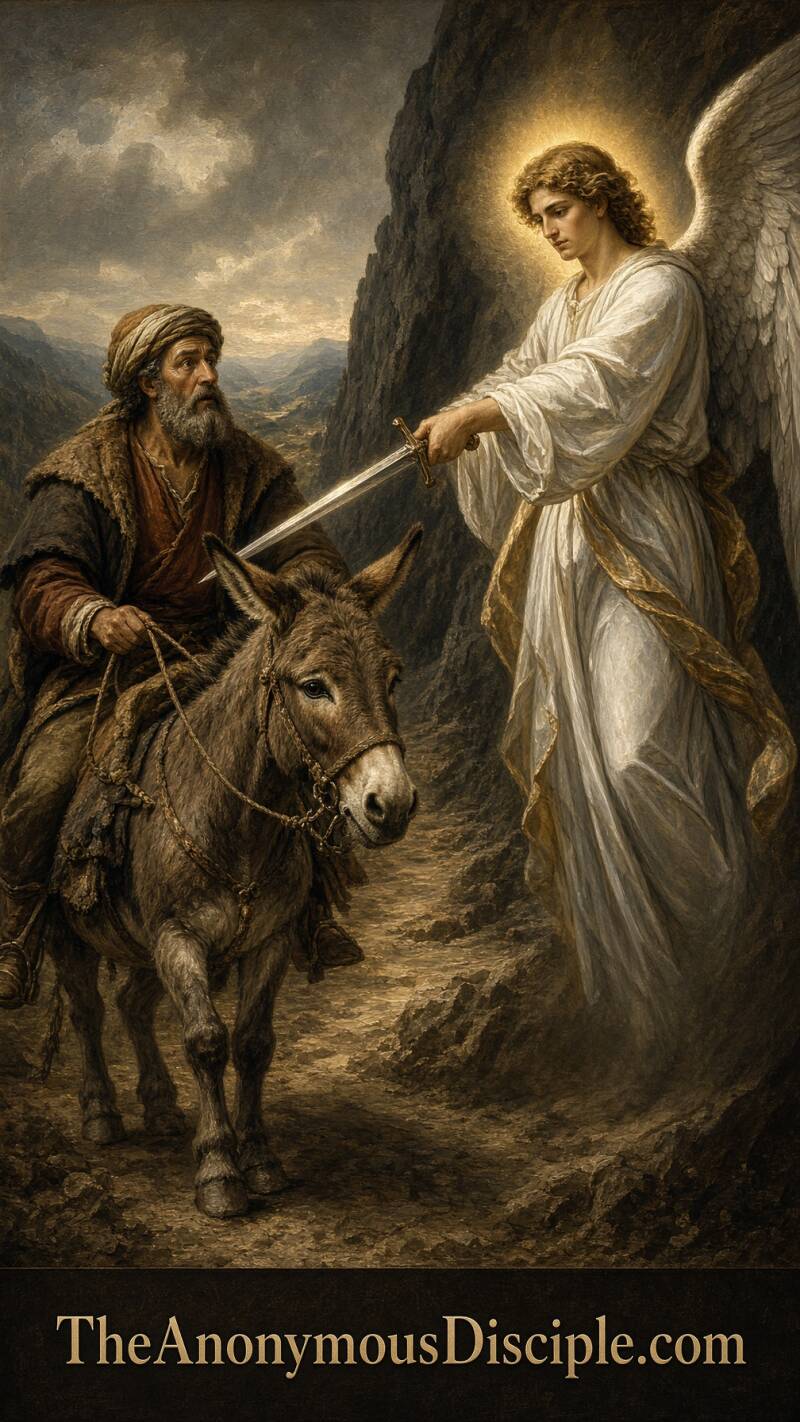
32 And the angel of the LORD said unto him, Wherefore hast thou smitten thine ass these three times? behold, I went out to withstand thee, because thy way is perverse before me:
33 And the ass saw me, and turned from me these three times: unless she had turned from me, surely now also I had slain thee, and saved her alive.
34 And Balaam said unto the angel of the LORD, I have sinned; for I knew not that thou stoodest in the way against me: now therefore, if it displease thee, I will get me back again.
35 And the angel of the LORD said unto Balaam, Go with the men: but only the word that I shall speak unto thee, that thou shalt speak. So Balaam went with the princes of Balak.
Cross References for the anchor verse, Numbers 22:32
“Why have you struck your donkey these three times? … I have come out to oppose you because your way is perverse before me.”
Closest links:
- Numbers 22:22 — Same angel, same word: he stood in the road “as his adversary.” Verse 32 is the angel explaining why he is there.
- Numbers 22:28 — The donkey already asked the same question: “Why have you struck me these three times?”
- Deuteronomy 23:4–5 — The “perverse way” is Balaam going to curse the people God had blessed.
- 2 Peter 2:15–16 — The New Testament name for that “perverse way” is loving money more than obeying God.
- Acts 13:10 — Paul uses similar language (“you enemy of all righteousness… will you never stop making the Lord’s paths crooked?”) for a man who stood against God’s work.
- Micah 6:5 — God tells Israel to remember this whole confrontation.
- Psalm 36:6; Psalm 145:9 — The LORD cares for man and beast. That is why the angel is angry that Balaam beat the donkey who was actually saving his life.
- Deuteronomy 25:4 — “Do not muzzle an ox while it is treading out the grain.” Scripture treats animals with fairness; Balaam did the opposite.
In plain words: verse 32 is the angel saying, “I am not the problem. Your path is. You are beating the very creature I sent to keep you alive.” The later verses (Peter, Jude, Revelation, Deuteronomy, Micah) show that Balaam’s “perverse way” was greed dressed up as ministry.
English Standard Version (ESV)
21 So Balaam rose in the morning and saddled his donkey and went with the princes of Moab.
22 But God’s anger was kindled because he went, and the angel of the LORD took his stand in the way as his adversary. Now he was riding on the donkey, and his two servants were with him.
23 And the donkey saw the angel of the LORD standing in the road, with a drawn sword in his hand. And the donkey turned aside out of the road and went into the field. And Balaam struck the donkey, to turn her into the road.
24 Then the angel of the LORD stood in a narrow path between the vineyards, with a wall on either side.
25 And when the donkey saw the angel of the LORD, she pushed against the wall and pressed Balaam’s foot against the wall. So he struck her again.
26 Then the angel of the LORD went ahead and stood in a narrow place, where there was no way to turn either to the right or to the left.
27 When the donkey saw the angel of the LORD, she lay down under Balaam. And Balaam’s anger was kindled, and he struck the donkey with his staff.
28 Then the LORD opened the mouth of the donkey, and she said to Balaam, “What have I done to you, that you have struck me these three times?”
29 And Balaam said to the donkey, “Because you have made a fool of me. I wish I had a sword in my hand, for then I would kill you.”
30 And the donkey said to Balaam, “Am I not your donkey, on which you have ridden all your life long to this day? Is it my habit to treat you this way?” And he said, “No.”
31 Then the LORD opened the eyes of Balaam, and he saw the angel of the LORD standing in the way, with his drawn sword in his hand. And he bowed down and fell on his face.
32 And the angel of the LORD said to him, “Why have you struck your donkey these three times? Behold, I have come out to oppose you because your way is perverse before me.
33 The donkey saw me and turned aside before me these three times. If she had not turned aside from me, surely just now I would have killed you and let her live.”
34 Then Balaam said to the angel of the LORD, “I have sinned, for I did not know that you stood in the road against me. Now therefore, if it is evil in your sight, I will turn back.”
35 And the angel of the LORD said to Balaam, “Go with the men, but speak only the word that I tell you.” So Balaam went on with the princes of Balak.
Here are the main cross references, kept simple.
For the whole passage (Numbers 22:21–35)
These verses look back at Balaam’s story or explain what was really going on in his heart:
- 2 Peter 2:15–16 — Peter says Balaam “loved the wages of wickedness,” and that a donkey speaking with a human voice “restrained the prophet’s madness.” This is the clearest New Testament comment on this exact scene.
- Jude 11 — Jude lists “the error of Balaam” as rushing after profit.
- Revelation 2:14 — Jesus warns a church about people who hold “the teaching of Balaam,” who taught Balak to trip Israel up with idolatry and immorality.
- Deuteronomy 23:4–5 — Moses later reminds Israel that Moab hired Balaam to curse them, “but the LORD your God would not listen to Balaam; instead the LORD your God turned the curse into a blessing.”
- Micah 6:5 — “Remember… what Balak king of Moab plotted and what Balaam son of Beor answered.” God wants His people to remember this story.
- Numbers 22:12, 20; 23:8, 20; 24:13 — God had already said Israel is blessed and Balaam may only speak what God gives him. The roadblock in 22:21–35 is God enforcing that.
- Exodus 3:2; Joshua 5:13–15; Judges 6 — Other times “the angel of the LORD” appears with a drawn sword or as the LORD Himself.
- 2 Kings 6:17 — The LORD opens a servant’s eyes so he can see the unseen army. Same idea as God opening Balaam’s eyes in verse 31.
Who
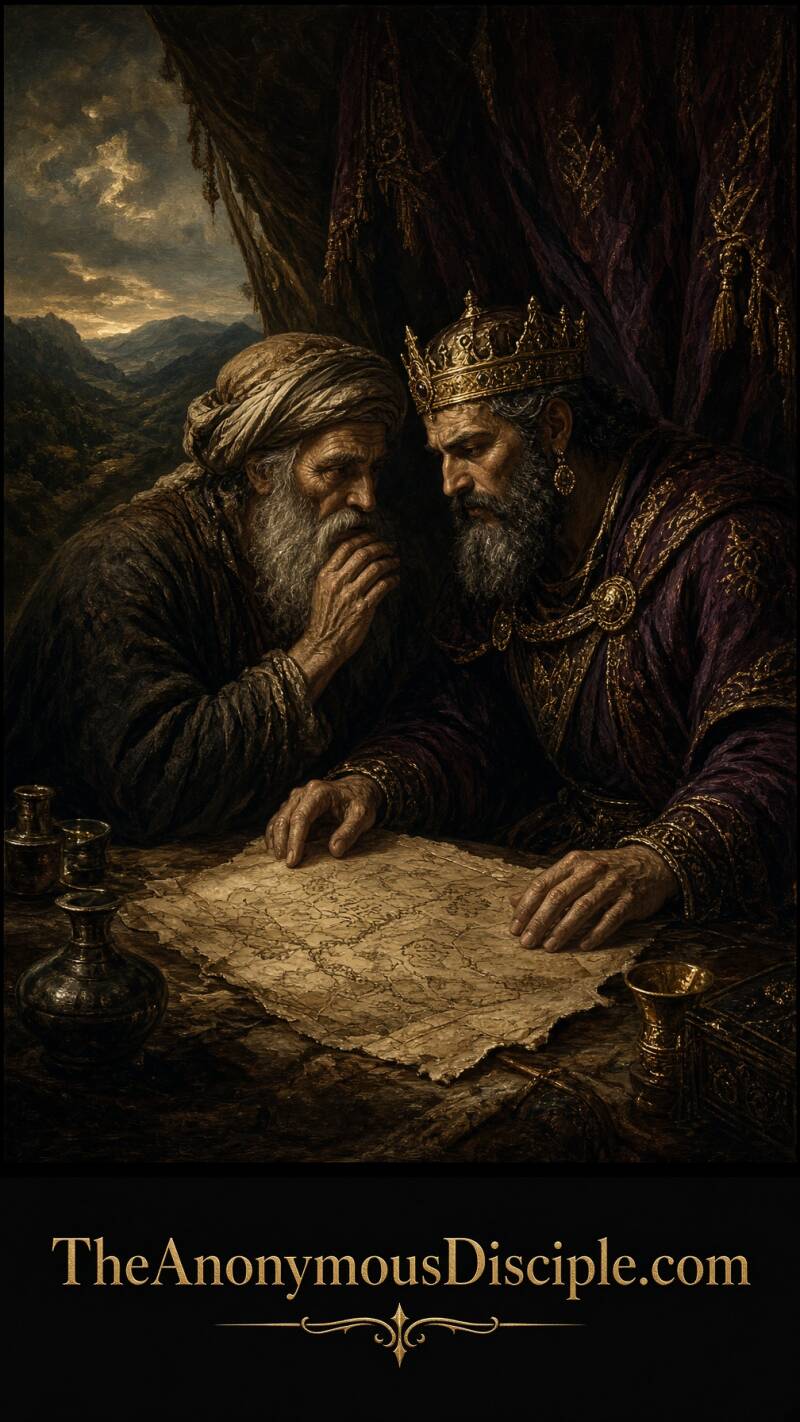
- Balaam — a well-known pagan prophet/diviner from the east (Pethor, near the Euphrates). King Balak of Moab hired him to curse Israel.
- The angel of the LORD — God Himself showing up as a warrior with a drawn sword, standing in Balaam’s path as an adversary.
- Balaam’s donkey — the one who actually sees the angel first and tries to save Balaam’s life.
- Balaam’s two servants — traveling with him.
- Balak and the princes of Moab — in the background; they are the ones paying Balaam to come curse Israel.
When
Near the end of Israel’s 40 years in the wilderness. Israel has already defeated the kings Sihon and Og and is camped in the plains of Moab, right across the Jordan from Jericho, about to enter the Promised Land. Moab is terrified of them.
Where
On the road from Balaam’s home in the east toward Moab. The scene moves:
- Out in the open field
- Then a narrow path between vineyard walls
- Then a tight spot with no room to turn left or right
That’s where the donkey finally lies down and the LORD opens Balaam’s eyes.
Audience
- First audience: Israel (Moses is writing this so God’s people would know how the LORD protected them when a foreign king tried to hire a curse against them).
- Immediate audience in the story: Balaam — God is confronting him.
- Us today: anyone who reads Scripture. It still teaches that God guards His people and that we cannot bless what He has cursed or curse what He has blessed.
Why (the point of this passage)
God had already told Balaam, “You shall not curse this people, for they are blessed.” Balaam still got up, saddled his donkey, and went with Balak’s men anyway — chasing the money and honor. That made the LORD angry.
So the angel blocked the road. Balaam couldn’t see it, but the donkey could. Three times the donkey saved Balaam’s life; three times Balaam beat her for it. Then God opened the donkey’s mouth and then Balaam’s eyes.
The “why” is pretty straightforward:
- You cannot curse what God has blessed.
- God will protect His people even when they don’t know they’re in danger.
- God can use anything He wants — even a donkey — to stop a stubborn heart and speak truth.
- Balaam looked religious and talked about “only saying what God says,” but his heart was still going after reward. God exposed that.
In short: Balak wanted a curse. God sent a roadblock. The donkey saw what the prophet wouldn’t. And Israel stayed under God’s blessing.
Cultural Notes
Balaam was a professional “for hire.”
In that culture, kings did not only fight with swords. They hired famous seers to bless or curse. Balak believed words had power. That is why he sent officials with “fees for divination” (Numbers 22:7). Balaam’s reputation was: whom he blesses is blessed, and whom he curses is cursed. Israel’s God is about to flip that whole system on its head.
He came from a long way off.
Pethor was near “the River” — most take that as the Euphrates, way up in Mesopotamia (today’s Syria/Iraq region). That is a serious journey on a donkey. Balak did not grab the nearest local fortune-teller. He sent for an international name.
Curses were a kind of spiritual weapon.
In the ancient Near East, people treated a spoken curse almost like a missile. You wanted the right man, the right high place, and the right rituals. Later Balaam will keep asking for altars and sacrifices on different mountains. That was the usual method: get a better view, offer more animals, try again. God keeps shutting the door.
The “angel of the LORD” as adversary is a loaded word.
In verse 22 the Hebrew says the angel stood in the road le-satan lo — “as an adversary against him.” Same root as the word later used for Satan. Here it is not the devil. It is the LORD Himself blocking a man who is walking a crooked path. God can be your adversary when you insist on a path He has already forbidden.
Donkeys were everyday work animals — and they were supposed to be treated decently.
A donkey was transportation, pack animal, and livelihood. Beating one three times in a row would have looked ugly even then. Scripture already teaches that God cares about animals (the ox treading grain, Psalm 36:6, Jonah 4:11). So the angel’s first question is not “Why are you going to Moab?” It is, “Why have you beaten your donkey these three times?” The creature who could see God was more faithful than the prophet who claimed to speak for God.
Talking animals were not a normal “trick” in Israel’s faith.
Other cultures had fables with talking beasts. Israel’s Scriptures almost never do this. When it happens here, the text is clear: the LORD opened the donkey’s mouth. It is a miracle, not a cartoon. Peter later says that “a speechless donkey spoke with a human voice and restrained the prophet’s madness” (2 Peter 2:16). The point is humiliation: the famous seer cannot see, and a donkey can.
There is an extra-biblical echo of Balaam’s name.
In 1967, at Tell Deir Alla in the Jordan Valley (east of the Jordan, not far from this story’s neighborhood), archaeologists found plaster writing from around 800 BC. It mentions “Balaam son of Beor, a seer of the gods.” It is not the same story as Numbers, and it is later than Moses’ day, but it shows Balaam son of Beor was a known seer-figure in that region. The Bible is not inventing a random foreign name.
Balaam’s later story explains the New Testament warnings.
He never does get to curse Israel. So, according to Numbers 31:16 and Revelation 2:14, he advised another way: if you cannot curse them, seduce them — idolatry and sexual sin at Peor. That is why Peter, Jude, and Jesus in Revelation treat “the way of Balaam” as greed plus spiritual compromise, not just a funny donkey story.
The comedy is the theology.
A pagan prophet is riding toward Israel to sell a curse. God stands in the road with a sword. The donkey sees. The prophet does not. The donkey talks. The prophet argues with her like she is the problem. Then his eyes open and he falls on his face. The culture said, “Hire the expert.” God said, “I can use a donkey before I let you touch My people.”
Then vs now — same heart, different clothes
Then: Balak offers money and honor if Balaam will curse Israel.
Now: The offer is still “say what I want and I’ll pay you / platform you / like you.” It may be a job, a ministry deal, a relationship, or just staying popular. The question is the same: Will I twist God’s word for a reward?
Then: God already said, “They are blessed. You may not curse them.” Balaam still saddles the donkey.
Now: We already know the verse… and we go anyway. We pray “Your will,” then keep walking toward what we wanted in the first place. Permission to go is not permission to disobey.
Then: The donkey sees the angel. Balaam only sees an animal in his way.
Now: God often uses inconvenient things — a closed door, a delay, a blunt friend, a check in the spirit, even something “beneath us.” We get angry at the obstacle instead of asking, “Lord, what are You blocking?”
Then: Balaam beats the donkey three times. The one saving his life gets the stick.
Now: We take it out on the people (or circumstances) God sent to protect us. A spouse who says “this doesn’t sit right,” a friend who won’t cheer the plan, a conscience that won’t shut up — and we treat them like the problem.
Then: Balaam talks a holy game: “I can only say what the LORD says.” His feet are still pointed toward the paycheck.
Now: We can quote Scripture and still love the wages. Peter’s words still fit: some “have left the straight way and wandered off to follow the way of Balaam… who loved the wages of wickedness” (2 Peter 2:15). Words and wallet tell different stories.
Then: When his eyes finally open, he says, “I have sinned… I’ll go back.” The angel says, “Go on — but only speak what I tell you.”
Now: Sorry is not the same as surrendered. God may let us keep walking, but He will not let us own the message. Half-repentance still wants the trip and the blessing.
Then: When the curse won’t work, Balaam’s “plan B” is to trip Israel with sin (Numbers 31:16; Revelation 2:14).
Now: If we cannot change God’s word, the temptation is to change God’s people — soften the line, mix worship with the world’s idols, call compromise “grace.” That is still the teaching of Balaam.
Then: A speechless donkey restrains a famous prophet.
Now: God is still willing to use the small, the ignored, and the “foolish” to stop a proud heart. The issue is never whether He can speak. It is whether we will listen before we need a miracle in the road.
A simple check for today:
- What am I chasing that God already said no to?
- Who or what have I been “beating” because they got in my way?
- Do my words sound like the LORD while my path looks like Balak’s offer?
- If the donkey could talk this morning, what would she say I still refuse to see?
The hope in the story is the same now as then: God protects what He has blessed, and He would rather open our eyes on the road than let us curse what He loves.
Deep Dive Study Notes
⚓️ Numbers 22:21–35
When the Obstacle Is Actually Mercy
Anchor: Numbers 22:32
📖 First, the setting
Israel has reached the plains of Moab after God has given them major victories. Balak, king of Moab, sees Israel and becomes terrified.
Rather than attack Israel directly, Balak tries something different:
He hires Balaam to curse them.
Balaam is a strange figure. He knows something of the true God and receives genuine revelation from Him, but Scripture ultimately remembers Balaam very negatively because of his greed and willingness to profit from wickedness.
That later biblical commentary matters:
2 Peter 2:15 (NIV) — “They have left the straight way and wandered off to follow the way of Balaam son of Bezer, who loved the wages of wickedness.”
And:
Jude 1:11 (NIV) — “They have rushed for profit into Balaam’s error…”
So when we read Numbers 22, we shouldn't picture an innocent prophet simply obeying God.
Balaam wants something.
And God knows his heart.
1. God had already answered Balaam
This is critical.
Before our passage, Balaam asks God whether he may go with Balak's officials.
God's first answer is unmistakable:
Numbers 22:12 (NIV) — “But God said to Balaam, ‘Do not go with them. You must not put a curse on those people, because they are blessed.’”
There are actually two commands here.
Do not go.
And:
Do not curse Israel.
Why?
Because God has blessed them.
Balak doesn't like Balaam's answer, so he sends more distinguished officials and offers Balaam an enormous reward.
And Balaam asks God again.
👀
That's our first heart check.
Sometimes we aren't asking God because we don't know His will.
Sometimes we keep asking because we don't like the answer He already gave us.
2. Then comes the difficult part
Numbers 22:20 (NIV) — “That night God came to Balaam and said, ‘Since these men have come to summon you, go with them, but do only what I tell you.’”
Okay.
God said go.
Then:
Numbers 22:21–22 (NIV) — “Balaam got up in the morning, saddled his donkey and went with the Moabite officials. But God was very angry when he went…”
Wait.
😳
Didn't God just tell him to go?!
Yes.
That's why we need to distinguish between God permitting Balaam's journey and God approving Balaam's heart and purpose in going.
The Hebrew wording in verse 20 is also conditional—essentially, if the men have come to call you, rise and go with them—and God immediately restricts Balaam:
“Do only what I tell you.”
Yet the rest of Scripture exposes what was happening inside Balaam.
He wanted Balak's reward.
So God permits Balaam to proceed while confronting the sinful path Balaam is determined to pursue.
There's a sobering biblical principle here:
God permitting something is not necessarily God approving it.
Balaam is going to learn that distinction on the back of a donkey. 😳
3. The prophet is blind—and the donkey sees
Now Scripture almost turns the whole situation upside down.
Numbers 22:23 (NIV) — “When the donkey saw the angel of the LORD standing in the road with a drawn sword in his hand, it turned off the road into a field…”
Notice:
“The donkey saw…”
Balaam doesn't.
The man who receives visions from God cannot see what an ordinary animal can see.
That's deliberate irony.
The donkey turns away.
Balaam beats her.
Then the Angel moves into a narrow path.
The donkey presses against the wall, crushing Balaam's foot.
Balaam beats her again.
Finally the Angel stands somewhere so narrow there is nowhere to escape.
The donkey lies down.
Balaam beats her a third time.
From Balaam's perspective:
This stupid animal keeps ruining my trip.
From God's perspective:
That donkey just saved his life three times.
🔥 There is our study.
4. Then God opens the donkey's mouth
And this part almost has a little divine humor in it.
Numbers 22:28 (NIV) — “Then the LORD opened the donkey’s mouth, and it said to Balaam, ‘What have I done to you to make you beat me these three times?’”
And perhaps the strangest part isn't that the donkey talks.
It's that Balaam argues with it. 😂
Numbers 22:29 (NIV) — “Balaam answered the donkey, ‘You have made a fool of me! If only I had a sword in my hand, I would kill you right now.’”
Ohhhh, Balaam.
Someone has a sword.
Just not you.
😳
Because standing immediately ahead of him is:
The Angel of the LORD—with a drawn sword.
The irony is enormous.
Balaam says:
“If I had a sword…”
Meanwhile Heaven's messenger is standing there holding one.
5. Then God opens Balaam's eyes
Notice the order.
Numbers 22:28 (NIV) — “Then the LORD opened the donkey’s mouth…”
Then:
Numbers 22:31 (NIV) — “Then the LORD opened Balaam’s eyes…”
First God opens the donkey's mouth.
Then God opens the prophet's eyes.
And suddenly Balaam sees reality.
The road hadn't changed.
The Angel hadn't suddenly appeared.
The Angel had been there all along.
Balaam simply couldn't see Him.
And THAT gives our anchor verse its punch.
⚓️ Numbers 22:32 — “Why have you beaten your donkey?”
Numbers 22:32 (NIV) — “The angel of the LORD asked him, ‘Why have you beaten your donkey these three times? I have come here to oppose you because your path is a reckless one before me.’”
Balaam thought:
The donkey is opposing me.
God says:
No, Balaam. I am opposing you.
😳
That changes everything.
The frustrating detour.
The crushed foot.
The delay.
The donkey refusing to move.
Balaam interpreted every one of them as problems preventing him from reaching his goal.
But they were actually acts of mercy preventing him from walking into judgment.
❤️ And here's where it reaches us
Sherri, there is a heart question buried in this story that I think is worth sitting with:
What if some of the things I call obstacles are actually God's mercy?
We naturally pray:
“Lord, remove this obstacle.”
Sometimes that is exactly the right prayer.
But Numbers 22 gives us another possible prayer:
“Lord, before You remove it, show me whether You put it there.”
Because Balaam desperately wanted his obstacle removed.
Had God immediately granted that request…
Balaam would have walked straight toward the sword.
Sometimes God's mercy looks like an open door.
Sometimes God's mercy looks like a donkey that refuses to take another step.
🕊️
✝️ One more fascinating detail: “the Angel of the LORD”
You KNOW we're not skipping this. 🤭
Numbers repeatedly calls this figure “the angel of the LORD.”
Numbers 22:31 (NIV) — “Then the LORD opened Balaam’s eyes, and he saw the angel of the LORD standing in the road with his sword drawn.”
There is a longstanding Christian interpretation that certain Old Testament appearances of the Angel of the LORD may be manifestations of the pre-incarnate Christ—a Christophany.
But I would put a careful asterisk beside this one.
The text itself does not explicitly identify the Angel as Jesus.
So we can responsibly say:
Possible Christophany? Yes.
Can we prove from Numbers 22 that this is Jesus? No.
That's an important distinction for our study.
🔗 And Balaam's story isn't finished
Here's the twist people sometimes miss.
Balaam eventually cannot curse Israel.
Every time he tries, God turns the intended curse into blessing.
And eventually Balaam gives one of the Old Testament's remarkable Messianic prophecies:
Numbers 24:17 (NIV) — “I see him, but not now; I behold him, but not near. A star will come out of Jacob; a scepter will rise out of Israel…”
✨ A star.
👑 A scepter.
From Israel.
God takes a man hired to curse His people…
…and puts a prophecy concerning the coming King in his mouth.
Balaam couldn't control the donkey's mouth.
And ultimately Balaam couldn't control his own mouth either.
God did.
That is wild. ❤️
🕊️ Our takeaway
I think the sentence sitting at the center of today's study is:
Balaam thought God was standing in his way. In reality, God was keeping Balaam from destroying himself.
So before asking God to remove every closed door, delay, frustration, or interruption:
“Lord, open my eyes.”
Because the obstacle I am fighting might be the very mercy He placed between me and something I cannot yet see.
And that makes Numbers 22:31 almost as important as our anchor:
Numbers 22:31 (NIV) — “Then the LORD opened Balaam’s eyes…”
🙏❤️
Lord, do that for me.
Add comment
Comments