

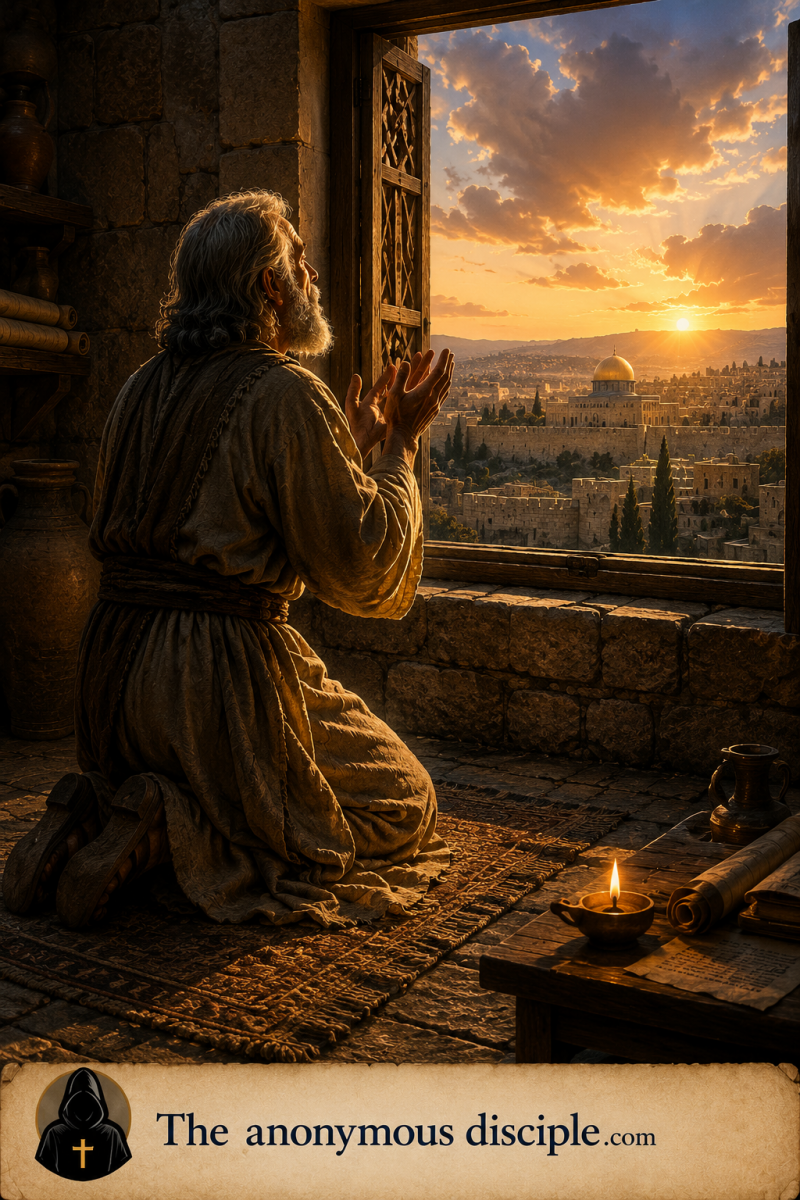
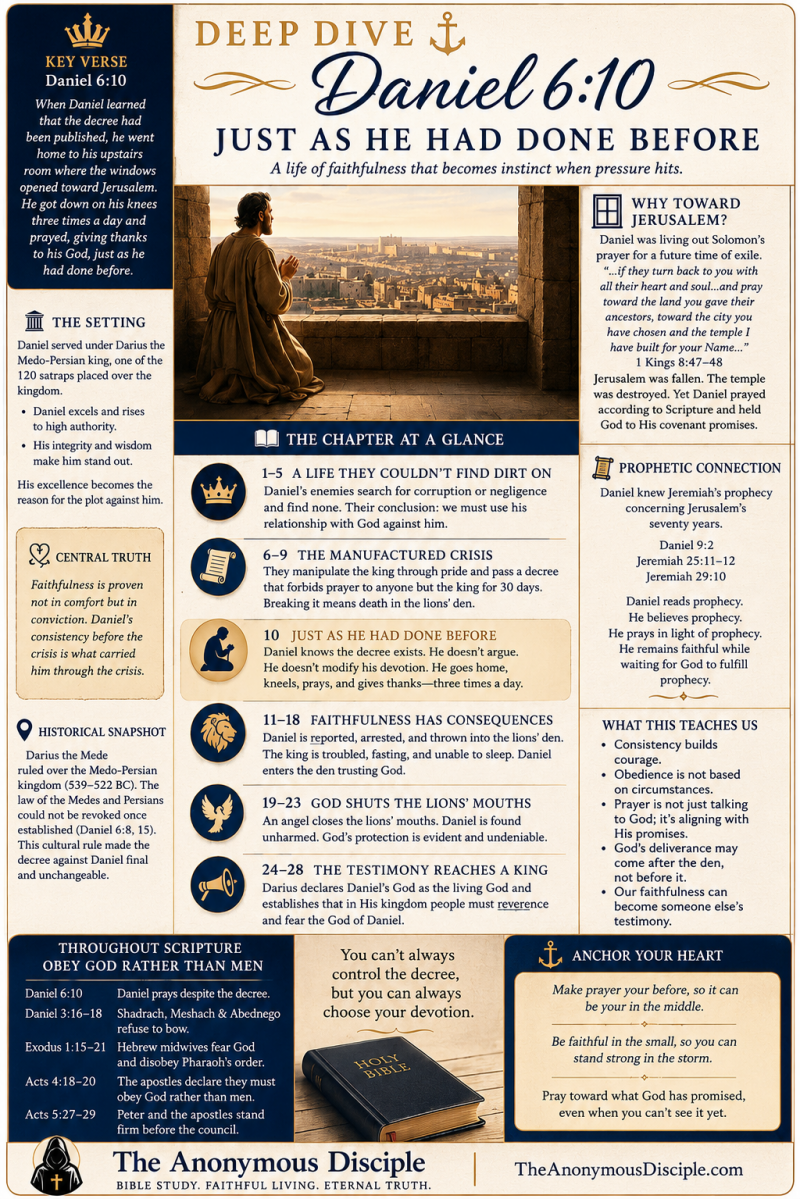
Daniel 6 is remembered for lions, an angel, and a miraculous deliverance—but the heart of the chapter is found before Daniel ever enters the den. When a decree made prayer to God punishable by death, Daniel did not panic, protest, or suddenly discover courage. He simply went home, opened his windows toward Jerusalem, got on his knees, and prayed “just as he had done before” (Daniel 6:10).
Daniel’s faithfulness in the crisis was built through faithfulness long before the crisis. His enemies could find no corruption in his life, so they targeted the one thing they knew he would never compromise: his devotion to God. Yet even with the lions’ den waiting, Daniel continued to pray, give thanks, and trust the God whose promises he already knew.
This study follows Daniel from the open window to the lions’ den and ultimately to a pagan king proclaiming the greatness of the living God. It is a powerful reminder that pressure does not create devotion—it reveals it. The habits of faith we build in ordinary days prepare us to stand when obedience becomes costly. -🪄Jenny🪄
Today's study:
- Deep Dive of Daniel 6 (⚓ verse 10)
- Cultural Notes
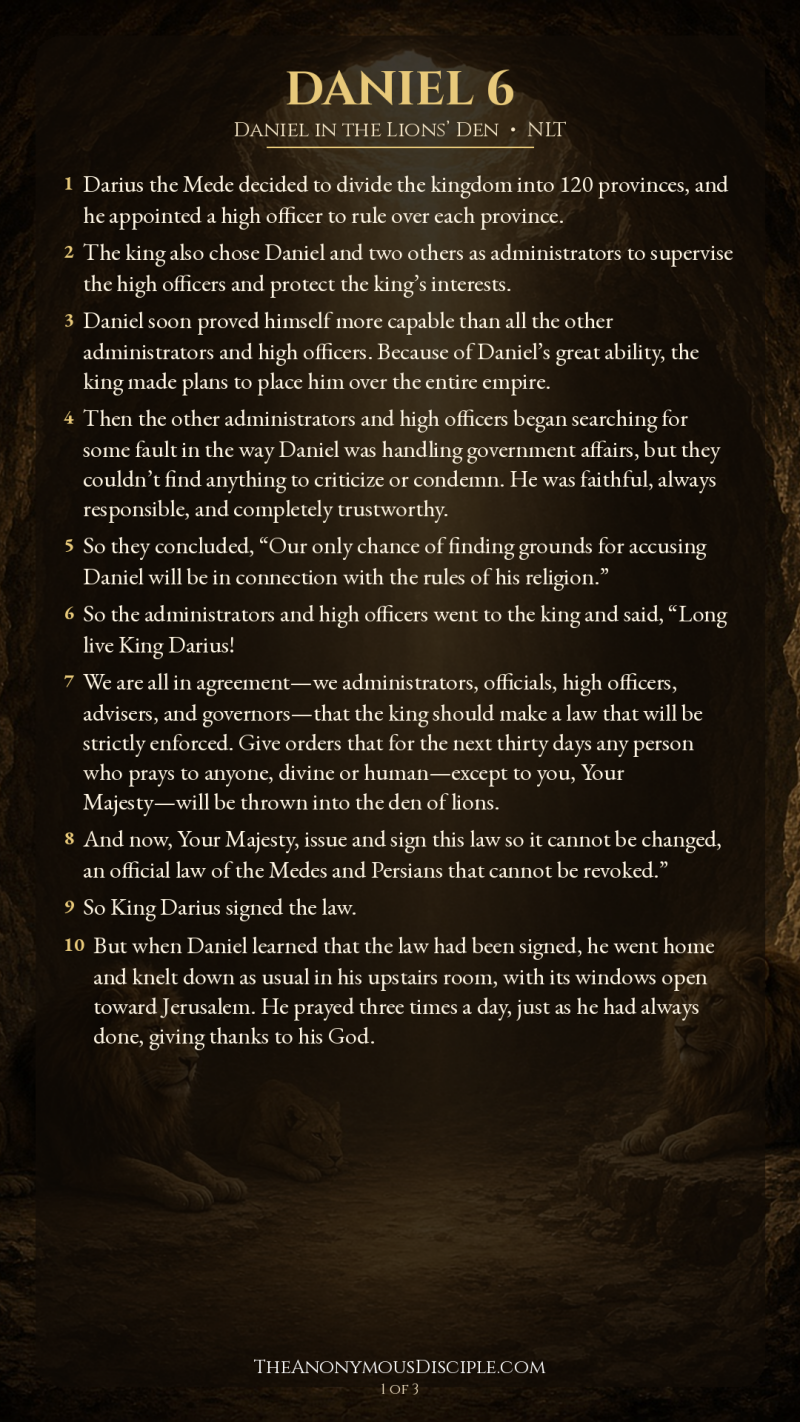
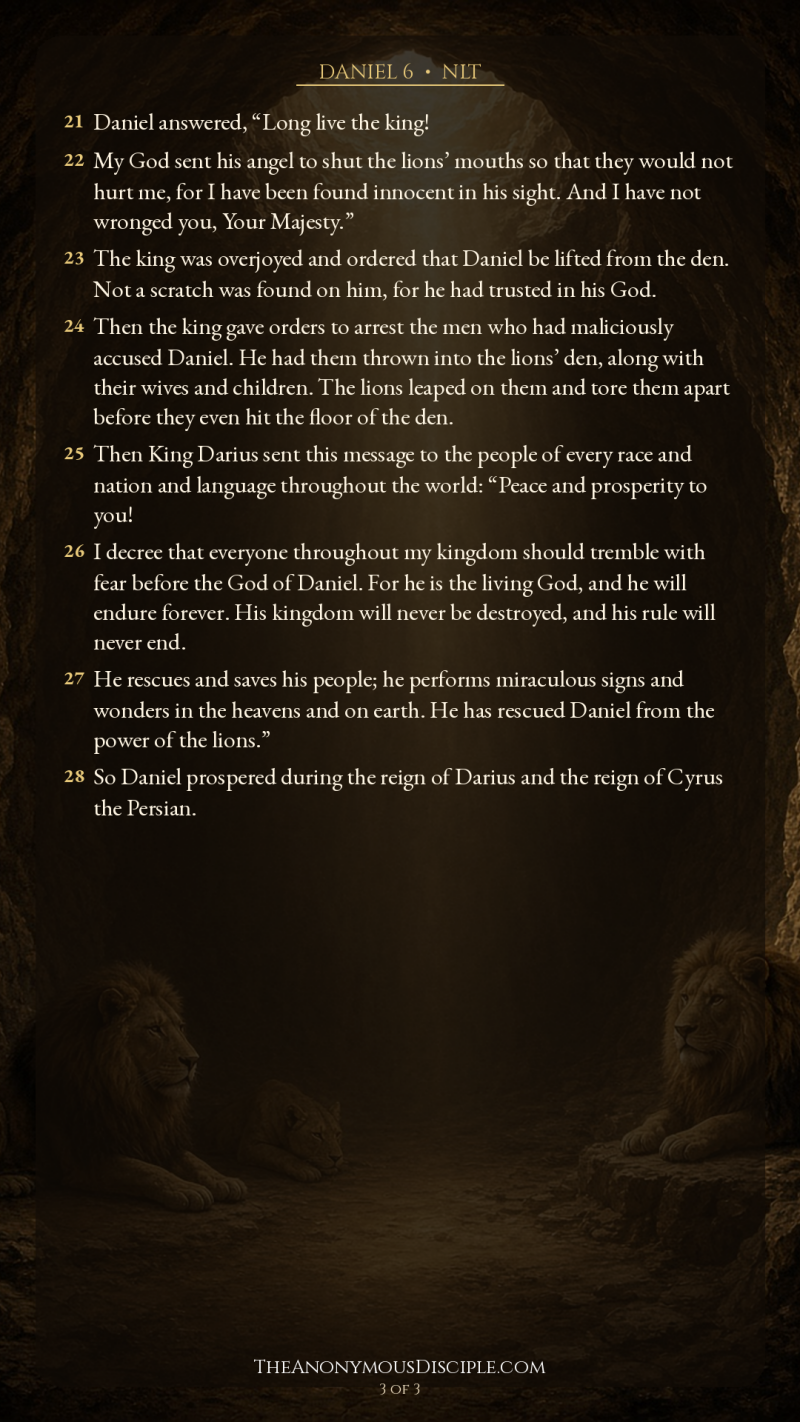
- Daniel 6 in its entirety NLT translation
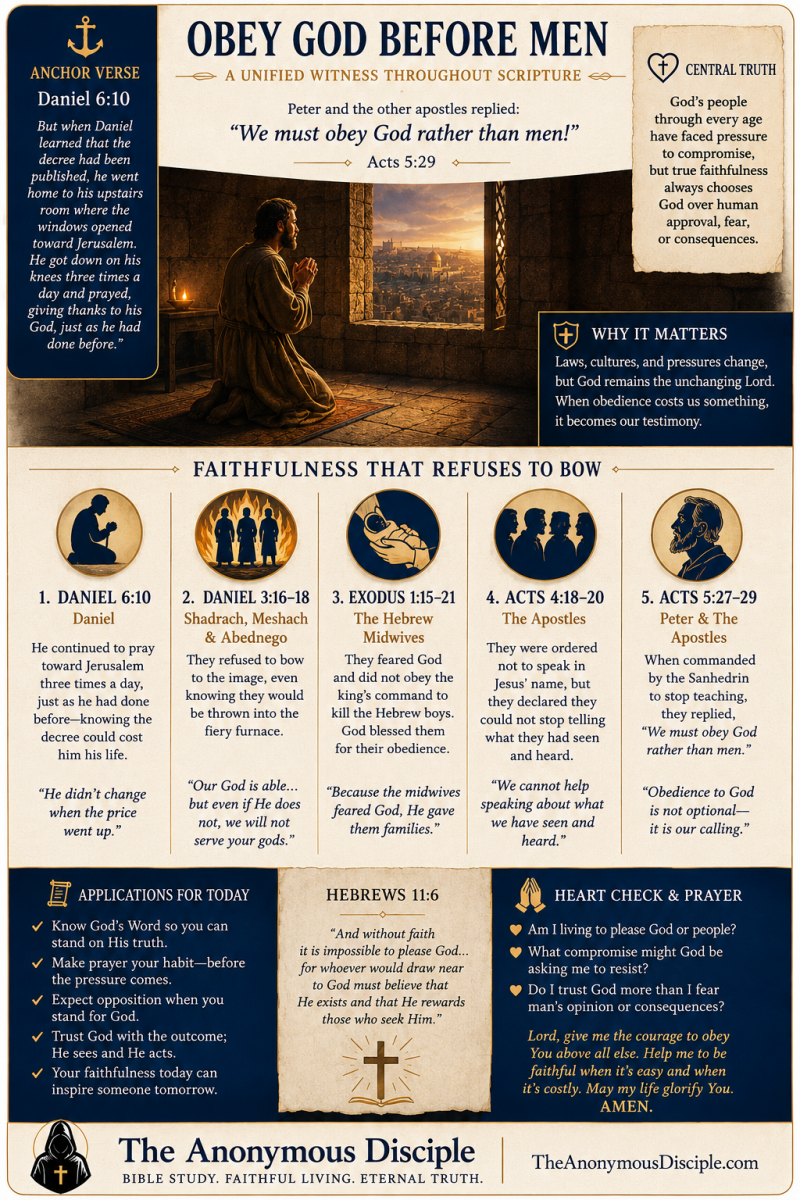
- Obey God Before Men card
- Themes Notes
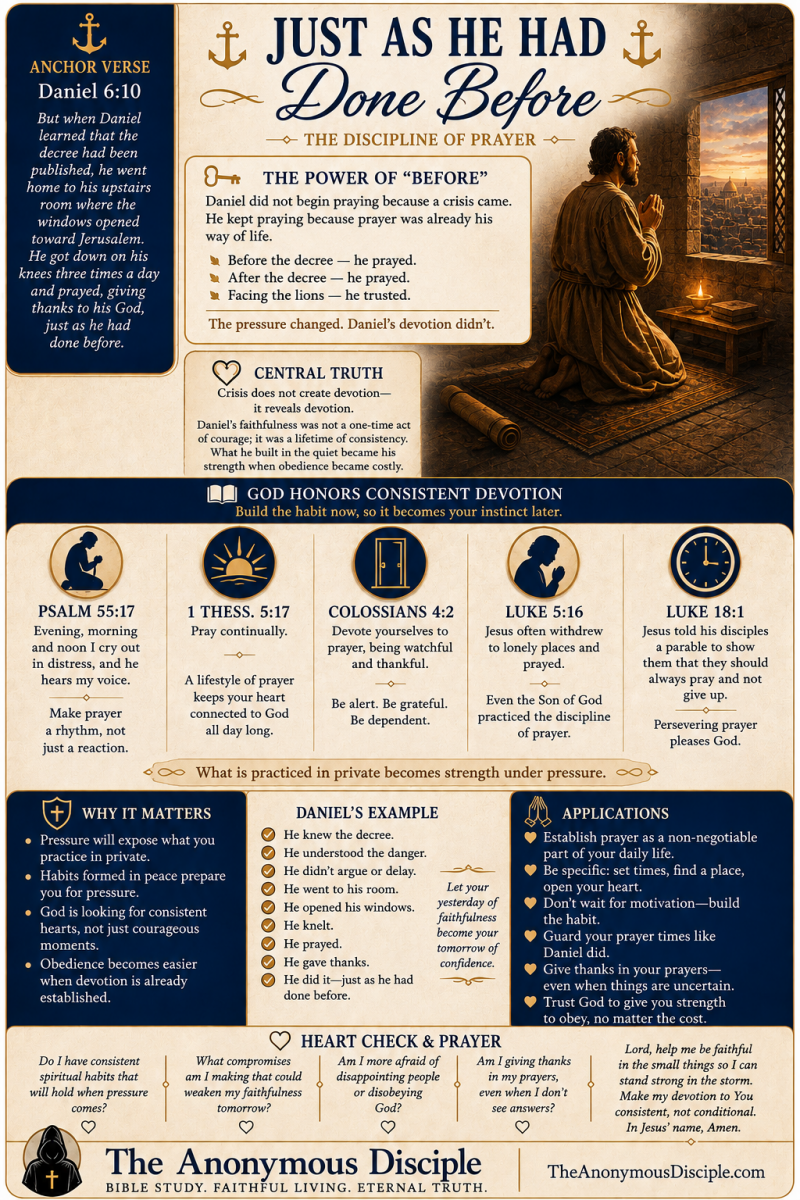
- Just As He Had Done Before card
- Cross References
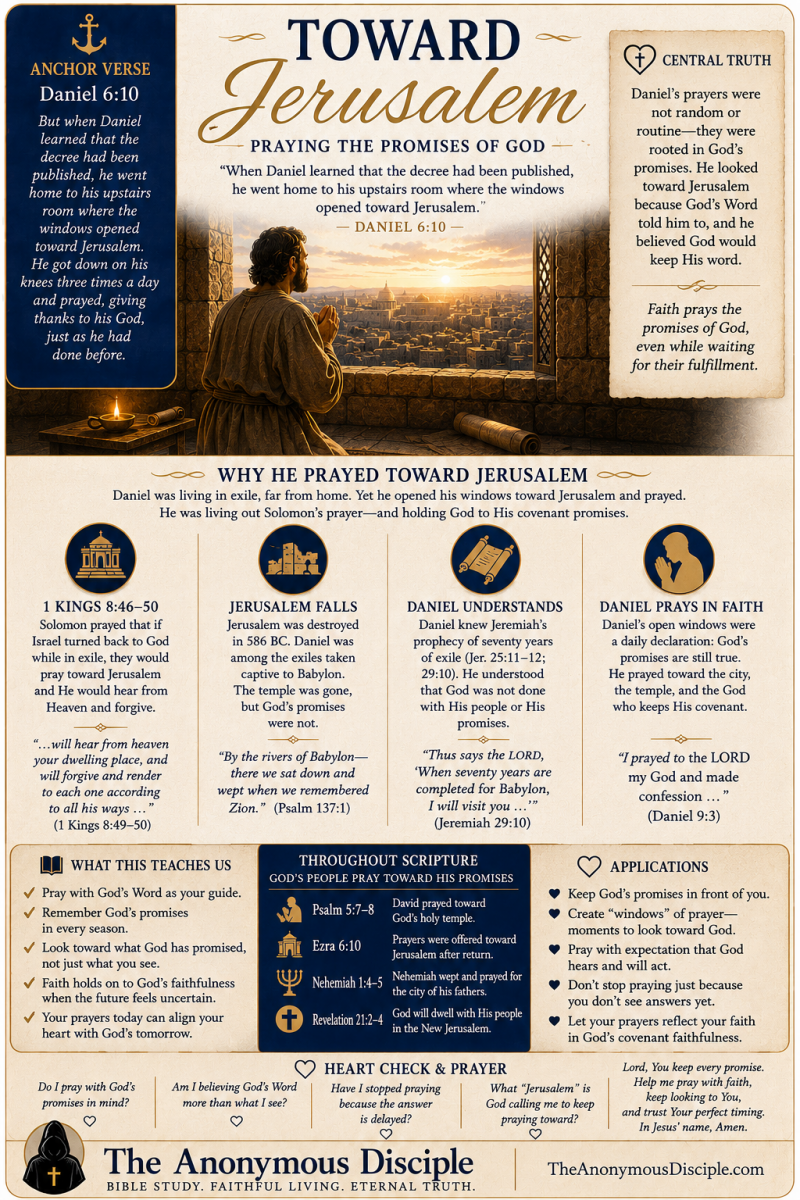
- Toward Jerusalem card
- How It Points To Jesus
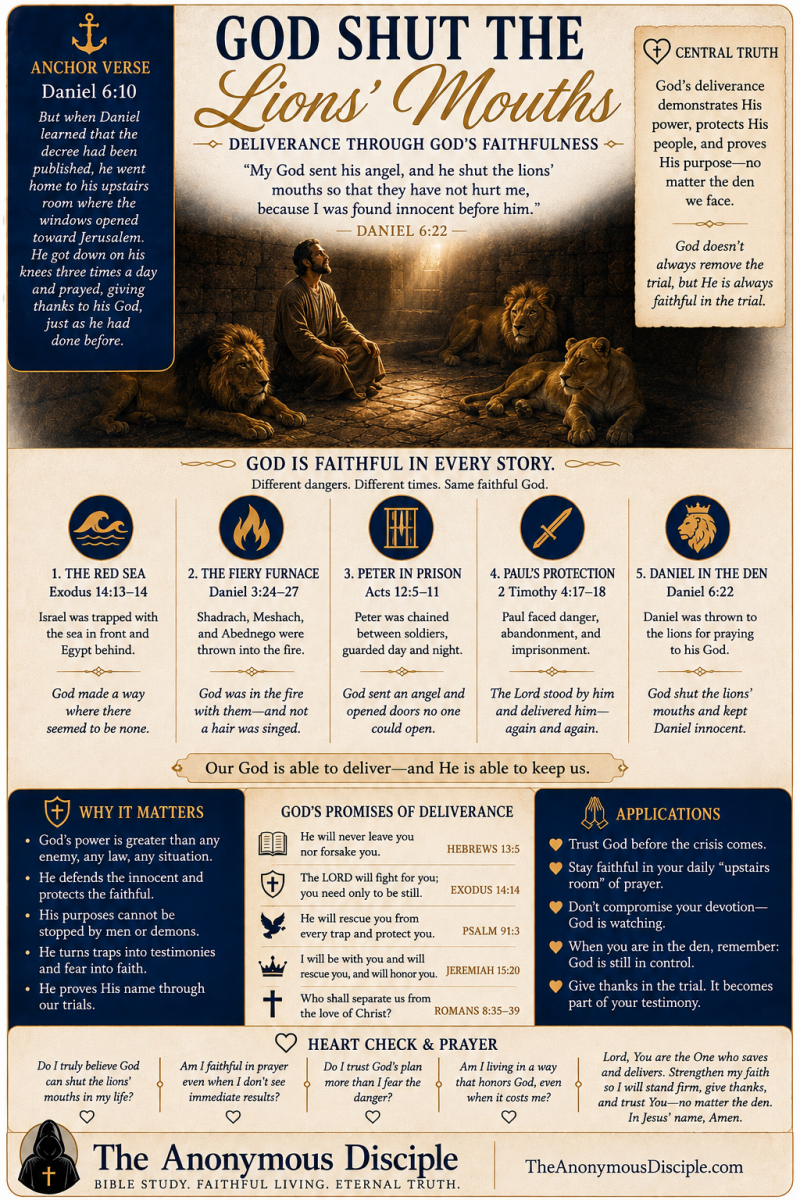
- God Shut The Lions' Mouths card
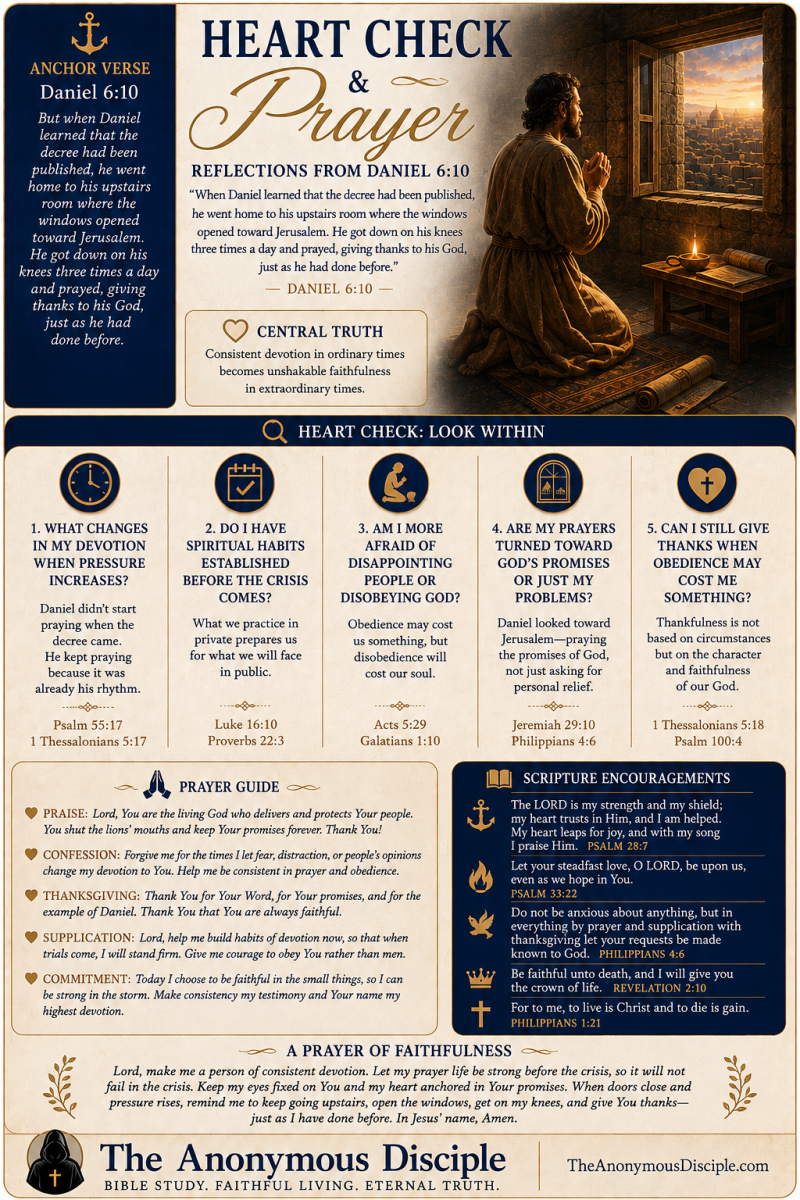
- Heart Check & Prayer (plus pdf)

When and where this is set
The story is placed right after Babylon fell in 539 BC.
For about 70 years, God’s people had been living as captives in a pagan empire. Then a new power took over: the Medes and Persians, led by Cyrus the Great. Daniel is now an old man. He has already served Babylon’s kings. Now he is serving the new government.
That matters. Empires change. God does not. Daniel’s prayer life stays the same under a new flag.
The heart of the history
Daniel 6 is a court story with a pastoral punch:
God’s people can live under a government that does not share their faith.
They can serve well and still be hated.
The state can pass a law that makes ordinary faithfulness look like rebellion.
And still, the living God is able to keep His servant.
Daniel did not need a friendly law to keep praying. He needed a living God. That is the piece of history that still fits our world.
How that government worked
The Persians ran a huge empire by splitting it into regions and putting officials over them. Daniel 6 calls them high officers and administrators. Jealousy in a royal court was normal. A man like Daniel — honest, gifted, and trusted by the king — was a threat to men who wanted power.
Two cultural details in the chapter match the wider Bible world:
1. “The law of the Medes and Persians cannot be changed.”
You see the same idea in Esther. Once a royal decree was signed, the king was not supposed to just take it back. That is why the officials trap Darius. They do not attack Daniel’s work. They get the king to sign something he will later hate, then say, “You can’t undo it.”
2. A sealed stone.
They put a stone over the den and seal it with the king’s seal and the nobles’ seals. That is like locking a door and having several officials stamp the lock. No one can quietly sneak Daniel out and claim “the lions didn’t eat him.” The miracle has to be public.
Interesting cultural notes
Praying toward Jerusalem
Daniel opens his windows toward Jerusalem. That is not random. When Solomon dedicated the temple, he asked God to hear His people when they prayed toward that place, even from a far country (see 2 Chronicles 6). The temple was in ruins by this time. Daniel still faced home. Exile did not cancel covenant.
Three times a day
Psalm 55:17 talks about crying out evening, morning, and noon. Daniel already had a rhythm. The new law did not create his prayer life. It only revealed it. That is why the officials knew where to find him.
Lions
Kings in that world kept lions as symbols of royal power. A “den” was likely a pit or walled enclosure, not a Roman circus. Being thrown to lions was a terror image: the king’s power would swallow you. In this chapter, the king’s lions cannot touch the man God claims.
The king cannot sleep
Darius fasts, refuses entertainment, and spends a miserable night. In that culture a king’s banquet and music were normal. His whole court routine stops. The pagan king is more shaken than the man in the pit.
The accusers and their families
Verse 24 is hard to read. The men who framed Daniel are thrown in with their wives and children. That was how some ancient empires punished treason — the household went down with the plotter. The Bible is reporting what the king did, not teaching us to copy it. The contrast is sharp: the innocent man comes out whole; the trap they built swallows them.
A letter to every nation
Persian kings really did send decrees across many languages and peoples. Darius ends the chapter by telling the empire to fear Daniel’s God. A Jewish exile’s private prayers become a public sermon.




One honest word about this: Daniel is not Jesus, and we should not force every detail to line up. Scripture itself shows a pattern, and then a greater fulfillment.
Daniel was innocent and was pulled out of the place of death.
Jesus was innocent and went into death for us — then God raised Him.
That is why the card calls it “the greater rescue.” Daniel’s story makes us glad God can shut a lion’s mouth. The gospel makes us glad God can open a grave. -𝕏James𝕏
Add comment
Comments