

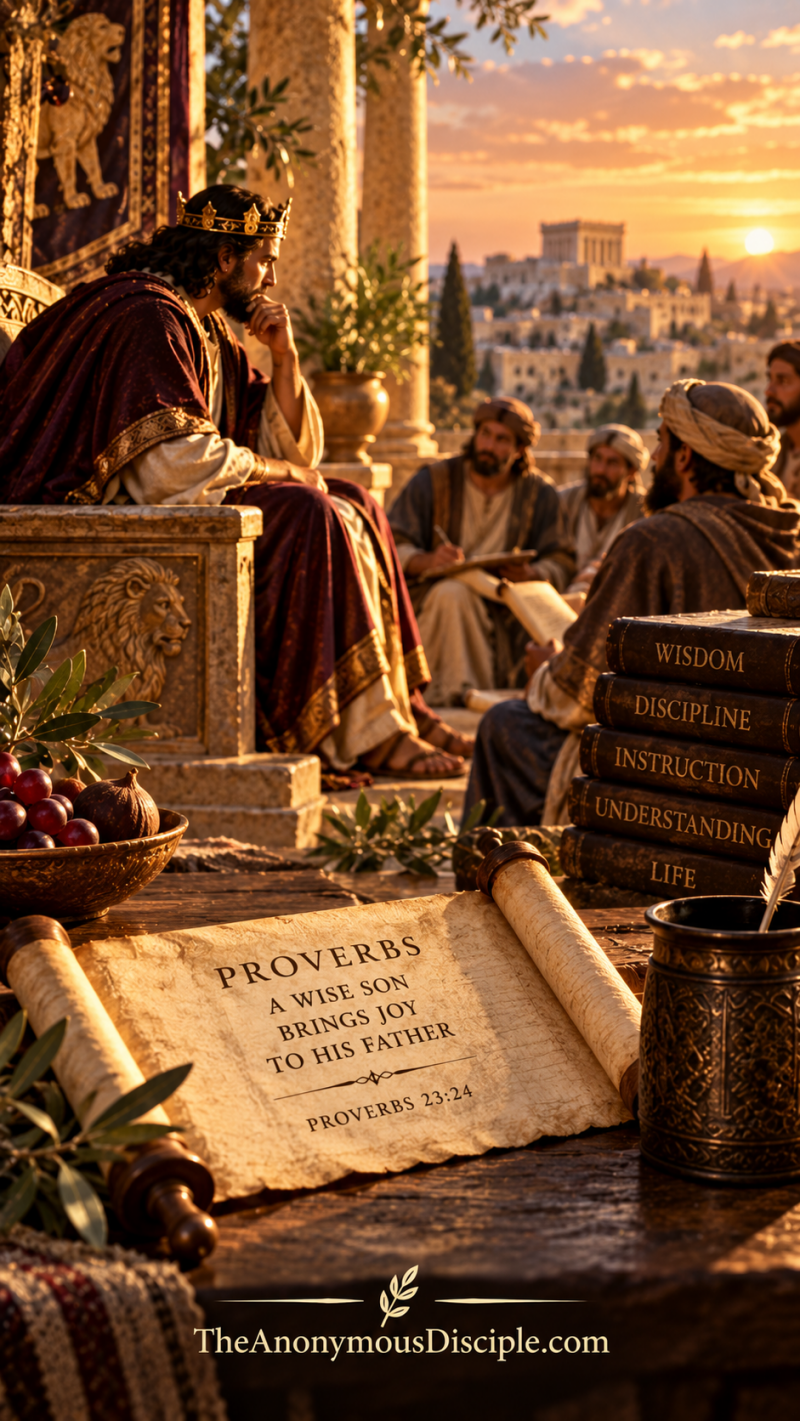
Proverbs 23:1–35 — Give Me Your Heart ❤️
Proverbs 23 is a deeply practical chapter about wisdom, discipline, desire, and the heart. From wealth and food to relationships, sexual temptation, alcohol, parenting, and the pursuit of truth, we are repeatedly warned not to let temporary appetites become our master. Instead, Scripture calls us to receive correction, choose our influences wisely, pursue truth at any cost, and set our hearts on the right path.
At the center of it all is a tender invitation:
Proverbs 23:26 — “My son, give me your heart and let your eyes delight in my ways.”
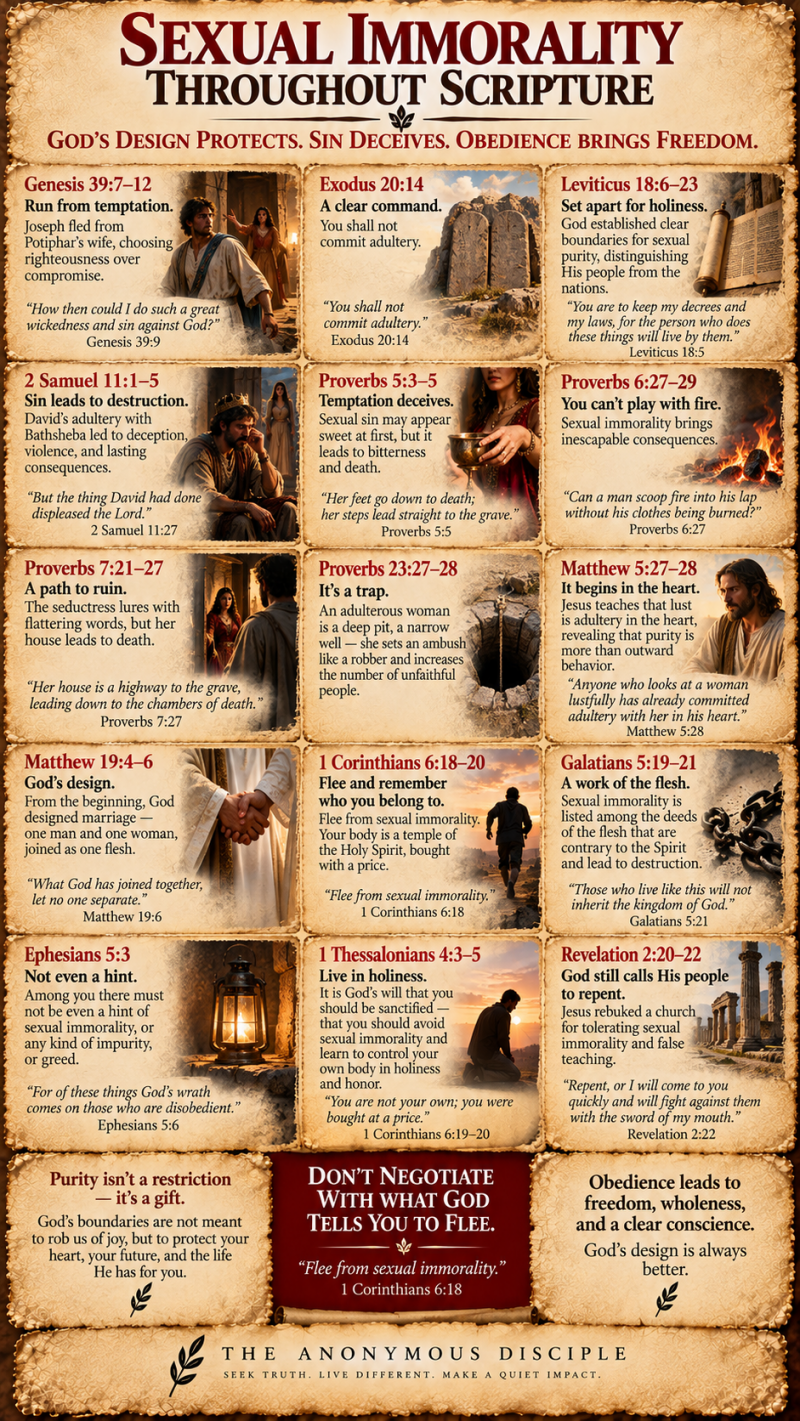
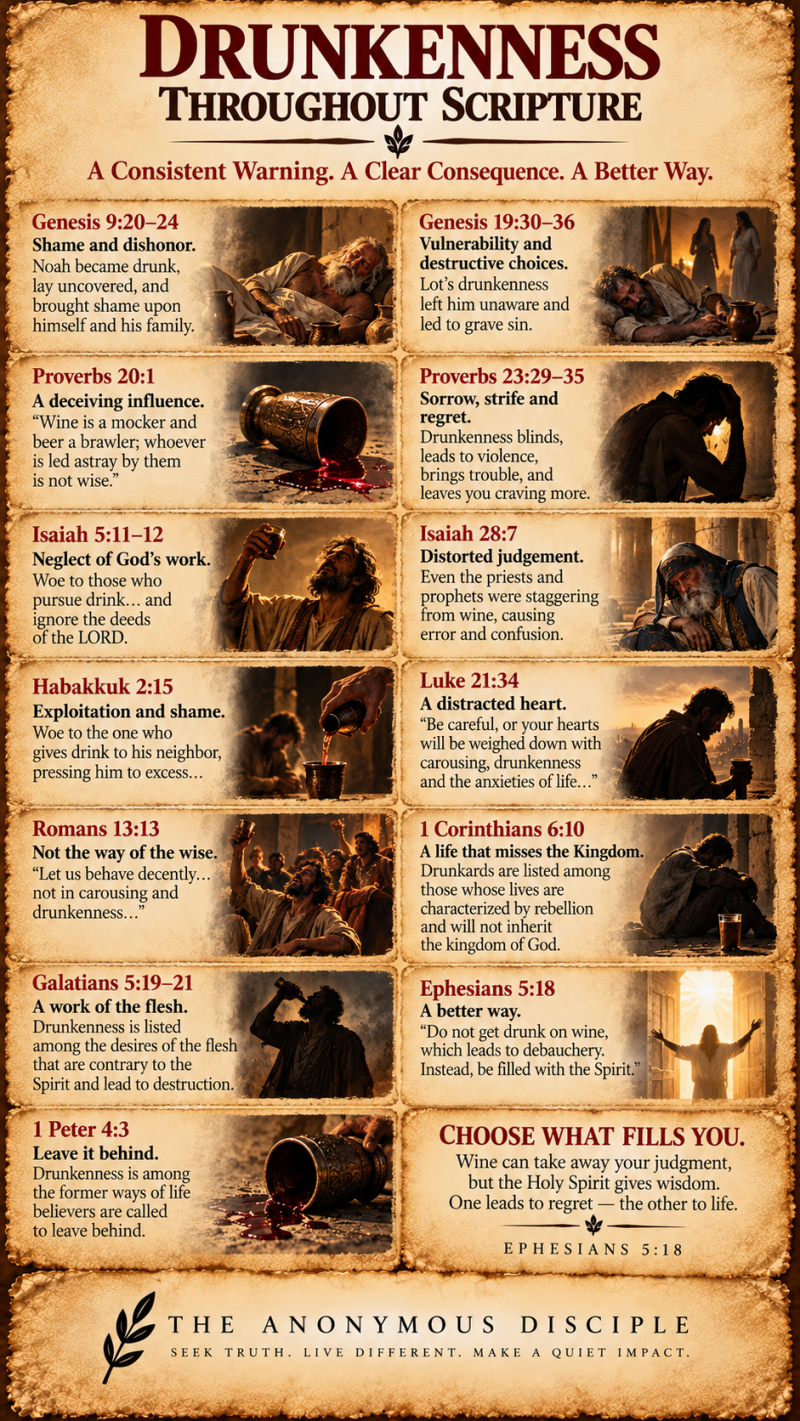
Today we’ll walk through the chapter, follow its warnings about drunkenness and sexual immorality throughout Scripture, and discover a theme woven through it all: wisdom looks beyond what feels good now and considers where the road eventually leads. 🕊️📖
Guard your appetites. Buy the truth. Receive correction. Give God your heart. ❤️⚓️
Proverbs 23 — Cross references + why it fits
1–3 · Self-control at the table
Daniel 1:8 — Daniel would not defile himself with the king’s food.
Psalm 141:4 — Do not let me eat the delicacies of evildoers.
Luke 21:34 — Do not let your heart be weighed down by carousing and worry.
1 Corinthians 9:27 — Discipline your body so you are not disqualified.
4–5 · Riches that fly away
Matthew 6:19–21 — Earthly treasure fades; the heart follows what it stores.
1 Timothy 6:9–10, 17 — The love of money is a trap; do not hope in uncertain wealth.
Hebrews 13:5 — Keep free from the love of money; be content.
Proverbs 27:24 — Riches do not last forever.
6–8 · The stingy host
Proverbs 28:22 — A stingy person chases riches and does not see poverty coming.
Matthew 6:21–23 — Where the treasure is, the heart is.
9 · Don’t waste wisdom on a fool
Matthew 7:6 — Do not throw pearls to those who will trample them.
Proverbs 26:4–5 — Wisdom knows when to speak and when to stay quiet.
10–11 · Boundaries and the fatherless
Proverbs 22:22–23, 28 — Do not exploit the poor; the Lord takes up their case.
Deuteronomy 19:14; 27:17 — Do not move your neighbor’s boundary stone.
Psalm 68:5 — God is a father to the fatherless.
Exodus 22:22–24 — Do not take advantage of the widow or the fatherless.
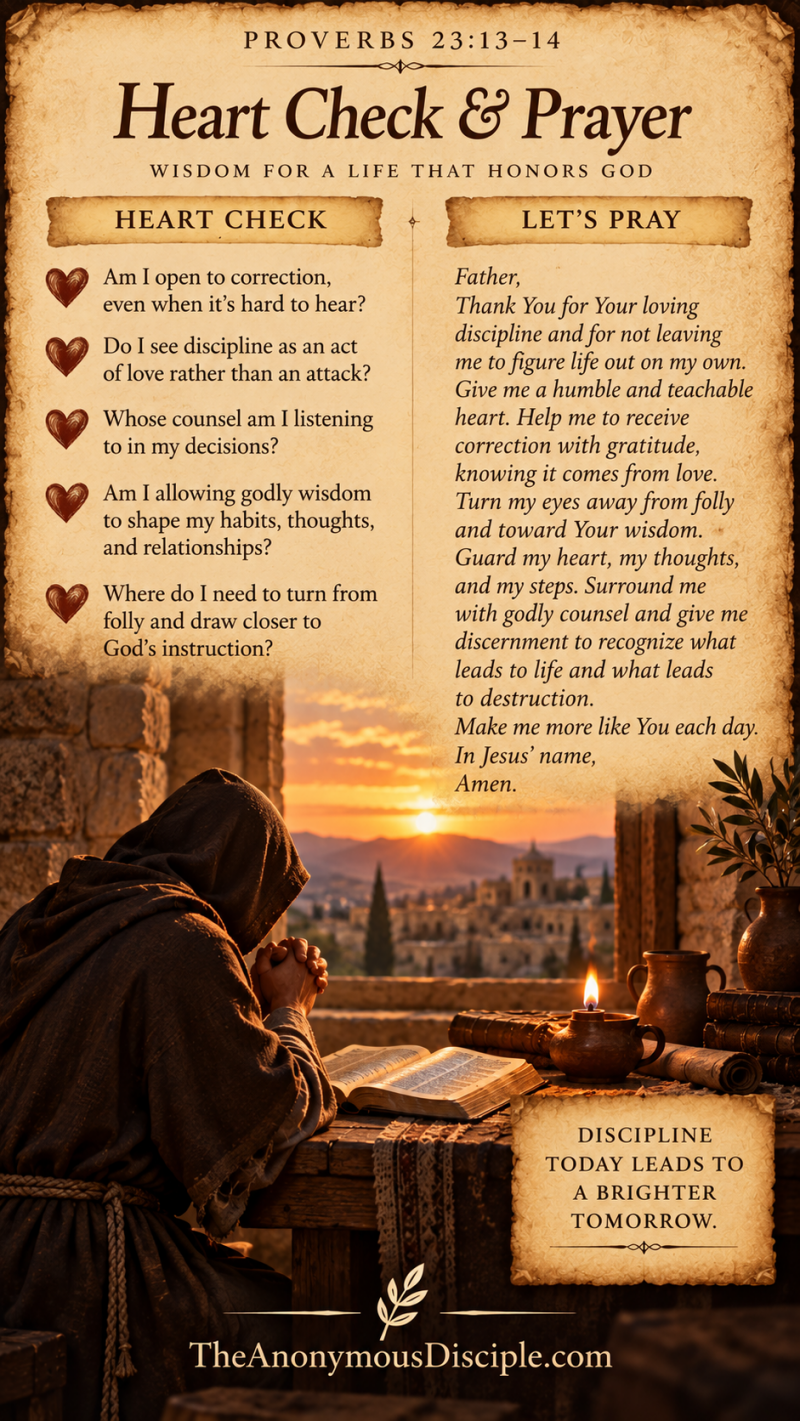
12–16 · Instruction, discipline, a parent’s joy
Proverbs 13:24; 19:18; 22:15 — Loving parents discipline their children.
Hebrews 12:5–11 — The Lord disciplines those He loves.
Proverbs 10:1; 15:20 — A wise son brings joy to his father.
17–18 · Don’t envy sinners; fear the Lord
Psalm 37:1–2 — Do not fret because of evildoers.
Psalm 73 — Envy of the wicked fades in God’s presence.
Proverbs 24:1, 19–20 — The evildoer has no future.
Jeremiah 29:11 — God gives a hope and a future.
Proverbs 10:28; 24:14 — The righteous have a sure hope.
19–21 · Drunkards and gluttons
Proverbs 20:1 — Wine is a mocker.
Isaiah 5:11, 22 — Woe to those who chase drink.
Ephesians 5:18 — Do not get drunk; be filled with the Spirit.
Romans 13:13 — Live decently, not in drunkenness.
22–25 · Honor parents; buy truth
Exodus 20:12 — Honor your father and mother.
Ephesians 6:1–3 — The first command with a promise.
Proverbs 4:5–7; 16:16 — Get wisdom; it is better than gold.
26–28 · Give God your heart
Proverbs 4:23 — Guard your heart; life flows from it.
Deuteronomy 6:5 — Love the Lord with all your heart.
Proverbs 5; 6:26; 7; 22:14 — Sexual sin is a pit.
29–35 · The bite of wine
Isaiah 5:11, 22 — Woe to those who run after strong drink.
Ephesians 5:18 — Drunkenness leads to ruin.
1 Corinthians 6:10; Galatians 5:21 — Drunkards will not inherit the kingdom.
Luke 21:34 — Do not let drunkenness weigh down your heart.
Three verses to keep at the center
Proverbs 22:19 — These sayings are given so your trust may be in the Lord.
Proverbs 23:17–18 — Do not envy sinners; fear the Lord; your hope will not be cut off.
Proverbs 4:23 — Guard your heart.
Proverbs 23 (KJV)
1 When thou sittest to eat with a ruler, consider diligently what is before thee:
2 And put a knife to thy throat, if thou be a man given to appetite.
3 Be not desirous of his dainties: for they are deceitful meat.
4 Labour not to be rich: cease from thine own wisdom.
5 Wilt thou set thine eyes upon that which is not? for riches certainly make themselves wings; they fly away as an eagle toward heaven.
6 Eat thou not the bread of him that hath an evil eye, neither desire thou his dainty meats:
7 For as he thinketh in his heart, so is he: Eat and drink, saith he to thee; but his heart is not with thee.
8 The morsel which thou hast eaten shalt thou vomit up, and lose thy sweet words.
9 Speak not in the ears of a fool: for he will despise the wisdom of thy words.
10 Remove not the old landmark; and enter not into the fields of the fatherless:
11 For their redeemer is mighty; he shall plead their cause with thee.
12 Apply thine heart unto instruction, and thine ears to the words of knowledge.
13 Withhold not correction from the child: for if thou beatest him with the rod, he shall not die.
14 Thou shalt beat him with the rod, and shalt deliver his soul from hell.
15 My son, if thine heart be wise, my heart shall rejoice, even mine.
16 Yea, my reins shall rejoice, when thy lips speak right things.
17 Let not thine heart envy sinners: but be thou in the fear of the LORD all the day long.
18 For surely there is an end; and thine expectation shall not be cut off.
19 Hear thou, my son, and be wise, and guide thine heart in the way.
20 Be not among winebibbers; among riotous eaters of flesh:
21 For the drunkard and the glutton shall come to poverty: and drowsiness shall clothe a man with rags.
22 Hearken unto thy father that begat thee, and despise not thy mother when she is old.
23 Buy the truth, and sell it not; also wisdom, and instruction, and understanding.
24 The father of the righteous shall greatly rejoice: and he that begetteth a wise child shall have joy of him.
25 Thy father and thy mother shall be glad, and she that bare thee shall rejoice.
26 My son, give me thine heart, and let thine eyes observe my ways.
27 For a whore is a deep ditch; and a strange woman is a narrow pit.
28 She also lieth in wait as for a prey, and increaseth the transgressors among men.
29 Who hath woe? who hath sorrow? who hath contentions? who hath babbling? who hath wounds without cause? who hath redness of eyes?
30 They that tarry long at the wine; they that go to seek mixed wine.
31 Look not thou upon the wine when it is red, when it giveth his colour in the cup, when it moveth itself aright.
32 At the last it biteth like a serpent, and stingeth like an adder.
33 Thine eyes shall behold strange women, and thine heart shall utter perverse things.
34 Yea, thou shalt be as he that lieth down in the midst of the sea, or as he that lieth upon the top of a mast.
35 They have stricken me, shalt thou say, and I was not sick; they have beaten me, and I felt it not: when shall I awake? I will seek it yet again.
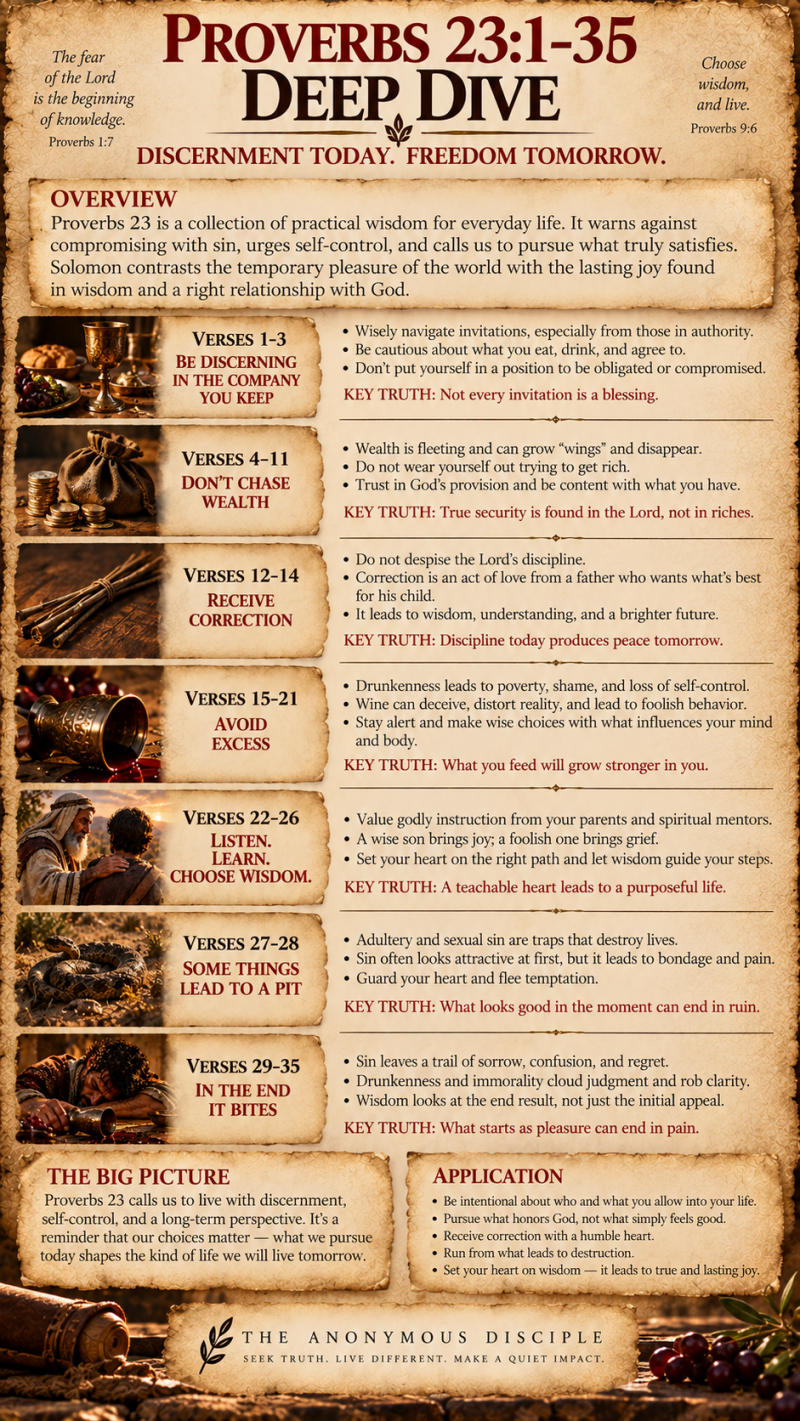
Here is the passage in simple, faithful language so you can study it:
When you sit down to eat with a ruler, look carefully at what is set in front of you. If you are a person who loves to eat, put a knife to your own throat—don’t let your appetite run wild. Do not crave his fancy foods; they are deceptive. Do not work yourself to death trying to get rich; be wise enough to stop. The moment your eyes light on wealth, it is gone. It suddenly grows wings and flies away like an eagle toward heaven.
Do not eat the bread of a stingy man, and do not desire his delicacies. He is the kind of person who is calculating inside. “Eat and drink!” he says to you, but his heart is not with you. You will vomit up the bites you have eaten and waste your pleasant words.
Do not speak in the hearing of a fool, because he will despise the good sense of your words. Do not move an ancient landmark or go into the fields of the fatherless. Their Redeemer is strong; He will plead their cause against you.
Apply your heart to instruction and your ear to words of knowledge. Do not withhold discipline from a child. If you strike him with the rod, he will not die. If you strike him with the rod, you will save his soul from Sheol (the grave / the place of the dead).
My son, if your heart is wise, my heart too will be glad. My inmost being will rejoice when your lips speak what is right. Do not let your heart envy sinners, but continue in the fear of the Lord all day long. Surely there is a future, and your hope will not be cut off.
That covers verses 1–18 in everyday words. If you want the same stretch in NIV next, or a short verse-by-verse explanation of any part, just say so.
Listen, my son, and be wise. Keep your heart on the right path. Do not join those who drink too much wine or those who stuff themselves with meat. A drunkard and a glutton will become poor, and sleepiness will dress a person in rags.
Listen to your father who gave you life, and do not despise your mother when she is old. Buy truth—and do not sell it. Also buy wisdom, instruction, and understanding. The father of a righteous person will greatly rejoice, and the one who fathers a wise child will have joy in him. Let your father and mother be glad; let her who bore you rejoice.
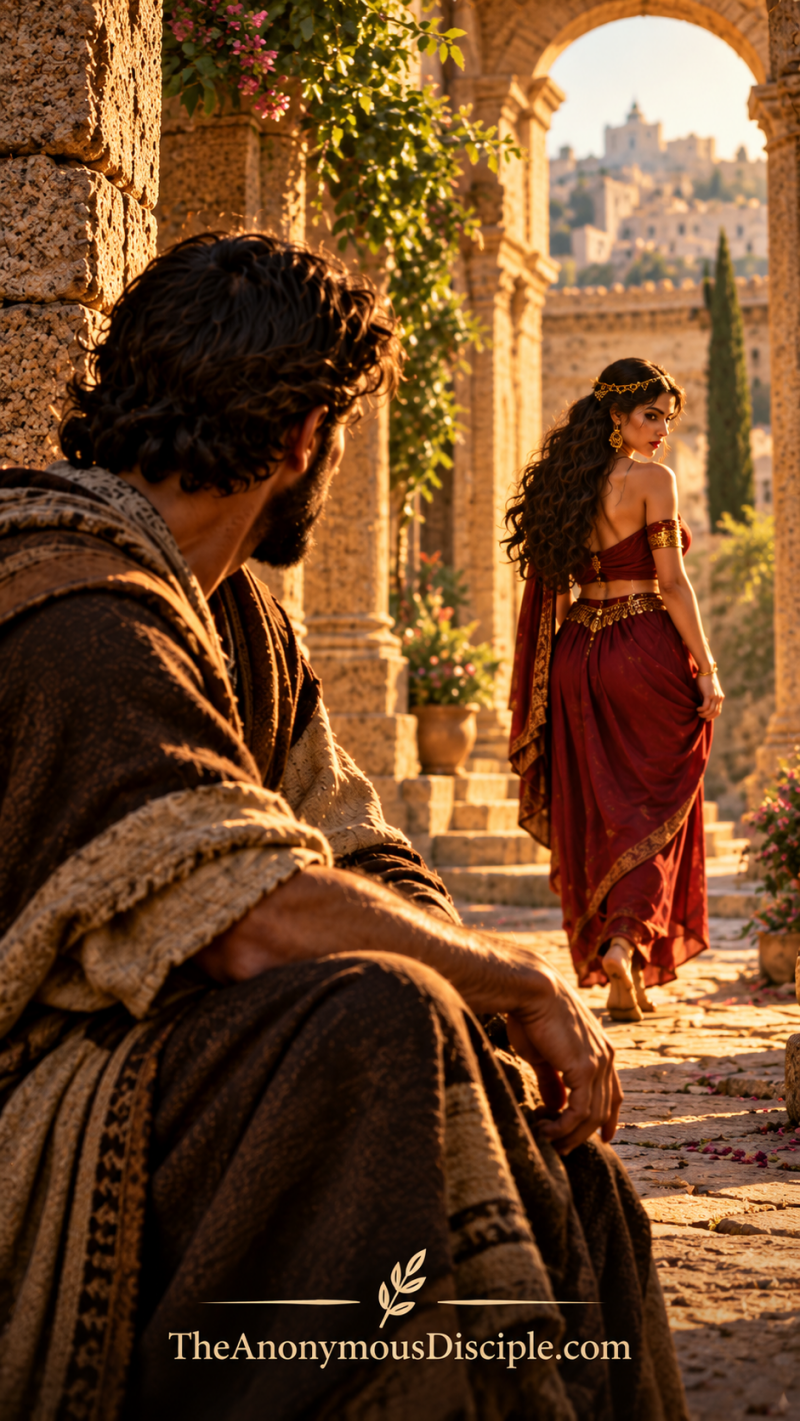
My son, give me your heart, and let your eyes watch my ways. A prostitute is a deep pit, and an immoral woman is a narrow well. She lies in wait like a robber and increases the number of unfaithful people.
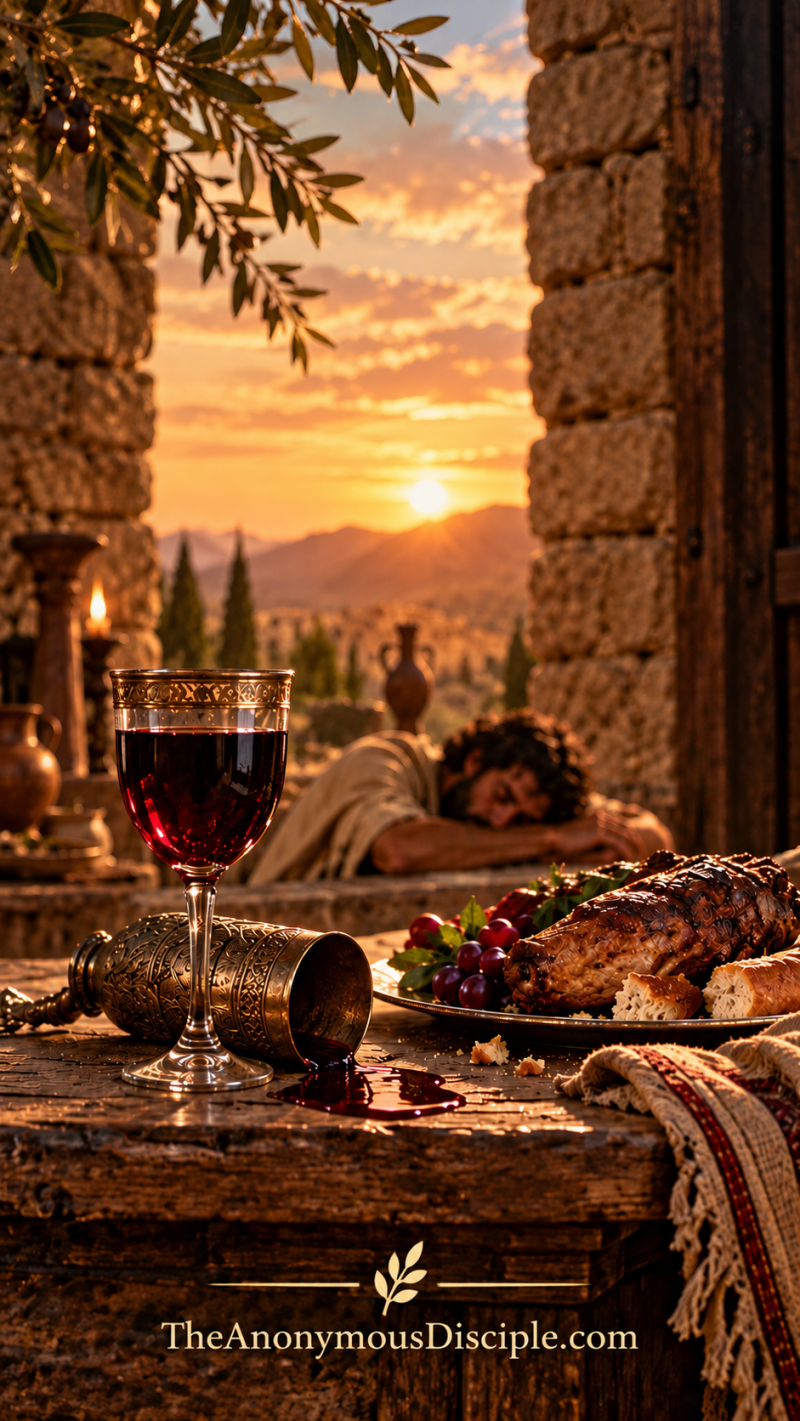
Who has woe? Who has sorrow? Who has fights? Who has complaints? Who has wounds for no reason? Who has red eyes? Those who linger over wine, those who go looking for mixed wine. Do not look at wine when it is red, when it sparkles in the cup and goes down smoothly. In the end it bites like a snake and stings like a viper. Your eyes will see strange things, and your heart will speak twisted things. You will be like someone lying in the middle of the sea, or like someone lying on the top of a ship’s mast. “They hit me, but I didn’t feel it. They beat me, but I didn’t know it. When will I wake up so I can have another drink?”

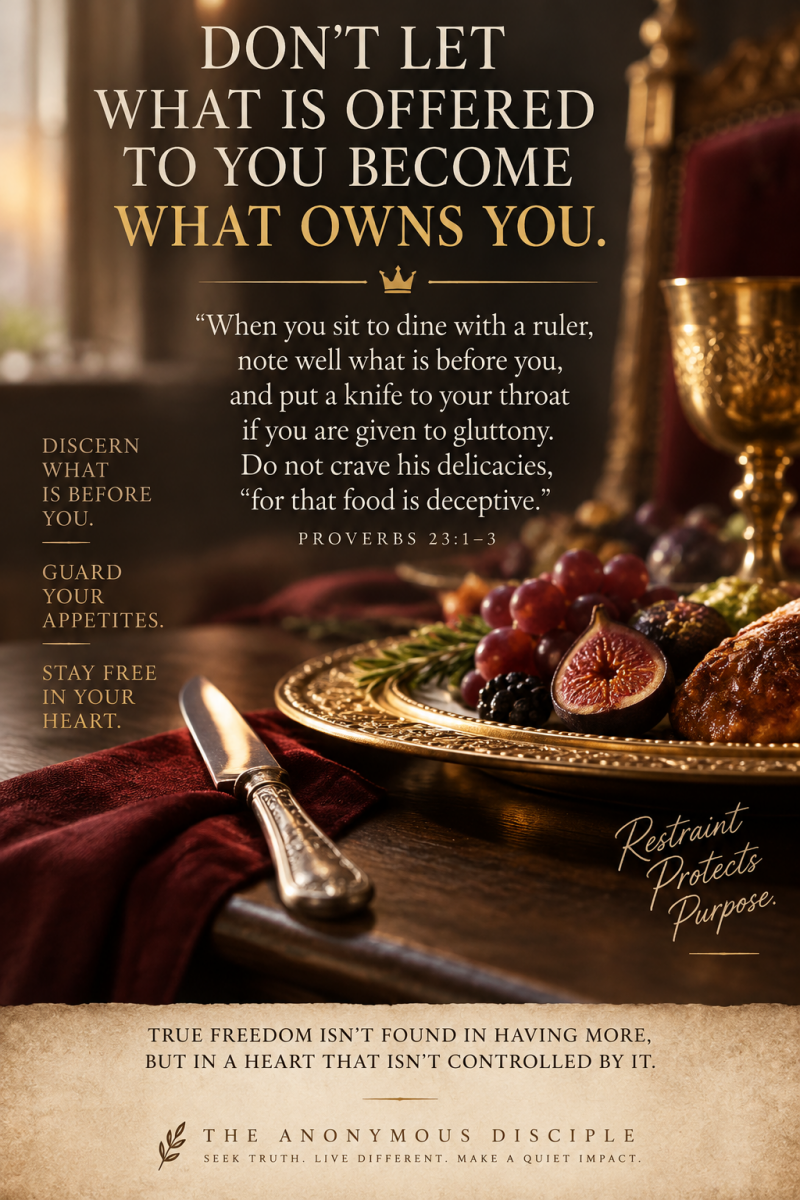
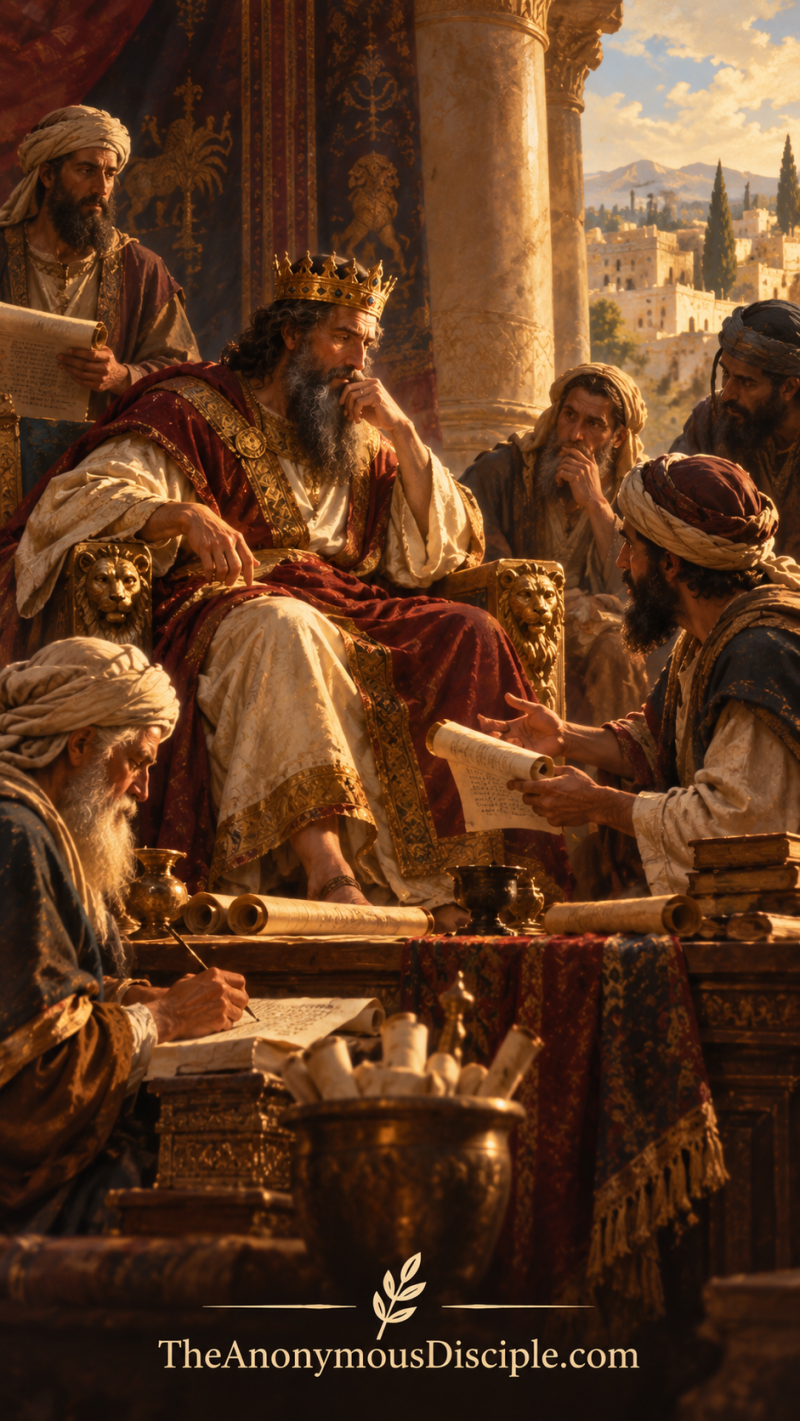
When you sit with someone powerful, watch yourself. Fancy food can be a trap.
Why it matters: If you live for appetite or for impressing important people, your trust slides off the Lord and onto men and meals.
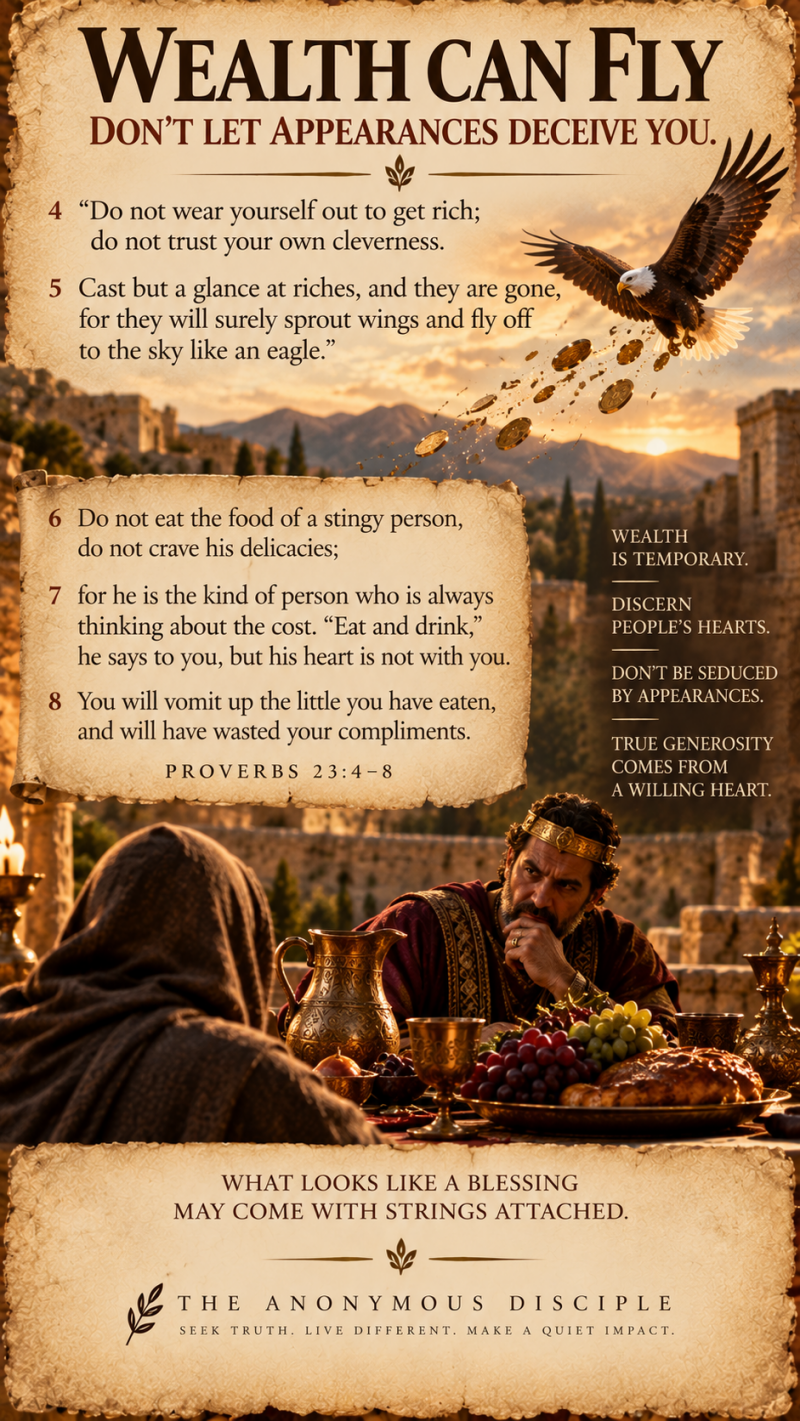
Do not wear yourself out getting rich. Wealth grows wings and flies away.
Why it matters: Riches feel solid, but they are not. The Lord is. Chasing money trains your heart to trust what disappears.
Do not eat with a stingy person who is counting the cost while he smiles. You will regret it.
Why it matters: A false friend can pull you into their small, grasping spirit. Wisdom keeps you from tying your heart to someone whose heart is not with you—or with God.
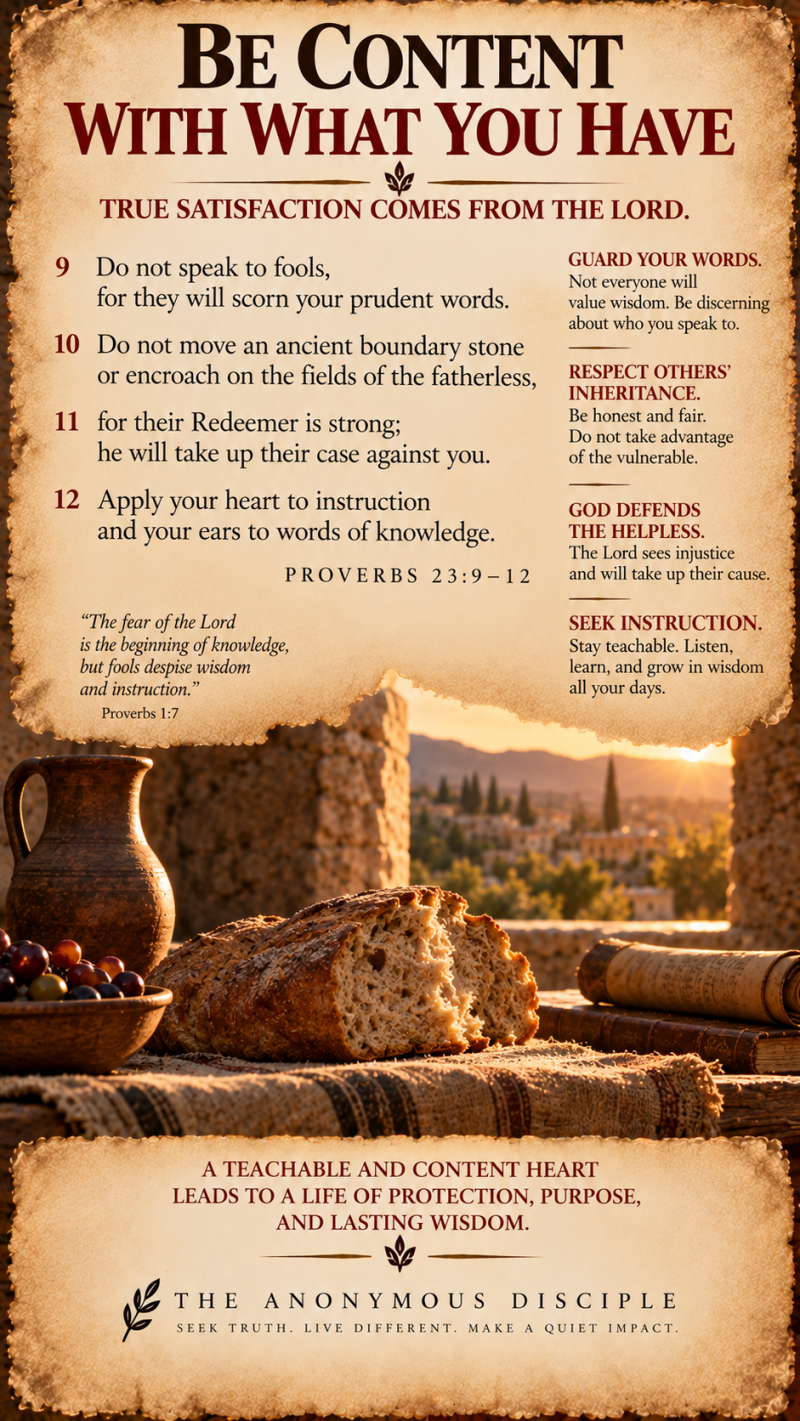
Do not waste wise words on a fool.
Why it matters: Fools despise wisdom. Pouring truth into closed ears drains you and does not honor the Lord who gave the truth.
Do not move old boundary lines or take from orphans. Their Redeemer is strong.
Why it matters: God Himself defends the weak. If you cheat them, you are not just hurting people—you are picking a fight with the Lord.
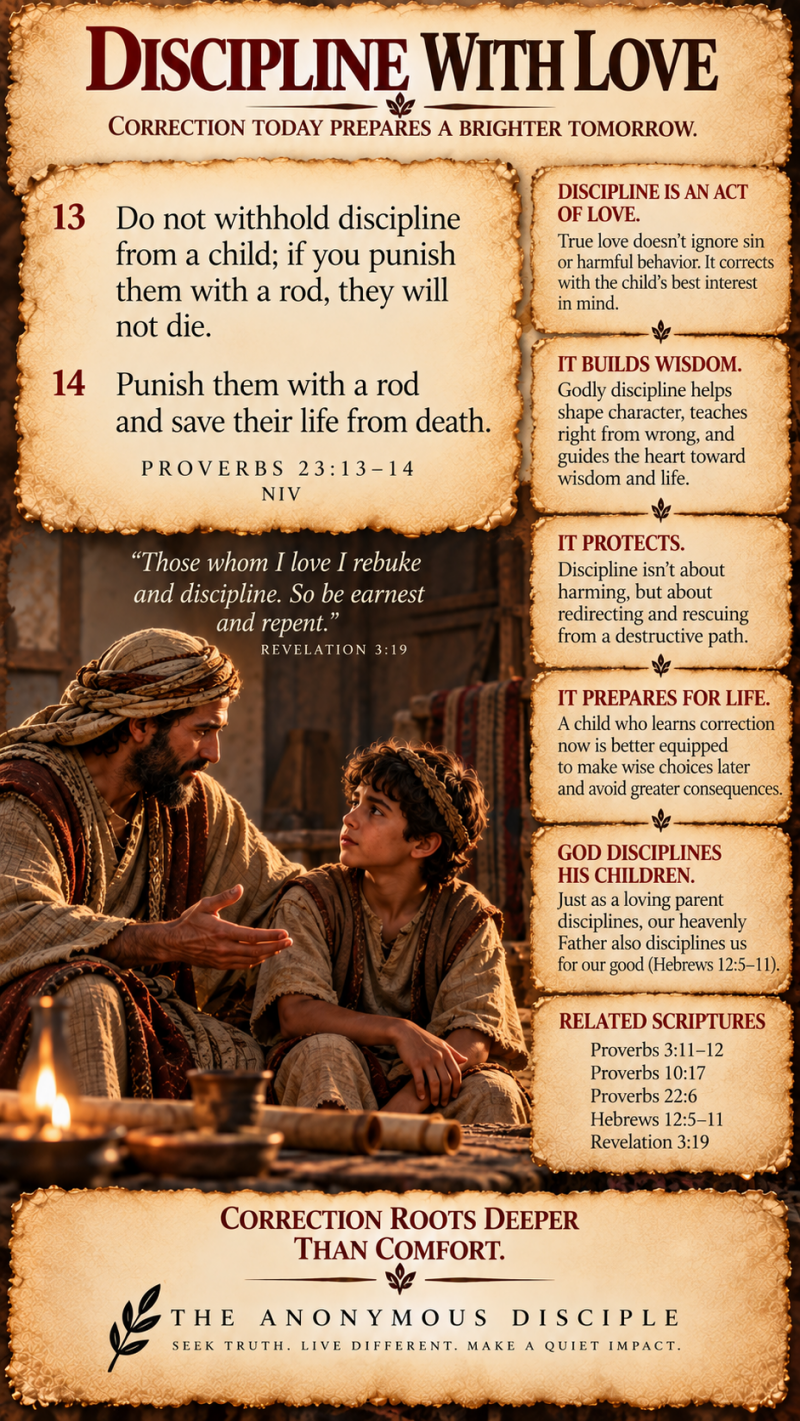
Give yourself to instruction. Do not withhold needed discipline from a child; it can rescue his life.
Why it matters: Wisdom and loving correction are how a soul is pulled off the path to ruin. This is part of fearing the Lord in the home.
A parent’s heart rejoices when a child’s heart is wise and the lips speak what is right.
Why it matters: Wisdom is not only personal. It blesses the people who love you. A wise life honors God and brings joy to those He put over you.

Do not envy sinners. Fear the Lord all day long. Then you will have a future, and your hope will not be cut off.
Why it matters: This is the hinge of the first half. Sinners can look like they are winning. They are not. The fear of the Lord is the safe path, and hope belongs to those who stay on it.
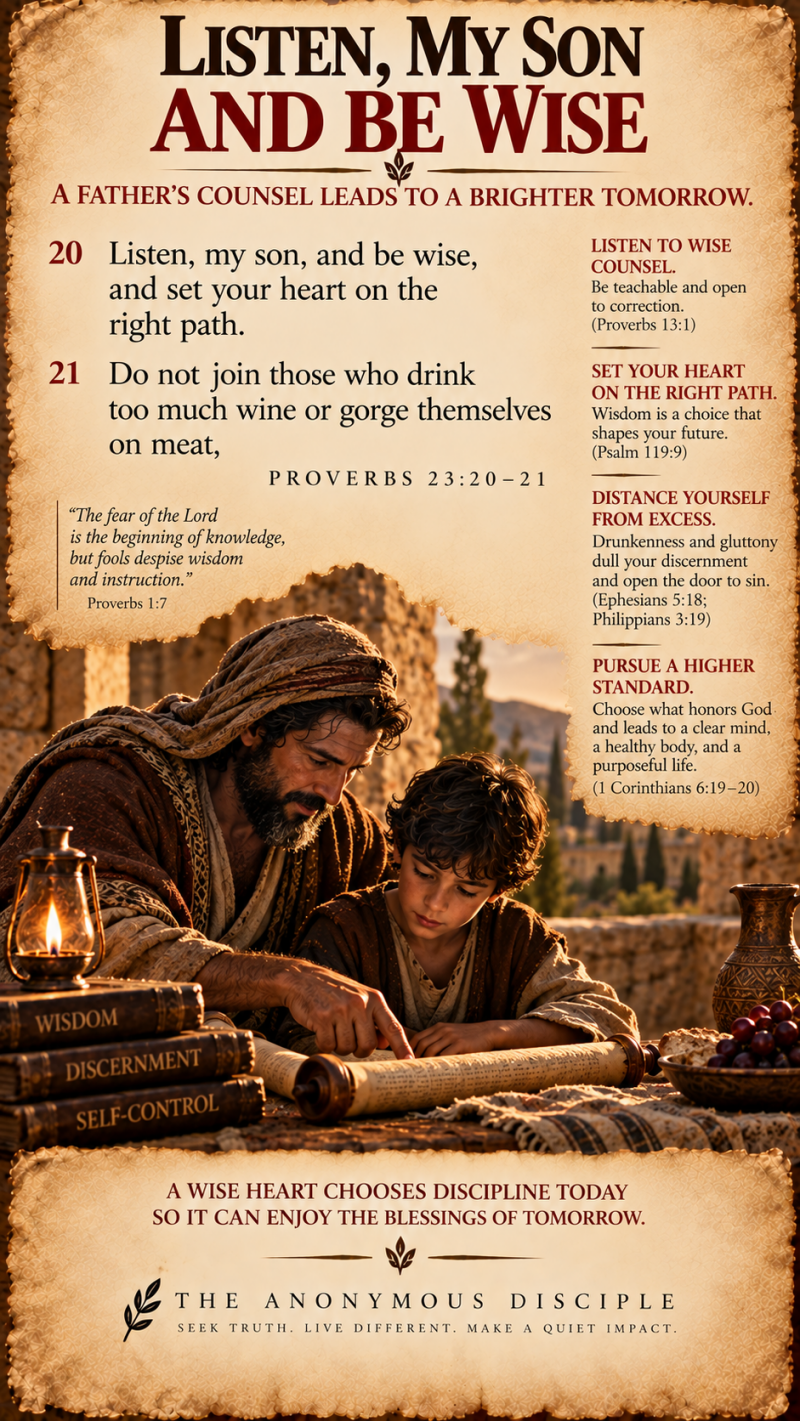
Listen, be wise, keep your mind on the right course. Do not run with heavy drinkers and gluttons. They end in poverty and rags.
Why it matters: The people you walk with shape you. Drunkenness and greed make a person poor in more ways than money. They dull the fear of the Lord.
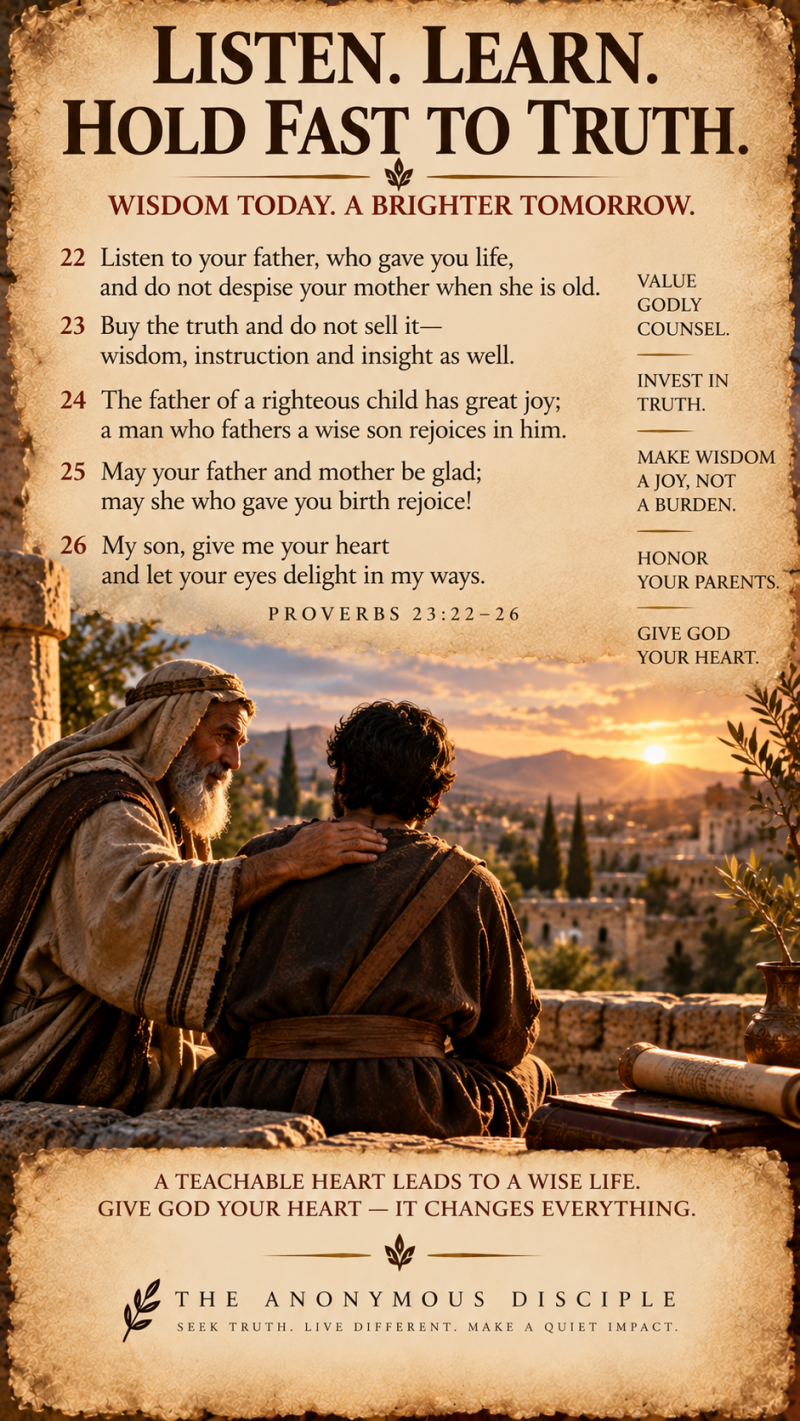
Listen to your father. Do not despise your mother when she is old. Buy truth—and do not sell it. Wisdom in a child makes parents glad.
Why it matters: Honoring parents and holding onto truth is how wisdom stays in a family. Selling truth for pleasure, money, or ease is how a heart leaves the Lord.
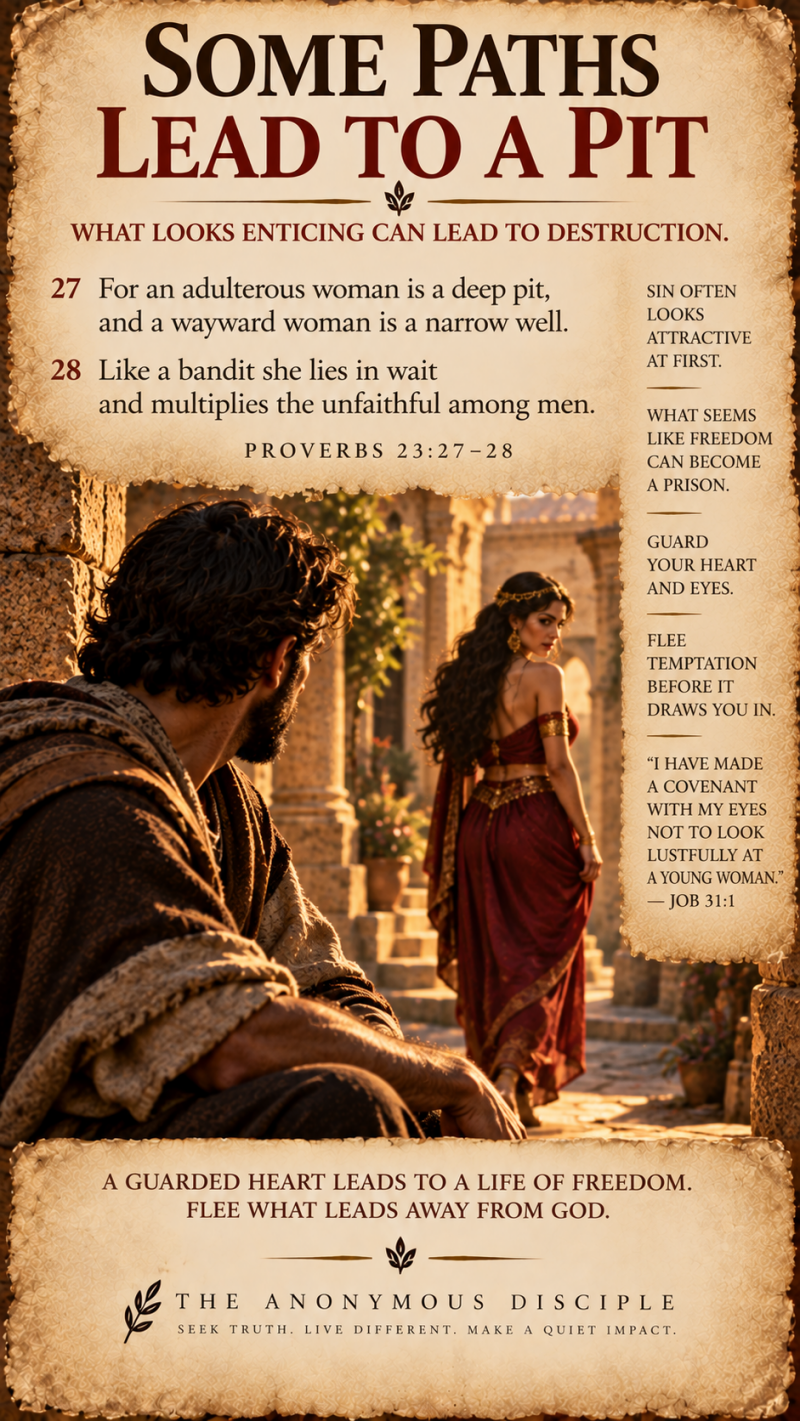
Give me your heart. Watch my ways. Sexual sin is a deep pit. It lies in wait and multiplies unfaithful people.
Why it matters: God does not want half a heart. Immorality does not just “happen.” It ambushes, and it pulls more people down with it. Giving the Lord your heart is the only safe place.

Who has woe, sorrow, fights, wounds, and red eyes? Those who linger over wine. It looks beautiful in the cup, then it bites like a snake. The drunk person sees strange things, talks nonsense, feels no pain from the beating, and still wants another drink.
Why it matters: This is the chapter’s strongest warning. Wine promises ease and ends in bondage. A person can be so numb they do not even know they are being destroyed—and they go back for more. That is the opposite of fearing the Lord and trusting Him.
Deep Dive study notes
𝕏James𝕏-
Who wrote it?
The book as a whole is mainly tied to King Solomon, David’s son. The Bible itself says that (Proverbs 1:1; 10:1; 25:1). God gave Solomon unusual wisdom (1 Kings 3–4), and he spoke thousands of proverbs.
Chapter 23 sits in a section titled “the words of the wise” (Proverbs 22:17–24:22). That means this chapter was collected from wise teachers—possibly men in Solomon’s court, or older wisdom Solomon gathered and shaped. We are not given one personal name for chapter 23 the way we are for Solomon, Agur, or Lemuel later in the book. The safest, most honest way to say it: Solomon is the main figure behind Proverbs, and chapter 23 comes from the circle of the wise whose sayings he (or later editors) preserved.
When?
Solomon reigned about 970–931 B.C. Most of this material belongs to that time, or a little before/after as wisdom was collected. The whole book was probably gathered into its present shape later—some think by the time of King Hezekiah (around 715–686 B.C.), whose men copied more of Solomon’s proverbs (25:1).
Where?
Jerusalem, in Israel. This is court and household wisdom from the capital, not a letter written from another country.
To which audience?
It is written as a father speaking to “my son.” Originally that meant young men—especially sons being trained for life, work, and sometimes royal or official service. Mothers are honored too (23:22, 25). The wider audience is anyone in Israel who wants to live wisely: the simple, the young, and even people who are already wise and want to grow (1:4–5). It still speaks to us the same way.
Why?
The purpose is stated near the start of this section: so that your trust may be in the Lord (22:19), and so you will know how to live well.
Chapter 23 itself is practical and pointed. It warns you:
- not to lose self-control around powerful or stingy people
- not to chase riches that fly away
- not to envy sinners
- to receive instruction and discipline
- to honor father and mother
- to give God your heart
- to stay away from sexual immorality and from drunkenness
In short: it was written to train a young person (and all of us) to fear the Lord, choose wisdom, and avoid paths that ruin a life.
Some scholars notice that parts of 22:17–23:11 sound similar to an older Egyptian wisdom writing called the Instruction of Amenemope. That is possible—wisdom traveled in the ancient world. What makes Proverbs different is the center: these sayings are not just clever advice. They are meant to lead you to trust the Lord.
🪄Jenny🪄-
Proverbs 23 is loaded. It reads almost like a father sitting across the table saying, “Child, guard your heart—because what you desire will eventually steer your life.”
And I think there’s a thread running through the whole chapter that’s easy to miss: appetite. Appetite for food, wealth, approval, pleasure, envy, sex, alcohol—and then, beautifully, an appetite for wisdom and truth.
📖 Proverbs 23:1–35 — Guard Your Appetites
🍽️ Proverbs 23:1–3 — The ruler’s table
Proverbs 23:1–3 — “When you sit to dine with a ruler, note well what is before you, and put a knife to your throat if you are given to gluttony. Do not crave his delicacies, for that food is deceptive.” — NIV
“Put a knife to your throat” is deliberately shocking wisdom-language. It isn't an instruction to harm yourself; it's hyperbole meaning exercise serious restraint.
And notice where this happens: at the table of someone powerful.
The warning isn't merely about overeating. The ruler's delicacies may come with strings attached. Don't become so dazzled by what someone powerful can give you that your appetite compromises your judgment.
Principle: Don't let what is offered to you become what owns you.
💰 Proverbs 23:4–5 — Wealth grows wings
Proverbs 23:4–5 — “Do not wear yourself out to get rich; do not trust your own cleverness. Cast but a glance at riches, and they are gone, for they will surely sprout wings and fly off to the sky like an eagle.” — NIV
I love the imagery. 😂
💵 → 🪽 → 🦅
Solomon isn't condemning work, saving, or prosperity. He's warning against making wealth the object of life.
Money feels solid.
God says, Look again.
It can disappear astonishingly quickly.
Compare Jesus:
Matthew 6:19–21 — “Do not store up for yourselves treasures on earth... But store up for yourselves treasures in heaven... For where your treasure is, there your heart will be also.”
There's our heart again.
👀 Proverbs 23:6–8 — Don't eat the stingy person's food
This section warns about accepting hospitality from someone whose heart isn't actually generous.
Proverbs 23:7 — “For he is the kind of person who is always thinking about the cost. ‘Eat and drink,’ he says to you, but his heart is not with you.” — NIV
His mouth says:
“Please, have some!”
His heart says:
“Do you know how much that cost me?” 😒
😂
Biblical hospitality isn't merely putting food on the table. God cares about the heart behind the gift.
🗣️ Proverbs 23:9 — Don't waste wisdom
Proverbs 23:9 — “Do not speak to fools, for they will scorn your prudent words.”
This doesn't mean never speak truth to foolish people.
It means wisdom includes recognizing when someone isn't interested in receiving wisdom.
There is an interesting echo later in:
Matthew 7:6 — “Do not give dogs what is sacred; do not throw your pearls to pigs...”
Sometimes faithfulness means speaking.
Sometimes wisdom means realizing the conversation isn't going anywhere.
⚖️ Proverbs 23:10–11 — God defends the vulnerable
Proverbs 23:10–11 — “Do not move an ancient boundary stone or encroach on the fields of the fatherless, for their Defender is strong; he will take up their case against you.”
This is much bigger than property surveying.
Boundary stones established inherited land. Moving one could quietly steal someone's property.
And stealing from the fatherless was especially wicked because they might have no powerful male advocate to defend their legal interests.
But God says essentially:
They have an Advocate.
❤️
“their Defender is strong.”
The Hebrew idea behind Defender here is related to go'el—a kinsman-redeemer, one who takes up another's cause.
The vulnerable person may look defenseless.
God does not consider them defenseless.
❤️ Proverbs 23:12 — THE PIVOT
Proverbs 23:12 — “Apply your heart to instruction and your ears to words of knowledge.”
There it is.
Not merely:
Learn something.
But:
APPLY YOUR HEART.
Biblical wisdom isn't information stored in the brain.
It's truth allowed to reshape the heart.
And immediately afterward, Solomon begins talking about raising children.
👨👩👧 Proverbs 23:13–16 — Loving correction
Proverbs 23:15–16 — “My son, if your heart is wise, then my heart will be glad indeed; my inmost being will rejoice when your lips speak what is right.”
There's something tender underneath the discipline language of verses 13–14.
The parent's goal isn't punishment.
It's wisdom.
The joy isn't:
My child obeyed me.
It's:
“My child's HEART is wise.”
That's different.
Biblical parenting ultimately isn't about producing children who behave while we're watching.
It's about teaching them to recognize wisdom when we aren't there anymore.
👀 Proverbs 23:17–18 — Don't envy sinners
This one deserves highlighting.
Proverbs 23:17–18 — “Do not let your heart envy sinners, but always be zealous for the fear of the LORD. There is surely a future hope for you, and your hope will not be cut off.”
Why would God's people envy sinners?
Because sometimes...
sin looks like it's working.
The dishonest person gets rich.
The immoral person appears happy.
The arrogant person succeeds.
The person ignoring God seems to have an easier life.
And Scripture says:
Don't judge someone's story before you've reached the ending.
Psalm 73 wrestles with exactly this.
Asaph envied the prosperity of the wicked until:
Psalm 73:17 — “till I entered the sanctuary of God; then I understood their final destiny.”
Proverbs says instead:
Fear the LORD. There is a future. Your hope will not be cut off.
That's eternal perspective. ⚓️
🧭 Proverbs 23:19 — DIRECT YOUR HEART
Proverbs 23:19 — “Listen, my son, and be wise, and set your heart on the right path.”
Notice again:
❤️ heart
And now Solomon tells us something important.
Your heart isn't merely something you follow.
Your heart is something that must be directed.
Our culture often says:
Follow your heart.
Scripture repeatedly says:
Teach your heart where to go.
That's a very different philosophy of life.
🍷 Proverbs 23:20–21 — Appetite can become master
Proverbs 23:20–21 — “Do not join those who drink too much wine or gorge themselves on meat, for drunkards and gluttons become poor, and drowsiness clothes them in rags.”
Again—appetite.
Food isn't evil.
Wine isn't inherently presented as evil throughout Scripture.
But appetite becomes dangerous when it begins saying:
“You must satisfy me.”
Paul expresses the principle beautifully:
1 Corinthians 6:12 — “‘I have the right to do anything,’ you say—but not everything is beneficial... I will not be mastered by anything.”
That's the issue.
Who is master?
👵👴 Proverbs 23:22–25 — Listen to your parents
Proverbs 23:22 — “Listen to your father, who gave you life, and do not despise your mother when she is old.”
That one gets more powerful the older we get.
And then comes one of the great lines of Proverbs:
Proverbs 23:23 — “Buy the truth and do not sell it—wisdom, instruction and insight as well.”
🔥
BUY TRUTH.
Whatever truth costs you—
pride,
comfort,
an assumption you liked,
an opinion you've held,
being proven wrong—
pay the price.
But once you've found truth?
DON'T SELL IT.
Not for popularity.
Not for convenience.
Not because culture changes.
Not because obedience becomes difficult.
That verse could practically be a mission statement for Bible study.
“Buy the truth and do not sell it.”
❤️ Proverbs 23:26 — THE HEART OF THE CHAPTER
And then:
Proverbs 23:26 — “My son, give me your heart and let your eyes delight in my ways.”
Ohhhh Sherri.
Look at everything we've read.
Don't give your heart to...
🍽️ appetite
💰 wealth
👑 powerful people
👀 envy
🍷 intoxication
🗣️ foolishness
Instead:
“My son, give me your heart.”
At the immediate literary level, this is the father/teacher calling the son to embrace his instruction and example. But within the wider biblical message, it certainly harmonizes with God's call for wholehearted devotion.
God doesn't merely want outward compliance.
He wants the heart.
Proverbs 4:23 — “Above all else, guard your heart, for everything you do flows from it.”
⚠️ Proverbs 23:27–28 — Sexual temptation
Proverbs 23:27–28 — “for an adulterous woman is a deep pit, and a wayward woman is a narrow well. Like a bandit she lies in wait and multiplies the unfaithful among men.”
The language is deliberately vivid.
A deep pit is easy to fall into and difficult to escape.
A narrow well leaves little room to climb out.
The warning isn't “women are dangerous.” Proverbs elsewhere personifies foolish men and condemns male sexual sin too. The father is specifically warning his son about sexual temptation.
And notice what immediately preceded it:
“Give me your heart.”
Because sexual sin frequently begins long before physical action.
It begins when the heart and eyes wander.
Which makes Jesus' teaching in Matthew 5:27–28 especially relevant.
🍷 Proverbs 23:29–35 — The anatomy of drunkenness
This closing section is remarkable.
It begins with questions:
Proverbs 23:29–30 — “Who has woe? Who has sorrow? Who has strife? Who has complaints? Who has needless bruises? Who has bloodshot eyes? Those who linger over wine...”
Then comes temptation:
Proverbs 23:31 — “Do not gaze at wine when it is red, when it sparkles in the cup, when it goes down smoothly!”
Notice the progression.
👀 It looks beautiful.
🍷 It goes down smoothly.
🐍 Then—
Proverbs 23:32 — “In the end it bites like a snake and poisons like a viper.”
That phrase matters:
“IN THE END.”
Sin loves showing us the beginning.
God shows us the end.
Then intoxication affects perception:
Proverbs 23:33 — “Your eyes will see strange sights, and your mind will imagine confusing things.”
Then physical instability:
Proverbs 23:34 — “You will be like one sleeping on the high seas, lying on top of the rigging.”
And finally comes what may be the saddest line:
Proverbs 23:35 — “‘They hit me,’ you will say, ‘but I'm not hurt! They beat me, but I don't feel it! When will I wake up so I can find another drink?’”
Look at that.
The thing causing the misery becomes the thing the person immediately wants again.
That's bondage.
🔥 Now look at Proverbs 23 as ONE message
I don't think this chapter is a random pile of sayings at all.
Look at what keeps happening:
The ruler's delicacies: Don't crave them.
Riches: Don't exhaust yourself chasing them.
The stingy man's food: Don't be seduced by appearances.
Envy: Don't desire what sinners have.
Food: Don't let appetite rule you.
Wine: Don't let appetite rule you.
Sexual temptation: Don't let desire rule you.
And sitting right in the middle:
Proverbs 23:19 — “...set your heart on the right path.”
Then:
Proverbs 23:23 — “Buy the truth and do not sell it...”
Then:
Proverbs 23:26 — “My son, give me your heart...”
There's our deep-dive theme. ⚓️❤️
What possesses your heart will eventually direct your life.
And Proverbs doesn't merely tell us to suppress desire.
It gives us something infinitely better to desire:
Truth. Wisdom. The fear of the LORD. A future hope.
So my heart-check coming out of Proverbs 23 would be:
What appetite has been speaking the loudest to me lately—and has its voice become louder than God's?
Because the answer isn't merely “try harder not to want things.”
It's:
“My son, give me your heart.” — Proverbs 23:26
Add comment
Comments