


The Line in the Sand — Part 1
What do we do when someone has drawn a line in the sand and decided they don’t believe—or don’t want anything to do with Christianity? We don’t move the truth to make it easier to accept, but neither do we use that truth as a weapon. Jesus showed us another way: listen, love, speak truth with gentleness, and invite people to come and see.
In this study, we look at Christianity’s unmistakable claim that Jesus is the way, the truth, and the life (John 14:6), while remembering that His invitation is open to everyone. We’ll follow Jesus’ conversation with the Samaritan woman, consider Peter’s command to give an answer “with meekness and fear” (1 Peter 3:15), and remember something that takes an enormous burden off our shoulders: we cannot argue anyone into rescue. We can plant. We can water. But God gives the increase (1 Corinthians 3:6–7).
The goal isn’t to win the argument.
It’s to faithfully introduce someone to Jesus. ❤️⚓️
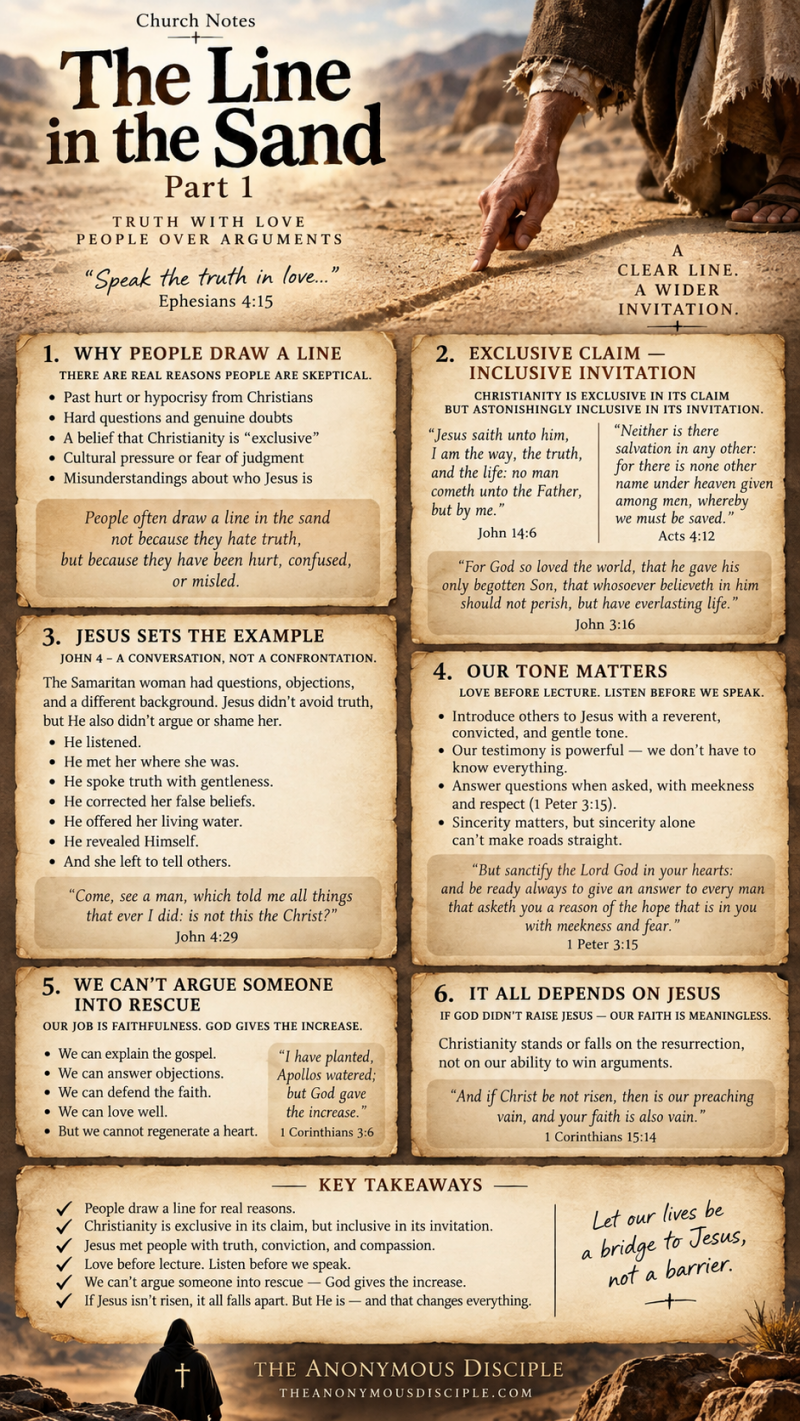
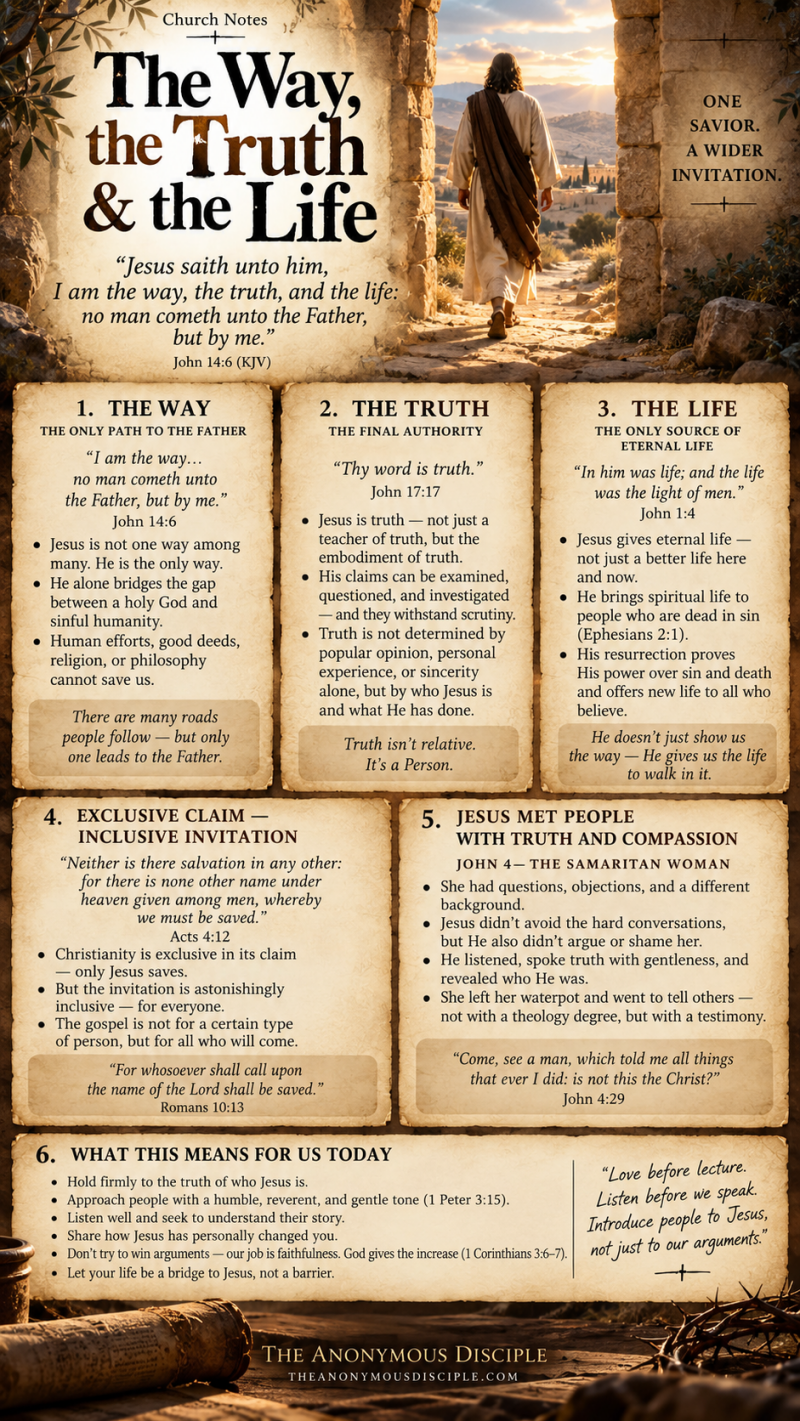
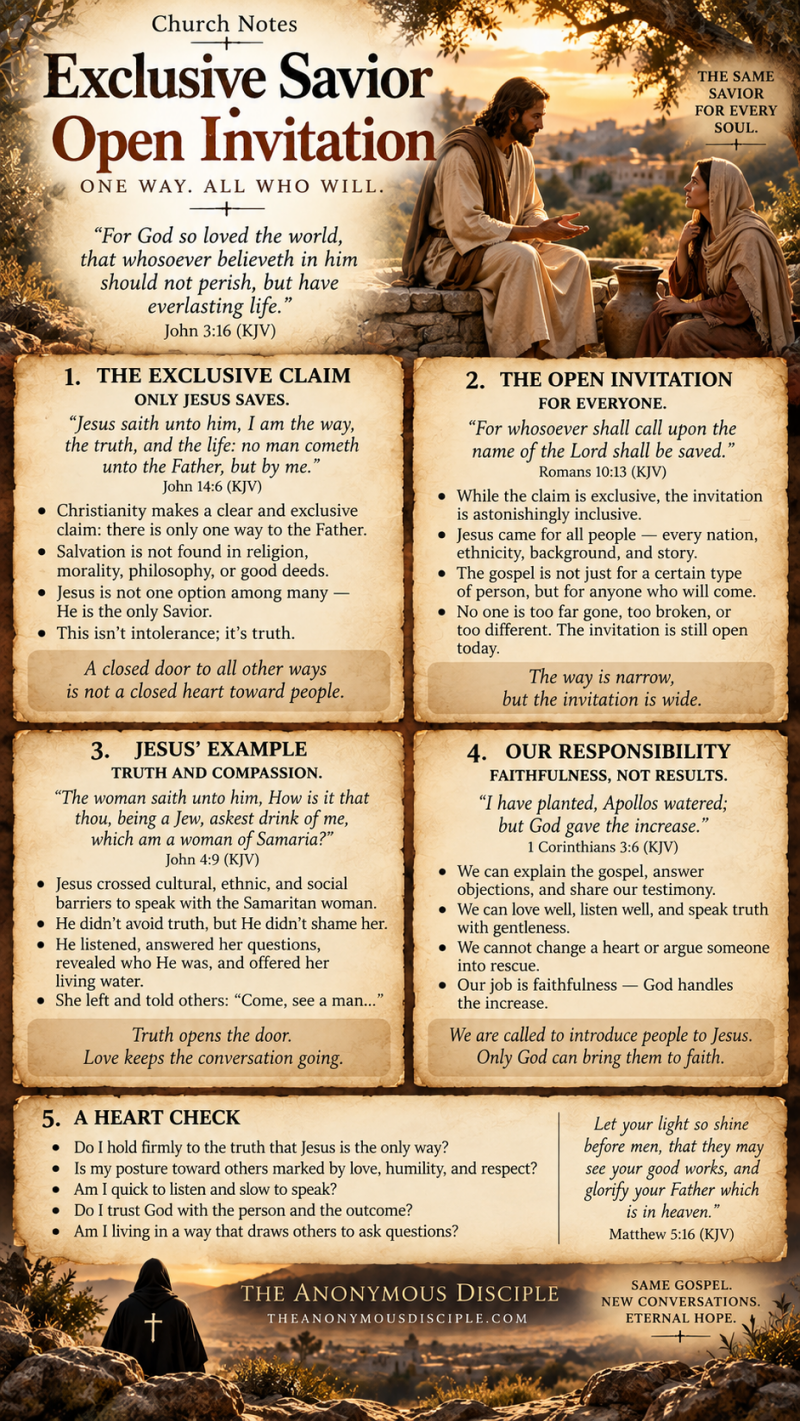
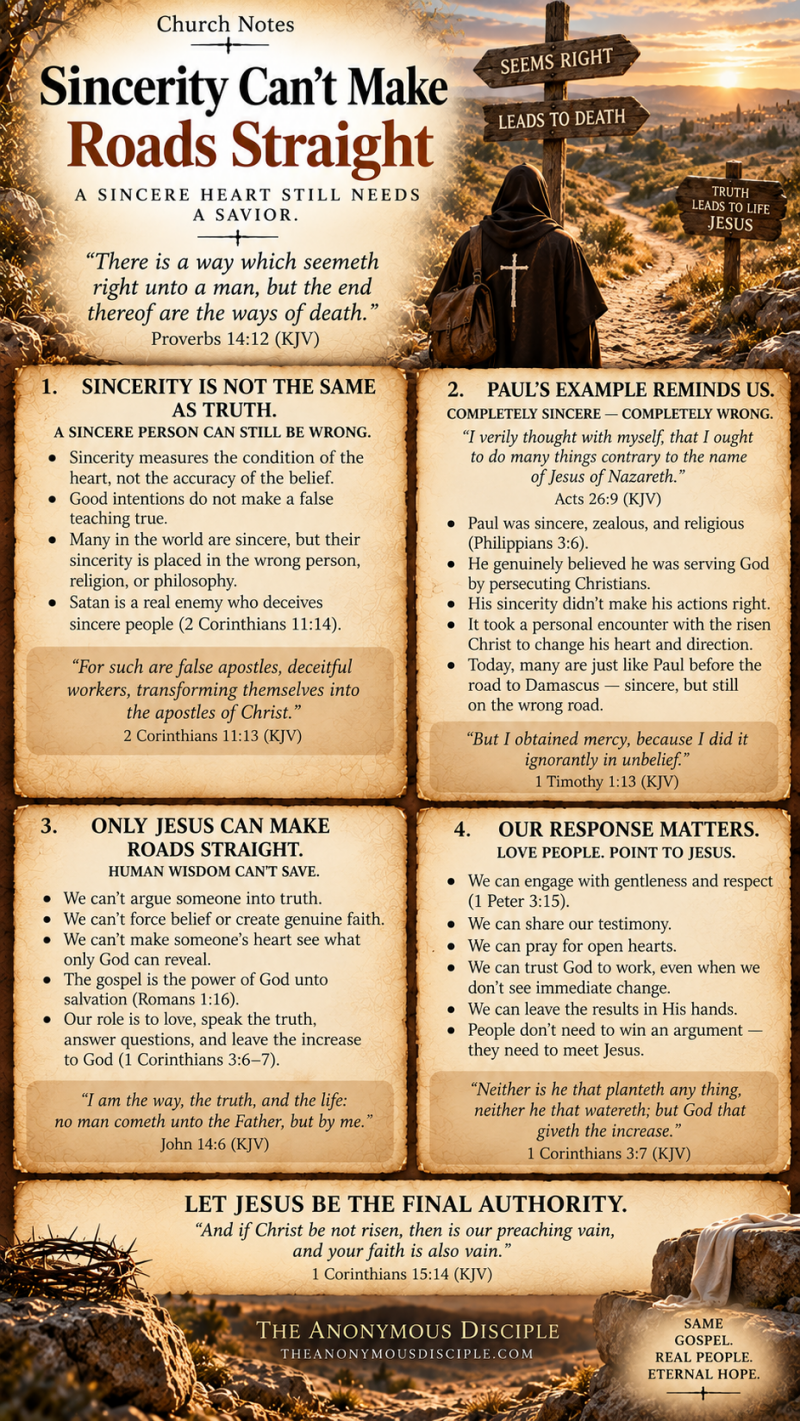
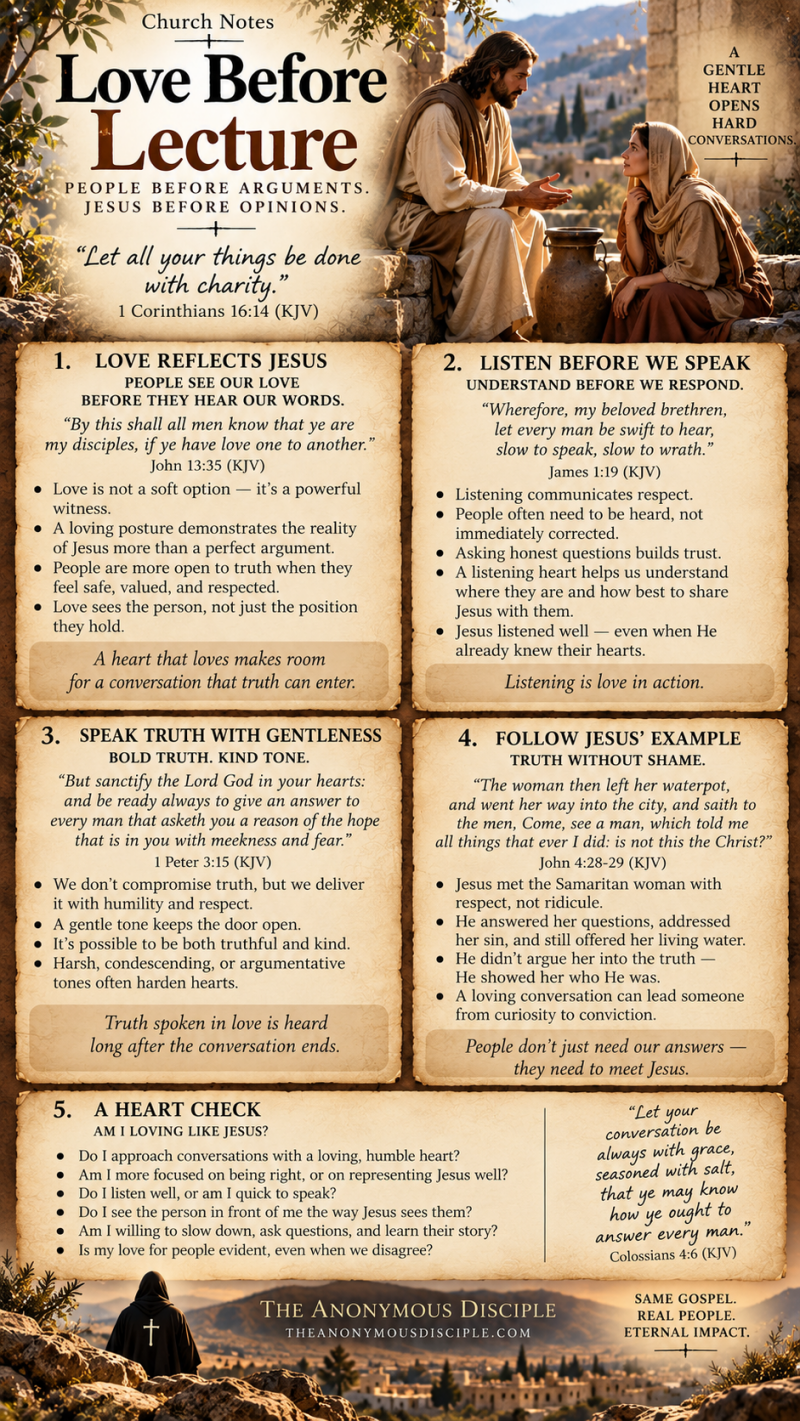
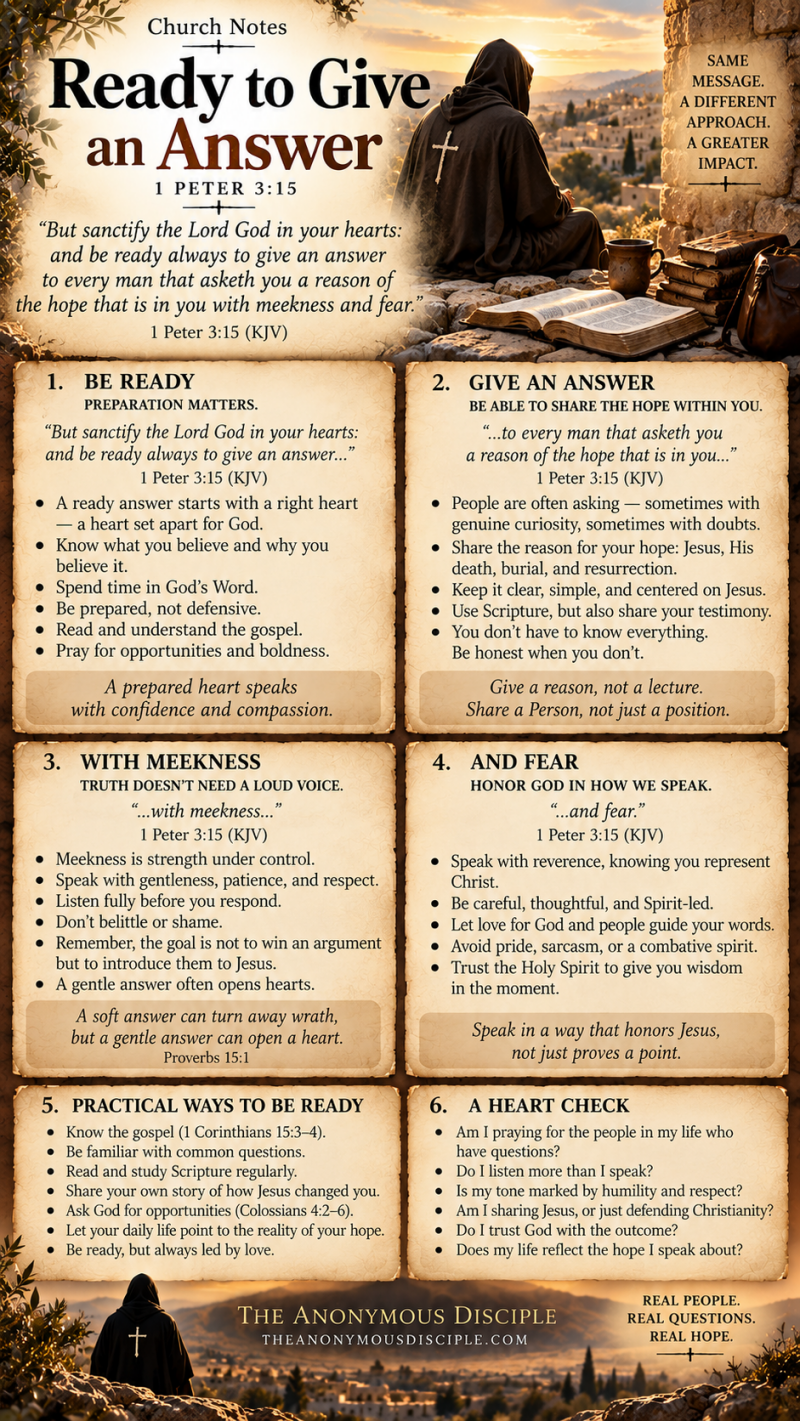
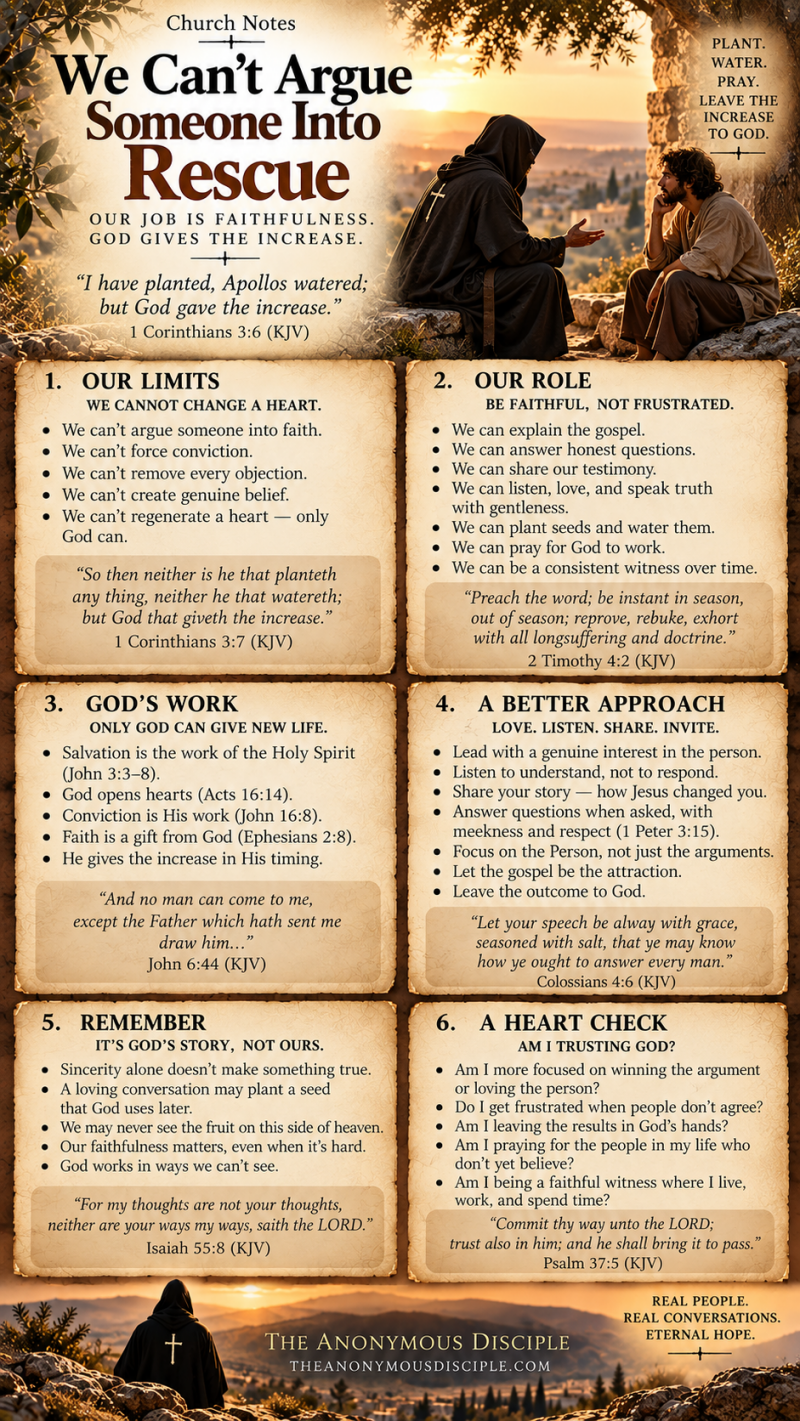
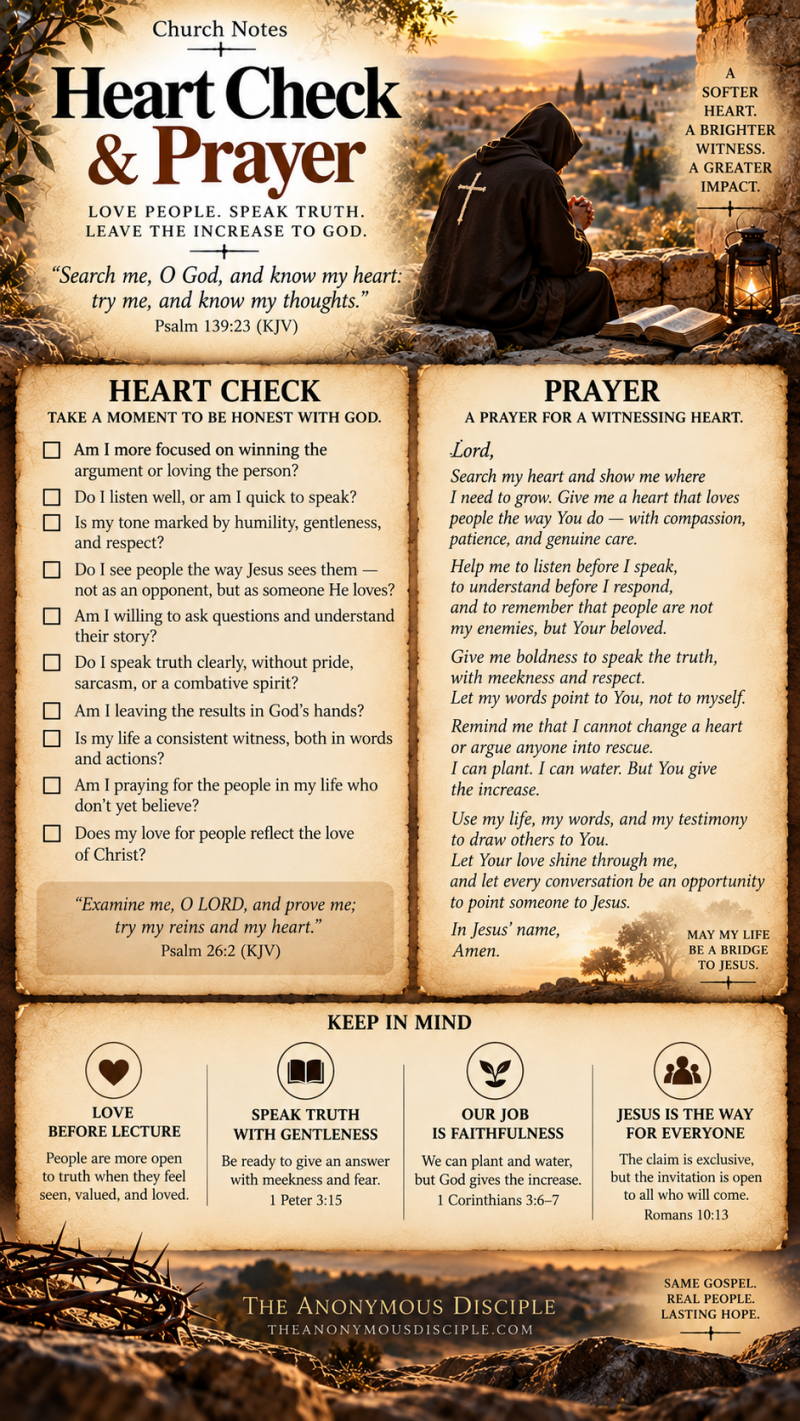
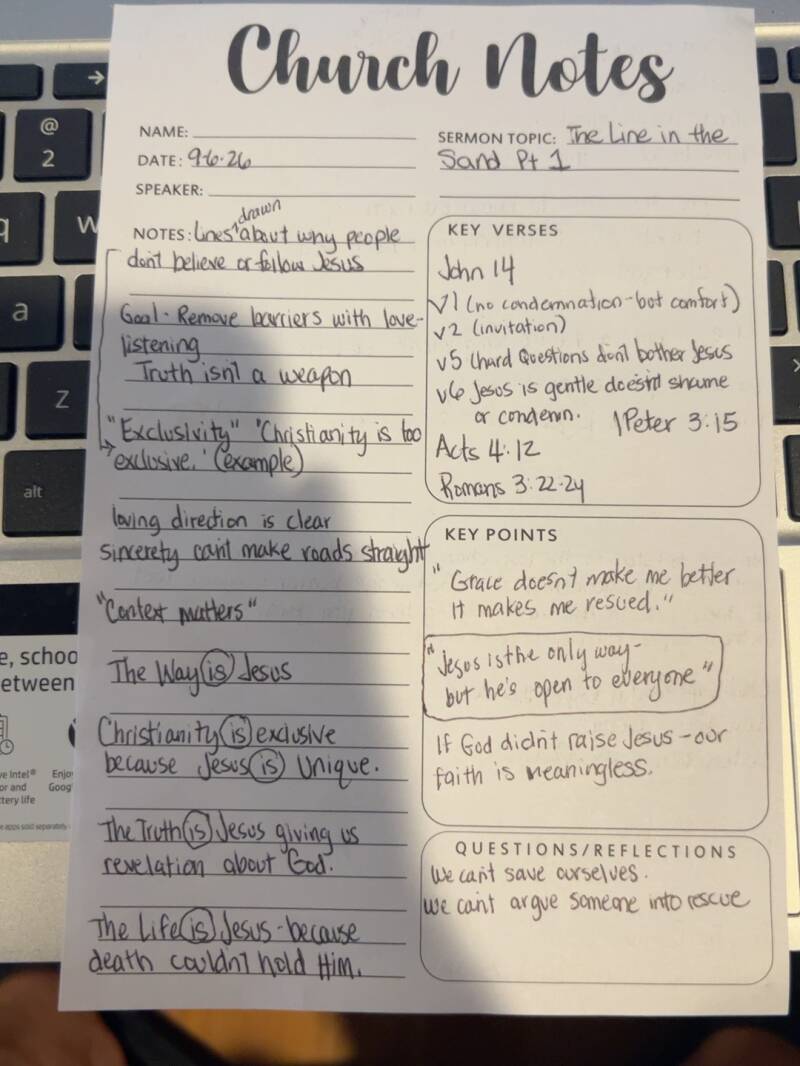
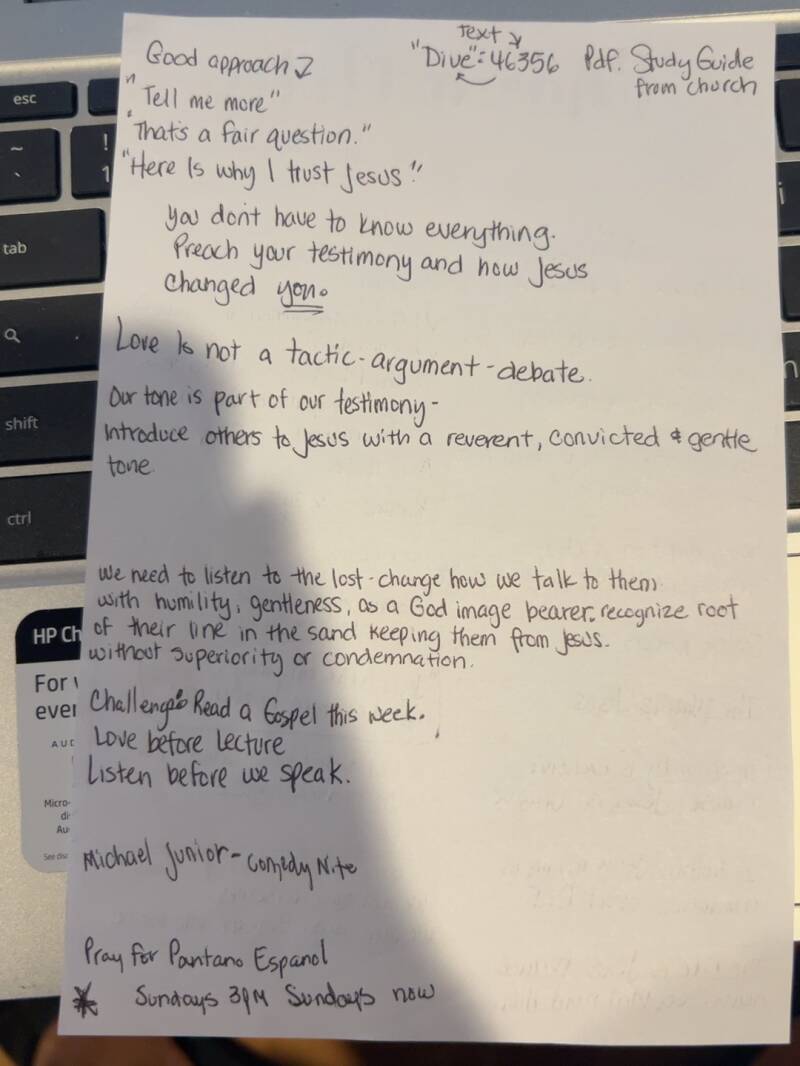
Ohhh. ❤️ I can see where Pastor went with this one, and there is a lot here worth digging into. Your notes also tell me this wasn’t really a sermon about “winning people to Christianity.” It was about how Christians represent Christ to people who have drawn a line in the sand.
And I think the sentence tying the whole thing together is the one you wrote on the back:
“Love before lecture. Listen before we speak.”
That fits beautifully with 1 Peter 3:15:
1 Peter 3:15 — “But sanctify the Lord God in your hearts: and be ready always to give an answer to every man that asketh you a reason of the hope that is in you with meekness and fear.” — KJV
Notice Peter doesn't tell believers to be timid about truth. He tells them to hold firmly to truth while changing the manner in which they deliver it.
And Pastor seems to have made exactly that distinction.
Christianity really is exclusive in its claim about salvation:
John 14:6 — “Jesus saith unto him, I am the way, the truth, and the life: no man cometh unto the Father, but by me.”
Acts 4:12 — “Neither is there salvation in any other: for there is none other name under heaven given among men, whereby we must be saved.”
But the invitation is astonishingly inclusive:
John 3:16 — “For God so loved the world…”
Romans 10:13 — “For whosoever shall call upon the name of the Lord shall be saved.”
So I REALLY like the wording you captured:
“Jesus is the only way — but He’s open to everyone.”
That is an important distinction. Christianity doesn't say, “Only people like us are welcome.” It says, “There is only one Savior, and absolutely anyone may come to Him.”
And then Pastor went somewhere even deeper…
Your notes say:
“We can't save ourselves.”
“We can't argue someone into rescue.”
YES. ❤️
We can explain the gospel. We can answer objections. We can defend the faith. We can give evidence. But we cannot regenerate another person's heart.
Paul actually describes the roles beautifully:
1 Corinthians 3:6–7 — “I have planted, Apollos watered; but God gave the increase. So then neither is he that planteth any thing, neither he that watereth; but God that giveth the increase.”
Our responsibility is faithfulness.
God handles the increase.
And that means I don't think Pastor was saying apologetics or defending Christianity is wrong. 1 Peter 3:15 explicitly tells us to be prepared with an answer. Rather, he's warning against turning apologetics into combat.
That distinction matters.
Truth isn't a weapon to beat somebody with.
Truth is a Person we're introducing them to.
And… look at John 4. 👀
I suspect this is why Pastor spent time there.
The Samaritan woman gives Jesus plenty of opportunities for an argument.
She questions Him.
John 4:9 — “How is it that thou, being a Jew, askest drink of me, which am a woman of Samaria?”
She raises a theological dispute about worship.
John 4:20 — “Our fathers worshipped in this mountain; and ye say, that in Jerusalem is the place where men ought to worship.”
Jesus doesn't dodge truth. In fact, He says something incredibly exclusive:
John 4:22 — “Ye worship ye know not what: we know what we worship: for salvation is of the Jews.”
So Jesus does correct her theology.
But He doesn't humiliate her.
He doesn't treat her like an opponent.
He keeps talking to her.
He knows her sin and her history, yet He continues offering her living water.
And eventually:
John 4:26 — “Jesus saith unto her, I that speak unto thee am he.”
That's gorgeous in the context of this sermon.
Conviction without condemnation.
Truth without cruelty.
Correction without superiority.
Invitation without compromising truth.
And look what happens afterward:
John 4:28–29 — “The woman then left her waterpot, and went her way into the city, and saith to the men, Come, see a man, which told me all things that ever I did: is not this the Christ?”
She doesn't return to town with a systematic theology degree. 😂
She basically says:
COME MEET HIM.
Which fits your other note perfectly:
“You don't have to know everything. Preach your testimony and how Jesus changed you.”
That woman had known Jesus for what—minutes? 😂
And she's already evangelizing.
One other line on your page jumped straight off it at me:
“Sincerity can't make roads straight.”
THAT deserves its own companion card.
Because our culture often treats sincerity as though sincerity determines truth:
“If someone genuinely believes something, who are we to say they're wrong?”
But sincerity tells us how strongly someone believes something, not whether the thing believed is true.
Paul himself is almost the ultimate biblical example. Before Christ, Paul was extremely sincere—and sincerely wrong.
Acts 26:9 — “I verily thought with myself, that I ought to do many things contrary to the name of Jesus of Nazareth.”
Then he encountered Jesus.
So Christianity's claim isn't:
“We're right because we're more sincere.”
It's:
“Jesus rose from the dead.”
That's why your note—
“If God didn't raise Jesus—our faith is meaningless.”
—is absolutely foundational.
Paul says exactly that:
1 Corinthians 15:14 — “And if Christ be not risen, then is our preaching vain, and your faith is also vain.”
Christianity ultimately stands or falls on Christ Himself and the Resurrection, not on whether Christians can win arguments.
Add comment
Comments