

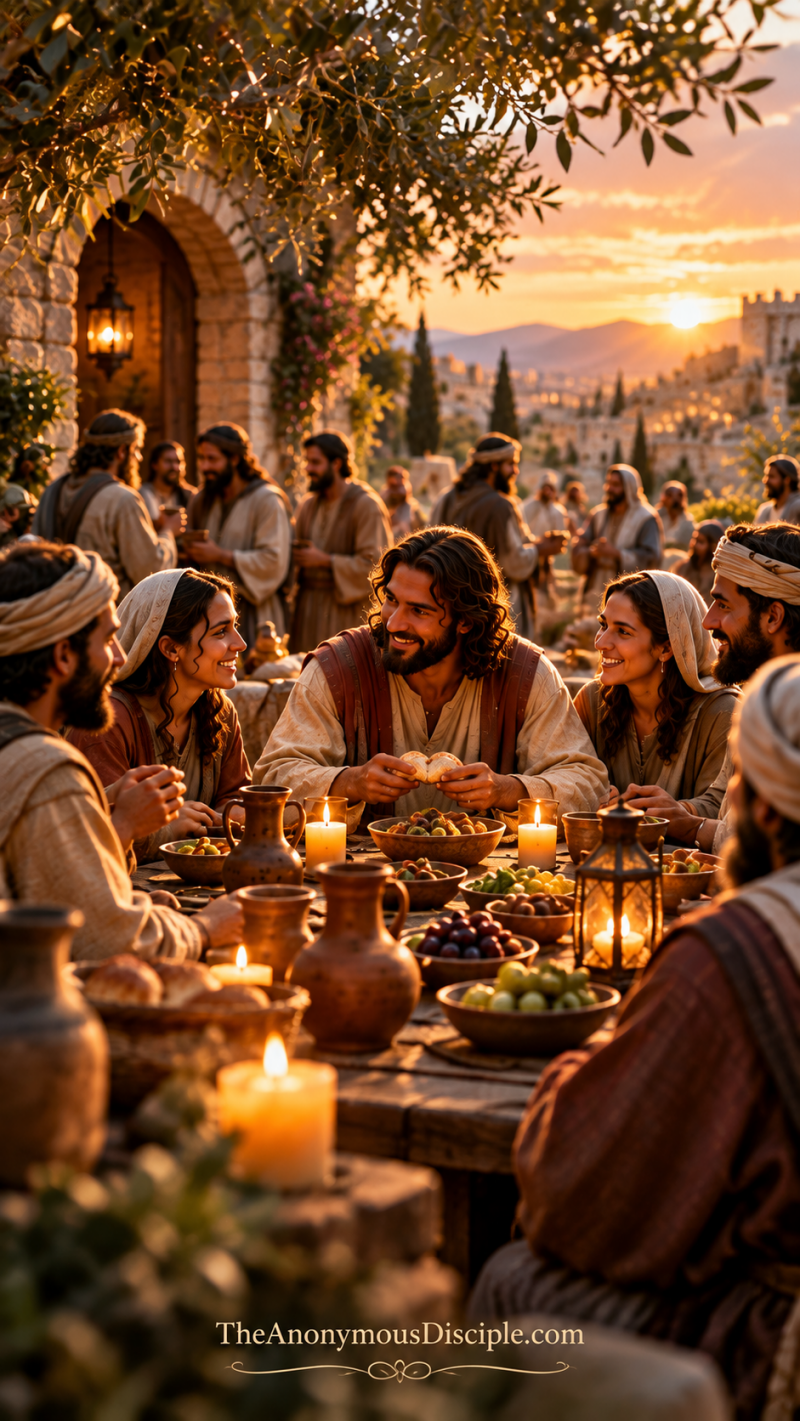
📜 Acts 2:42–47 | ⚓️ Verse 46
Faith Lived Together
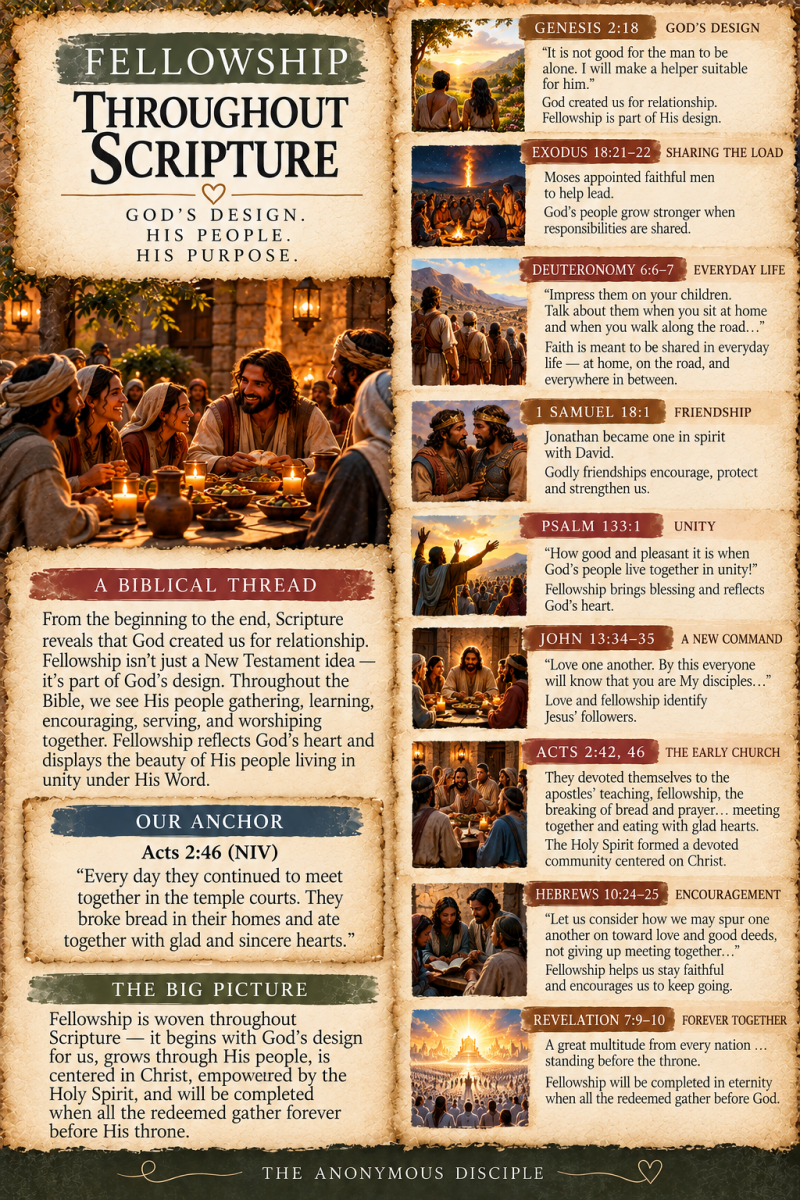
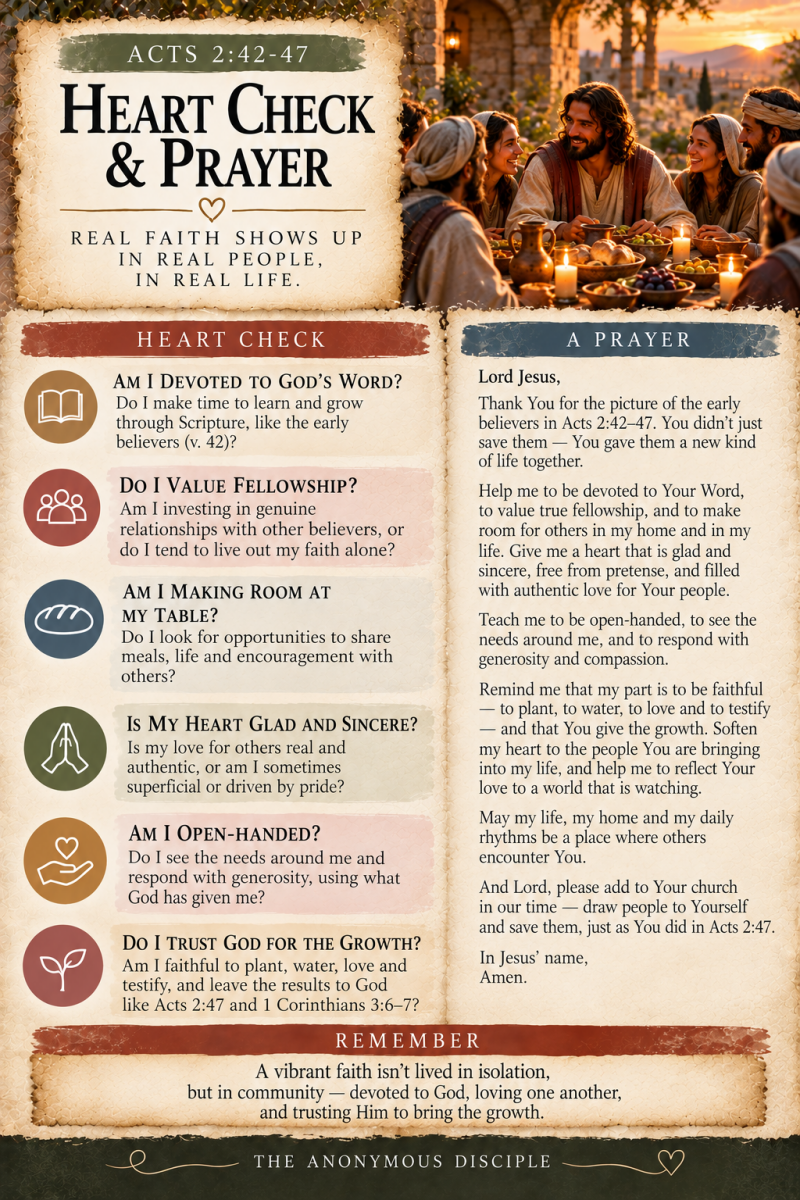
Acts 2:42–47 gives us a beautiful glimpse of the newborn church after Pentecost. These believers didn’t simply accept the gospel and return to life as usual. Filled with the Holy Spirit, they became devoted to the apostles’ teaching, fellowship, breaking of bread and prayer. They worshiped together, opened their homes, shared what they had, cared for one another’s needs and lived with glad and sincere hearts.
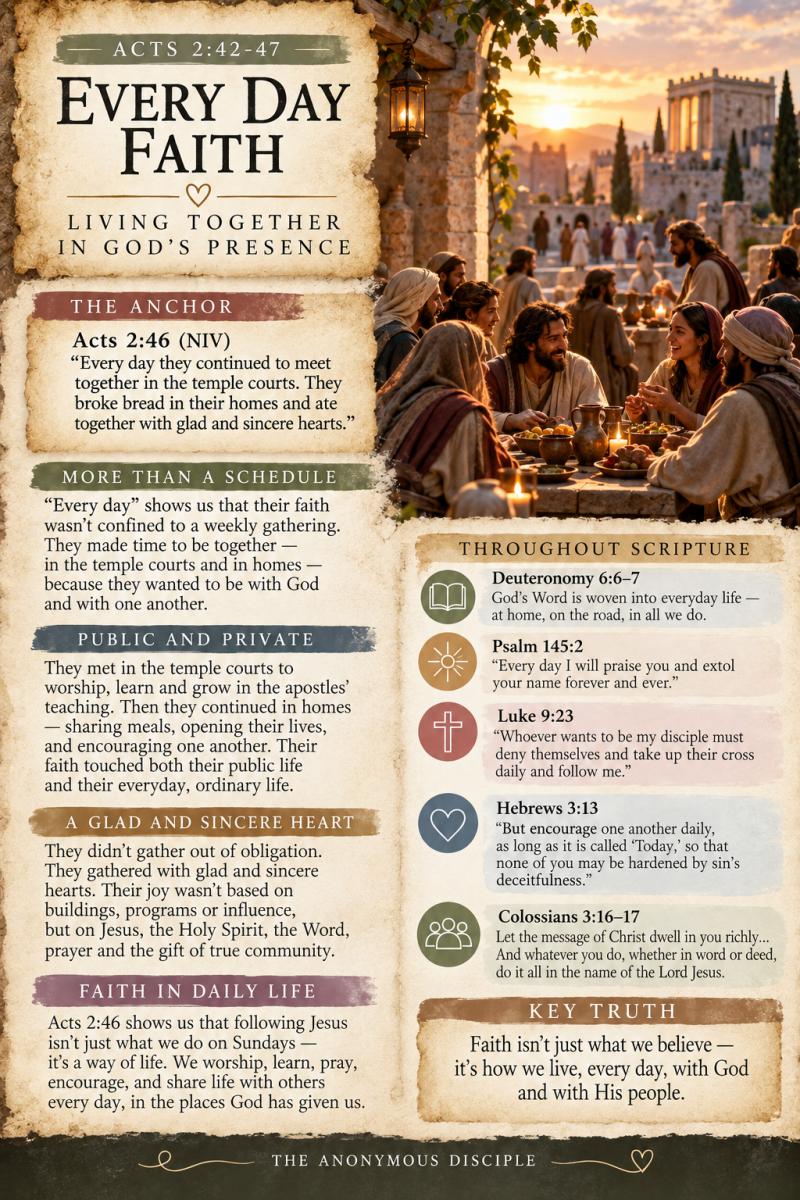
Our anchor, Acts 2:46, brings that life into focus: “Every day” they gathered. Their faith wasn’t confined to a particular place or a particular day. It followed them from the temple courts into their living rooms and around their tables. Worship and ordinary life were becoming beautifully intertwined.
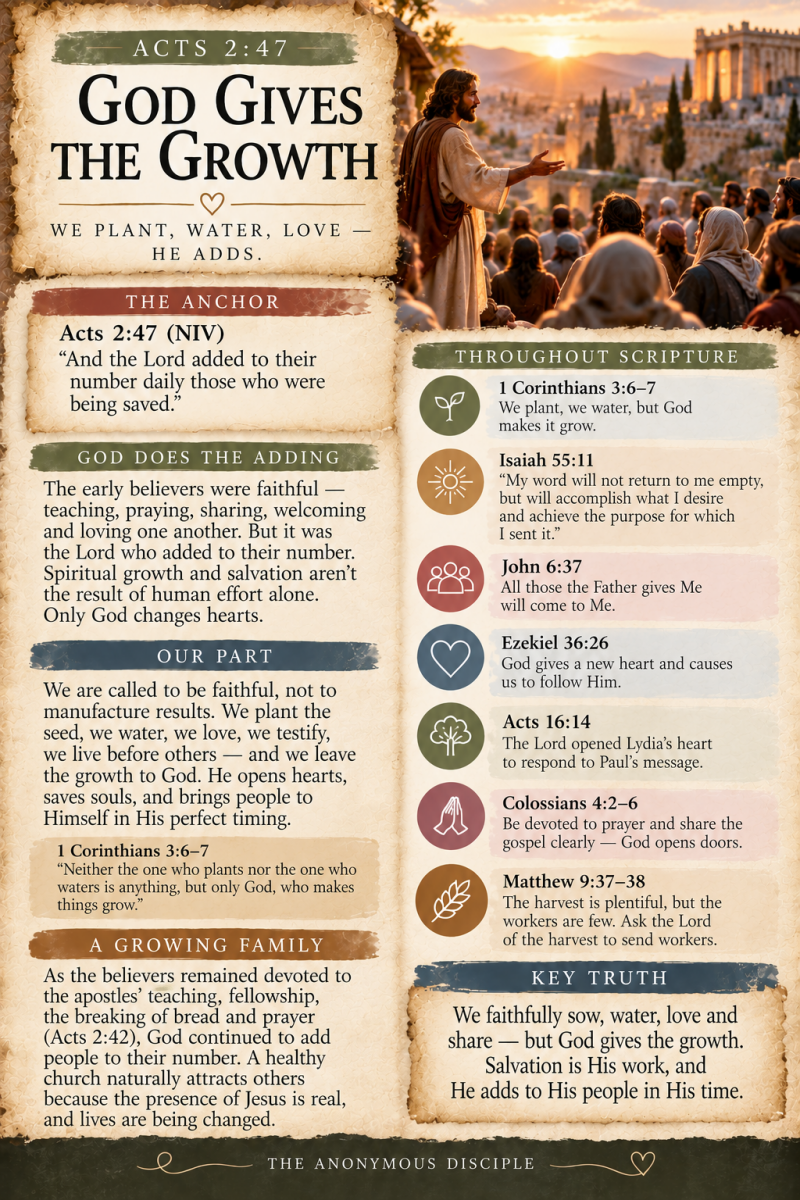
Their generosity flowed from open hearts. Their fellowship was genuine. Their homes became places of ministry. And while they faithfully taught, prayed, loved, shared and welcomed others, Acts 2:47 reminds us who produced the growth: “the Lord added to their number daily those who were being saved.”
That distinction still matters. We plant. We water. We love. We testify. But God gives the growth. — 1 Corinthians 3:6–7
Acts 2 shows us that following Jesus was never intended to be a faith lived in isolation. The Holy Spirit forms believers into a people who learn together, pray together, carry burdens together, share what God has given them and make room for one another.
The early church didn’t just gather for worship.
They built their lives around Jesus—and made room for one another there. ❤️🕊️🍞
Acts 2:42–47 (KJV)
42 And they continued stedfastly in the apostles' doctrine and fellowship, and in breaking of bread, and in prayers.
43 And fear came upon every soul: and many wonders and signs were done by the apostles.
44 And all that believed were together, and had all things common;
45 And sold their possessions and goods, and parted them to all men, as every man had need.
46 And they, continuing daily with one accord in the temple, and breaking bread from house to house, did eat their meat with gladness and singleness of heart,
47 Praising God, and having favour with all the people. And the Lord added to the church daily such as should be saved.
Acts 2:42–47 (ESV)
42 And they devoted themselves to the apostles’ teaching and the fellowship, to the breaking of bread and the prayers.
43 And awe came upon every soul, and many wonders and signs were being done through the apostles.
44 And all who believed were together and had all things in common.
45 And they were selling their possessions and belongings and distributing the proceeds to all, as any had need.
46 And day by day, attending the temple together and breaking bread in their homes, they received their food with glad and generous hearts,
47 praising God and having favor with all the people. And the Lord added to their number day by day those who were being saved.
Who
Luke is writing. He is telling us about the first believers in Jesus after Pentecost—the apostles and the thousands who had just been saved and baptized (see Acts 2:41).
When
Right after the Day of Pentecost. Jesus had risen, appeared for 40 days, gone back to heaven, and then the Holy Spirit came. This is the very first weeks and months of the church—around A.D. 30.
Where
Jerusalem. They met in the temple courts (the big public place of worship) and also in homes around the city.
To Who
Luke first wrote Acts for a man named Theophilus (Acts 1:1), to give him a clear, orderly account. By the Holy Spirit, it is also for us—so we can see what the church looked like when it first began.
Why
To show us what happened when people truly received the gospel and the Holy Spirit. Luke is painting a picture of a healthy, newborn church: they stayed close to the apostles’ teaching, to one another, to the breaking of bread, and to prayer. God was working wonders, they shared what they had, they were joyful, and the Lord kept adding people who were being saved.
In short: this is not a list of rules. It is a snapshot of what the Spirit produced in the first believers right after Jesus poured out the Holy Spirit.
Verse by verse breakdown with 𝕏James𝕏
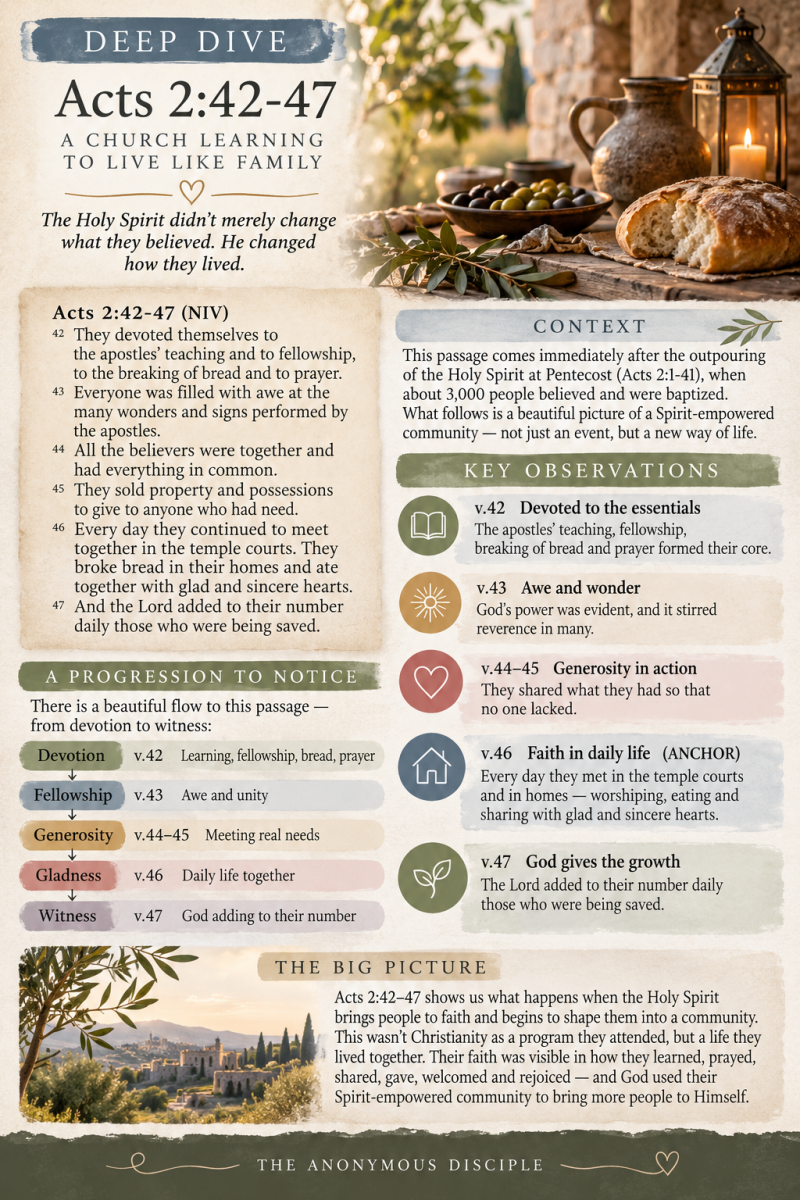
Verse 42
“And they devoted themselves to the apostles’ teaching and the fellowship, to the breaking of bread and the prayers.”
The new believers didn’t treat faith like a one-time event. They stuck with four things: listening to what the apostles taught about Jesus, sharing life with other believers, eating together (including the Lord’s Supper), and praying.
For us today: A healthy walk with Jesus is not just “I prayed a prayer.” It looks like staying close to Scripture, close to other believers, close to the Lord’s table, and close to prayer. Those four things still mark a living church.
Verse 43
“And awe came upon every soul, and many wonders and signs were being done through the apostles.”
People could tell God was really at work. There was a holy seriousness—and God confirmed the apostles’ message with miracles.
For us today: We should expect God to be living and active, not distant. We may not see the same signs in the same way, but a church that knows the Lord should still have a sense of “God is here,” not just a program.
Verse 44
“And all who believed were together and had all things in common.”
They didn’t just attend the same meetings. They belonged to one another. What they owned was treated as something they could share.
For us today: Faith in Jesus pulls us out of “me and mine” into “us.” We don’t have to live in a commune, but we do have to stop living as if other believers are strangers.
Verse 45
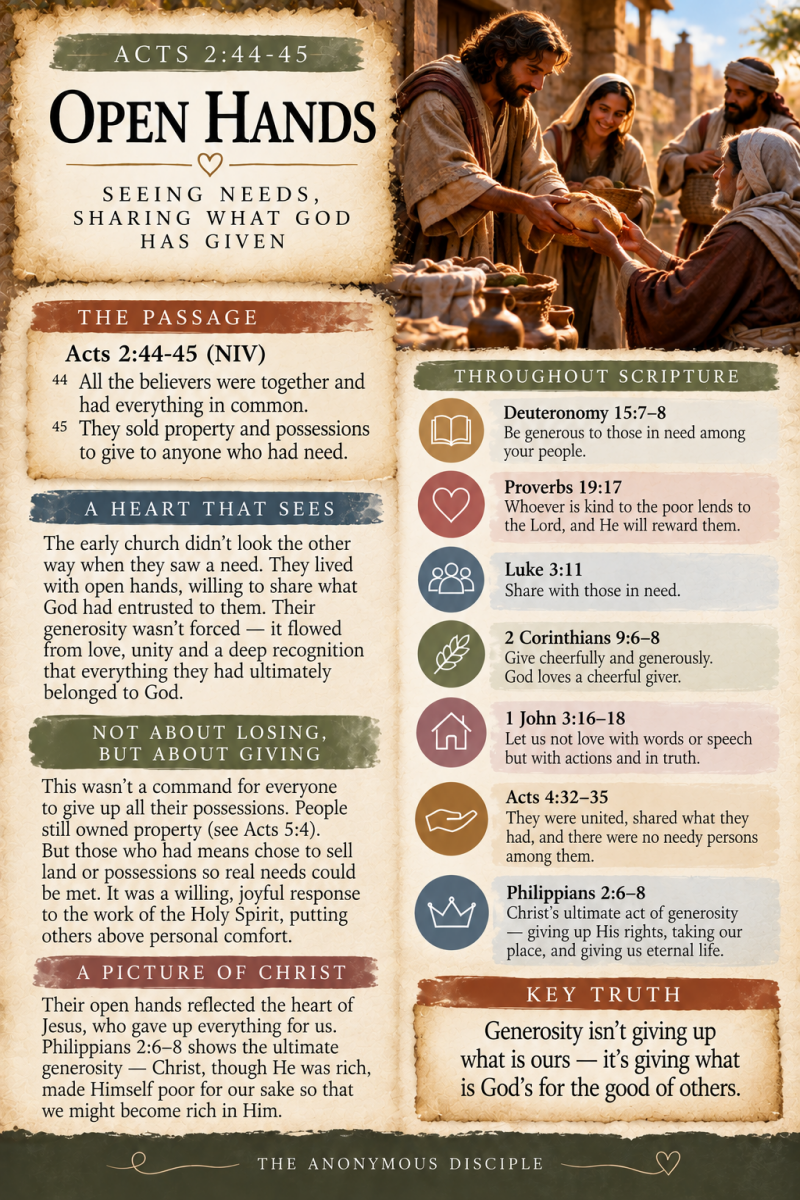
“And they were selling their possessions and belongings and distributing the proceeds to all, as any had need.”
When someone among them was in real need, others sold what they had and helped. It was voluntary love, not a forced system.
For us today: If the Lord has given us extra, it is not only for us. The early church noticed need and moved toward it. That same open-handed love still honors Jesus.
Verse 46
“And day by day, attending the temple together and breaking bread in their homes, they received their food with glad and generous hearts,”
They met publicly and privately. Big gatherings and small home meals. And they were glad—not grim, not tight-fisted.
For us today: Church is both the gathered people on the Lord’s Day and the smaller, ordinary meals and conversations through the week. Joy and generosity belong together.
Verse 47
“praising God and having favor with all the people. And the Lord added to their number day by day those who were being saved.”
They worshiped God, lived in a way that even outsiders noticed, and God Himself kept bringing new people to salvation. Growth was the Lord’s work.
For us today: Our job is to be faithful—praise God, love people, stay in the Word and prayer. Adding people to the church is the Lord’s work. We plant and water; He gives the increase.
Culture & Tradition Notes
These first believers were still Jews who trusted Jesus as Messiah. They did not think they had left Israel. They thought God was renewing His people from the inside. That is why their habits look both Jewish and new.
The apostles’ teaching
In that world a rabbi’s students stayed close to his words. After Jesus went to heaven, the Twelve were the ones who had walked with Him. “The apostles’ teaching” was not a book on a shelf yet. It was living teaching about who Jesus is, what He did, and how to live in light of His death and resurrection.
Fellowship (koinonia)
This word means sharing life, not just chatting after a service. Friends in the Greek world sometimes said “friends have all things in common.” Israel’s law also aimed at “there should be no poor among you” (Deuteronomy 15:4). Luke is showing that the Spirit made that kind of closeness real.
Breaking of bread
Jewish meals began with a blessing and the breaking of bread. Jesus had given that act a new meaning at the Last Supper. In Acts 2 it likely covers both: ordinary shared meals and remembering the Lord’s death. At this early stage the Lord’s Supper was still part of a real meal in a home, not a separate short ritual.
The prayers
The Greek says “the prayers,” which often points to set times. Faithful Jews prayed at the hours that went with the temple sacrifices—morning and about 3:00 in the afternoon (Acts 3:1). These believers still went to the temple for those hours, and they also prayed together in homes. Public and private prayer belonged together.
Temple and homes
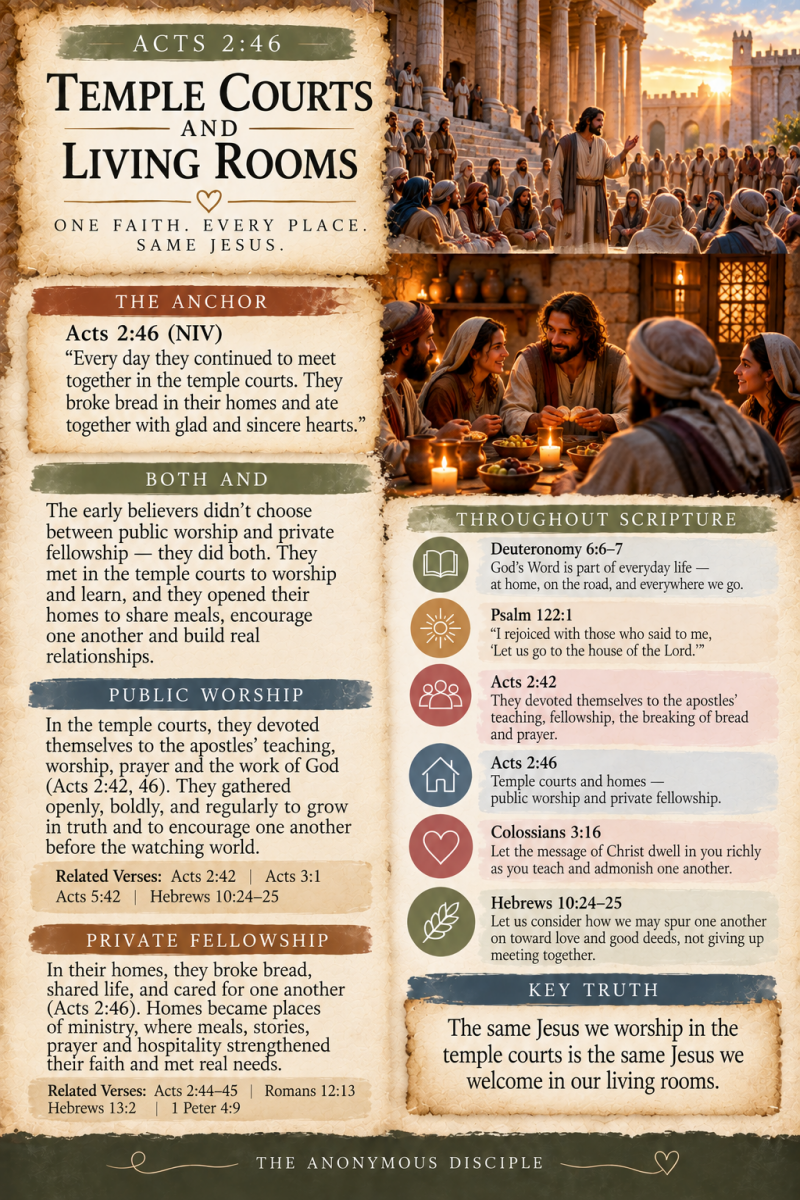
The temple courts were the big public square of Jewish life. That is where crowds were, so that is where they worshiped and later witnessed. Homes were where they ate, taught, and cared for one another. So the church had two rooms from day one: the large gathering and the household table.
“All things in common”
This was not a government program and not a rule for joining. People still owned houses (see later in Acts). When a real need appeared, some sold land or goods and gave. It was voluntary love, not forced sharing. Later, Peter tells Ananias the property was his to keep or sell (Acts 5:4). So this is generosity, not communism.
Why so much sharing right then?
Pentecost brought thousands of visitors to Jerusalem. Many who believed may have stayed instead of going home. Jobs and housing would have been tight. The family of faith stepped in so no brother or sister went hungry.
Awe, signs, and “favor with all the people”
In Scripture, “fear” or “awe” is the right response when God shows up. The signs through the apostles pointed to the risen Jesus, not to the apostles themselves. At this early moment the wider city still looked on them with goodwill. That will not last forever in Acts, but Luke wants us to see the beautiful beginning.
The Lord added
Growth is described as the Lord’s work. They were faithful in teaching, fellowship, bread, and prayer. He was the one who kept saving people.
In short: this is a Jewish messianic community, still at the temple, eating in homes, praying at the old hours, and now bound together by the Spirit around Jesus. The forms are familiar. The center is new.
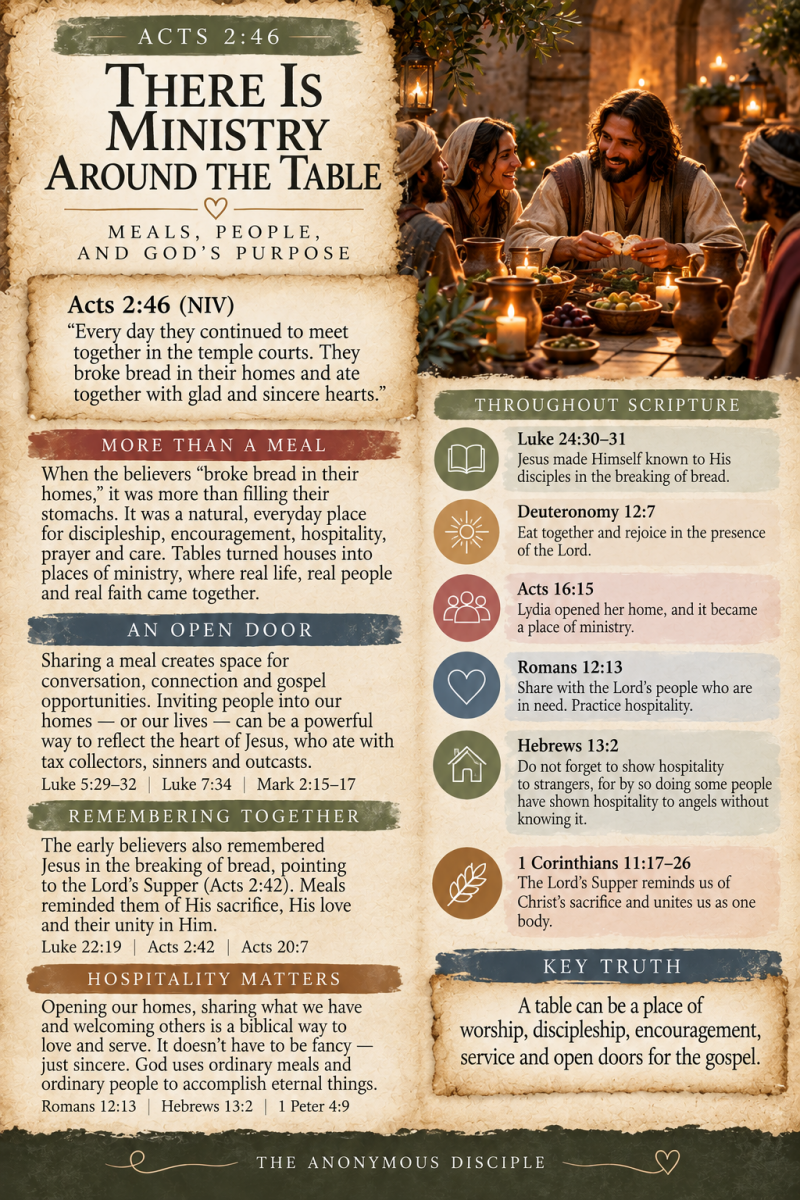
🔗Cross References🔗
For the passage as a whole (Acts 2:42–47)
These verses show the same pattern showing up again later, or they explain what each piece means.
- Acts 1:14 — already “with one accord” in prayer before Pentecost
- Acts 2:41 — the 3,000 who were added just before this snapshot
- Acts 4:32–35 — the same sharing and “no needy person among them”
- Acts 5:42 — still teaching every day in the temple and from house to house
- Luke 24:53 — after the resurrection they were “continually in the temple blessing God”
- Deuteronomy 15:4 — God’s older aim: “there should be no poor among you”
- 1 Corinthians 10:16–17; 11:23–26 — what “breaking bread” means when it points to the Lord’s Supper
- Hebrews 10:24–25 — don’t give up meeting together
- Acts 2:47 / 1 Corinthians 3:6–7 — the Lord is the one who adds and gives the growth
For verse 46 specifically (today’s anchor)
ESV: “And day by day, attending the temple together and breaking bread in their homes, they received their food with glad and generous hearts.”
Daily / together / one accord
- Acts 1:14
- Acts 2:1
- Acts 2:42
- Acts 5:12
In the temple
- Luke 24:53
- Acts 3:1 (Peter and John go up at the hour of prayer)
- Acts 5:21
- Acts 5:42
Breaking bread in homes
- Acts 2:42
- Acts 20:7, 11
- Luke 24:30, 35 (Jesus known in the breaking of bread)
- 1 Corinthians 10:16
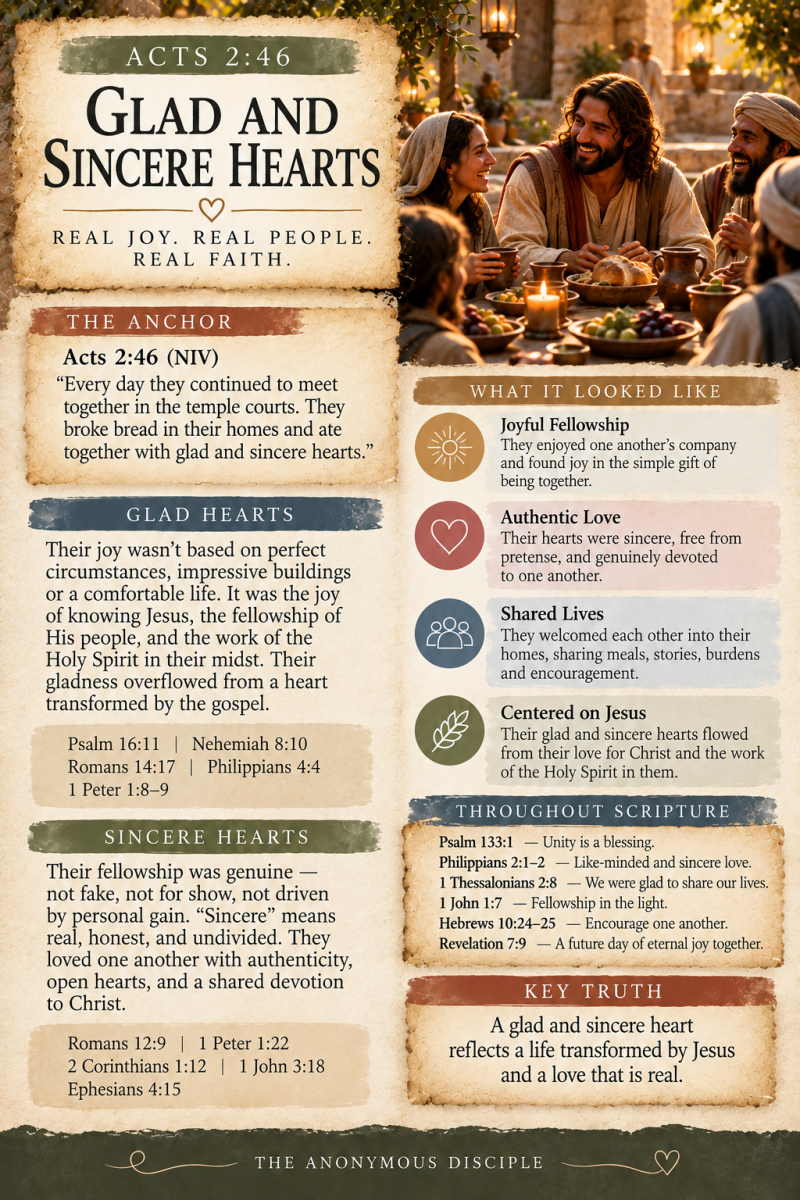
Glad / sincere / generous hearts at the table
- Acts 16:34 (the jailer’s household rejoicing over a meal)
- John 16:22 (joy no one can take)
- Romans 12:8 (generosity)
- 2 Corinthians 9:7 (cheerful giver)
Verse 46 is the “how they lived it out” verse. Verse 42 names the four things they devoted themselves to. Verse 46 shows the rhythm: public worship in the temple every day, then meals in homes, with glad and open hearts. Big gathering and kitchen table belonged together.
Add comment
Comments