

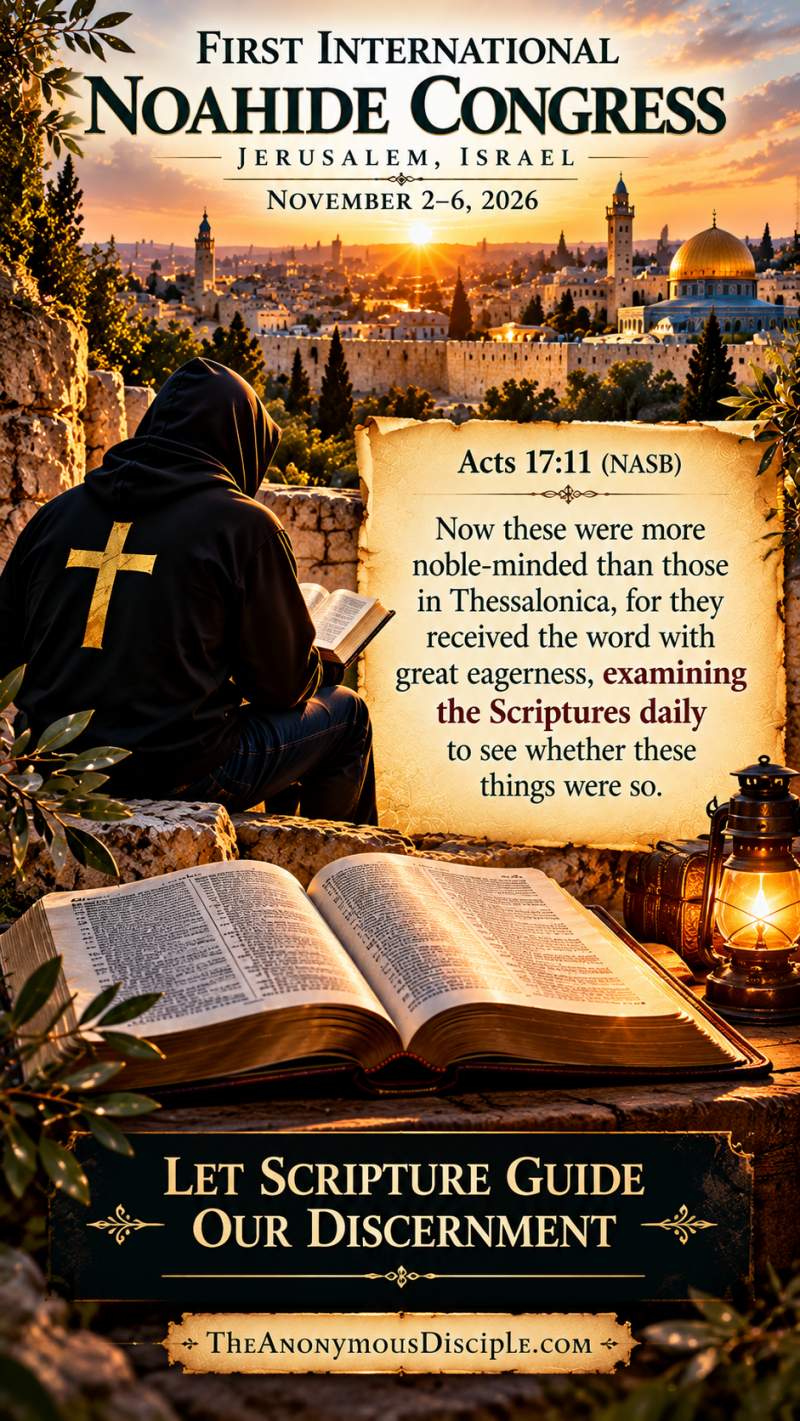
The First International Noahide Congress
Jerusalem, Israel | November 2–6, 2026
Examining the Claims, Understanding the Implications & Letting Scripture Guide Our Discernment
“...examining the Scriptures daily to see whether these things were so.” — Acts 17:11 (NASB, excerpt)
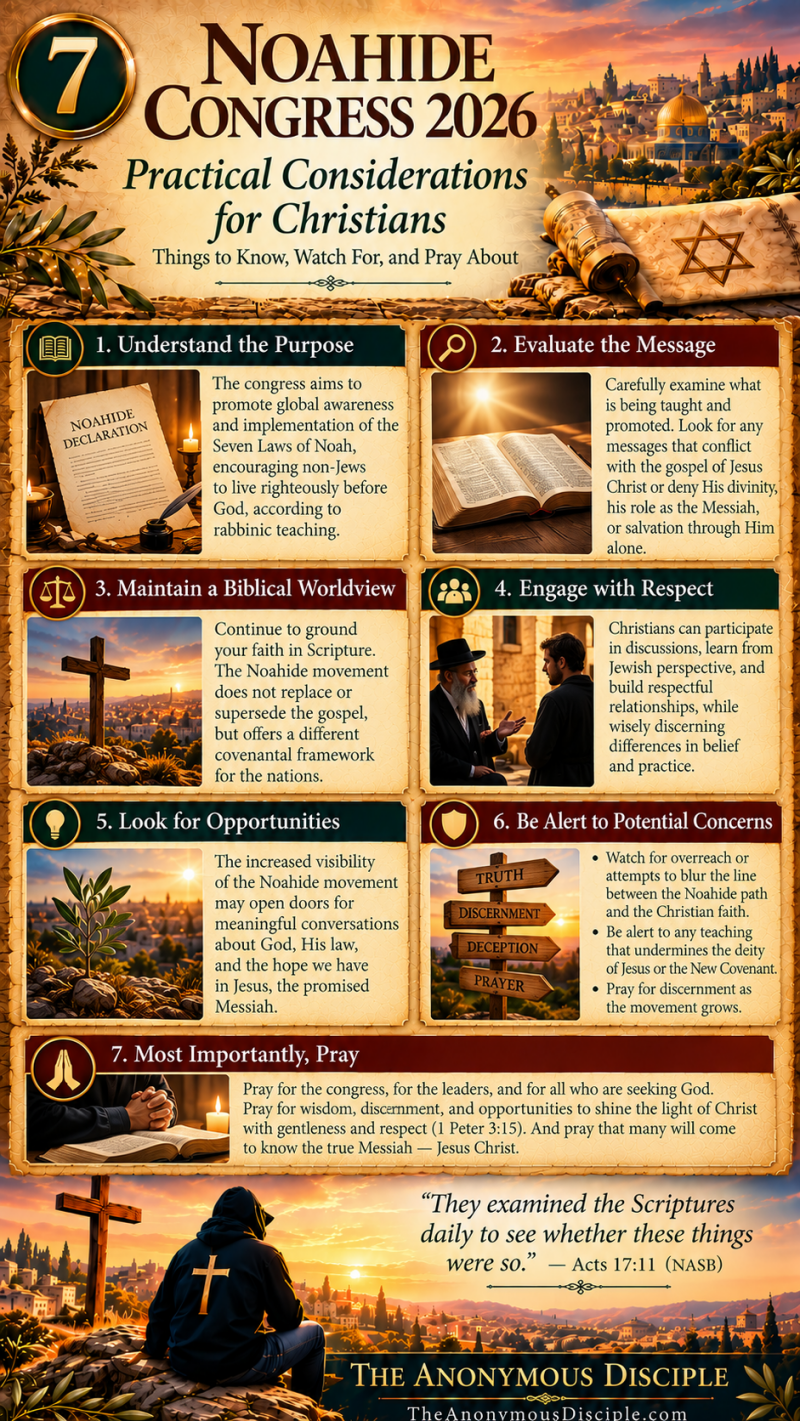
The First International Noahide Congress, scheduled for November 2–6, 2026, in Jerusalem, brings attention to a religious movement seeking to unite Noahide communities worldwide under a shared framework of belief, religious guidance, and organization.
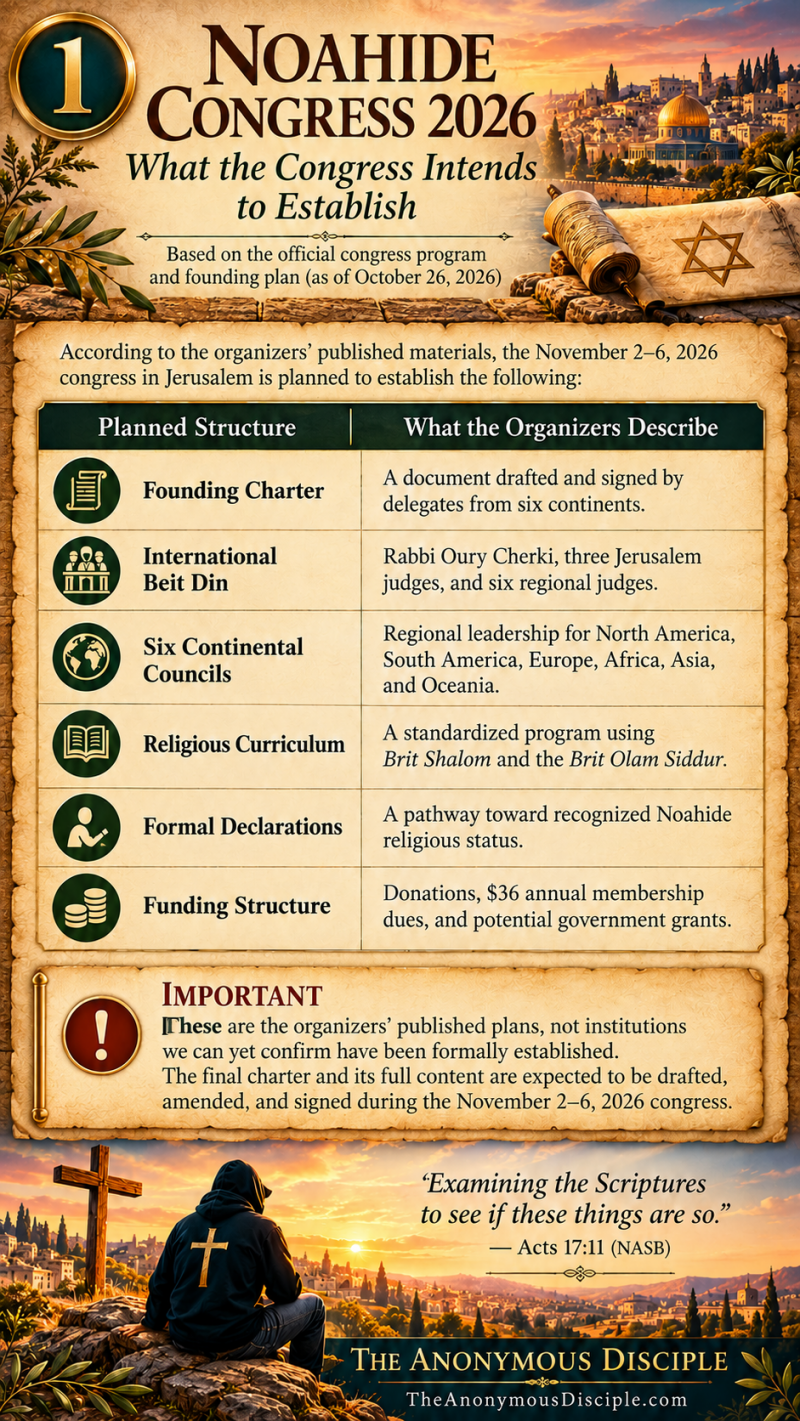
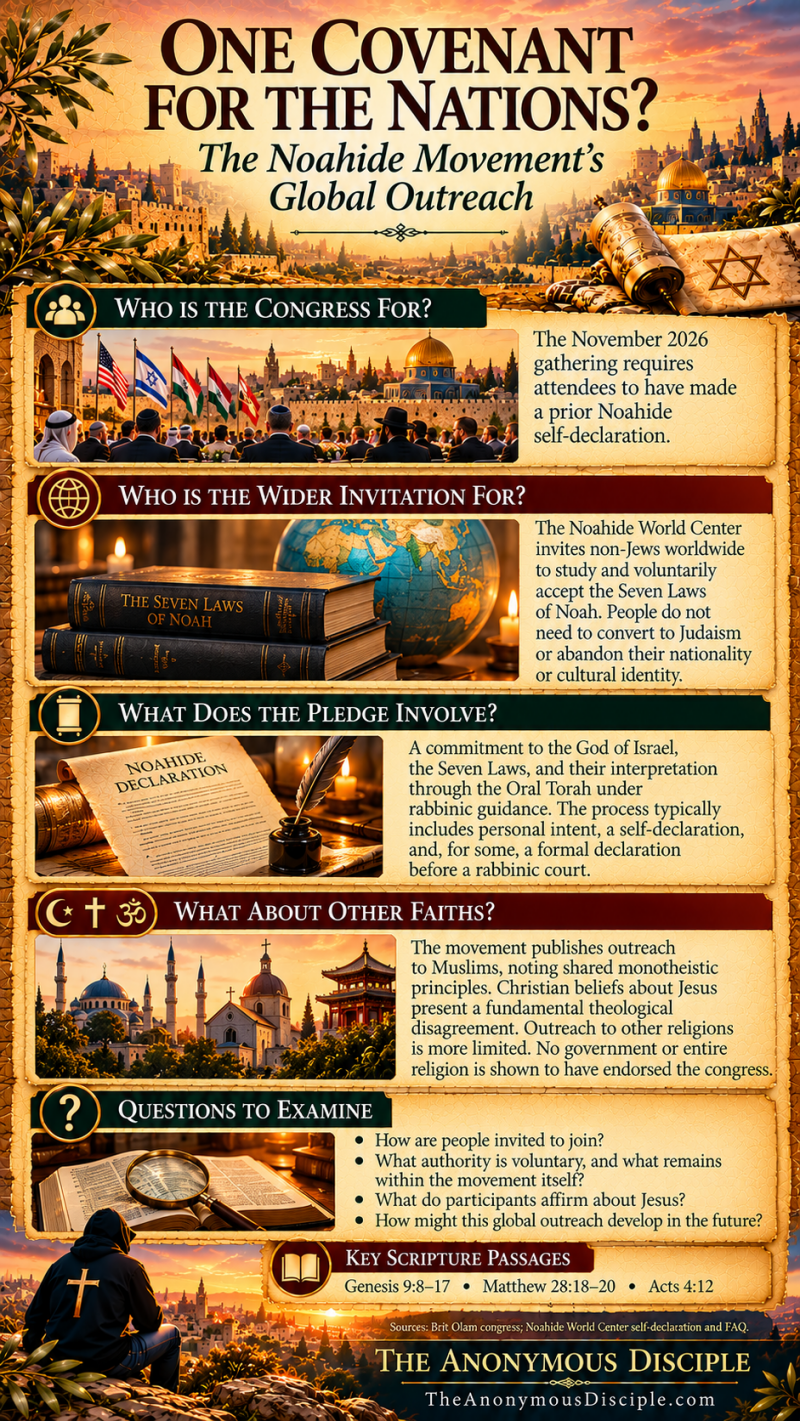
Organized by Brit Olam / the Noahide World Center, the gathering proposes international cooperation, continental councils, a rabbinic court, and a founding charter rooted in the Seven Laws of Noah.
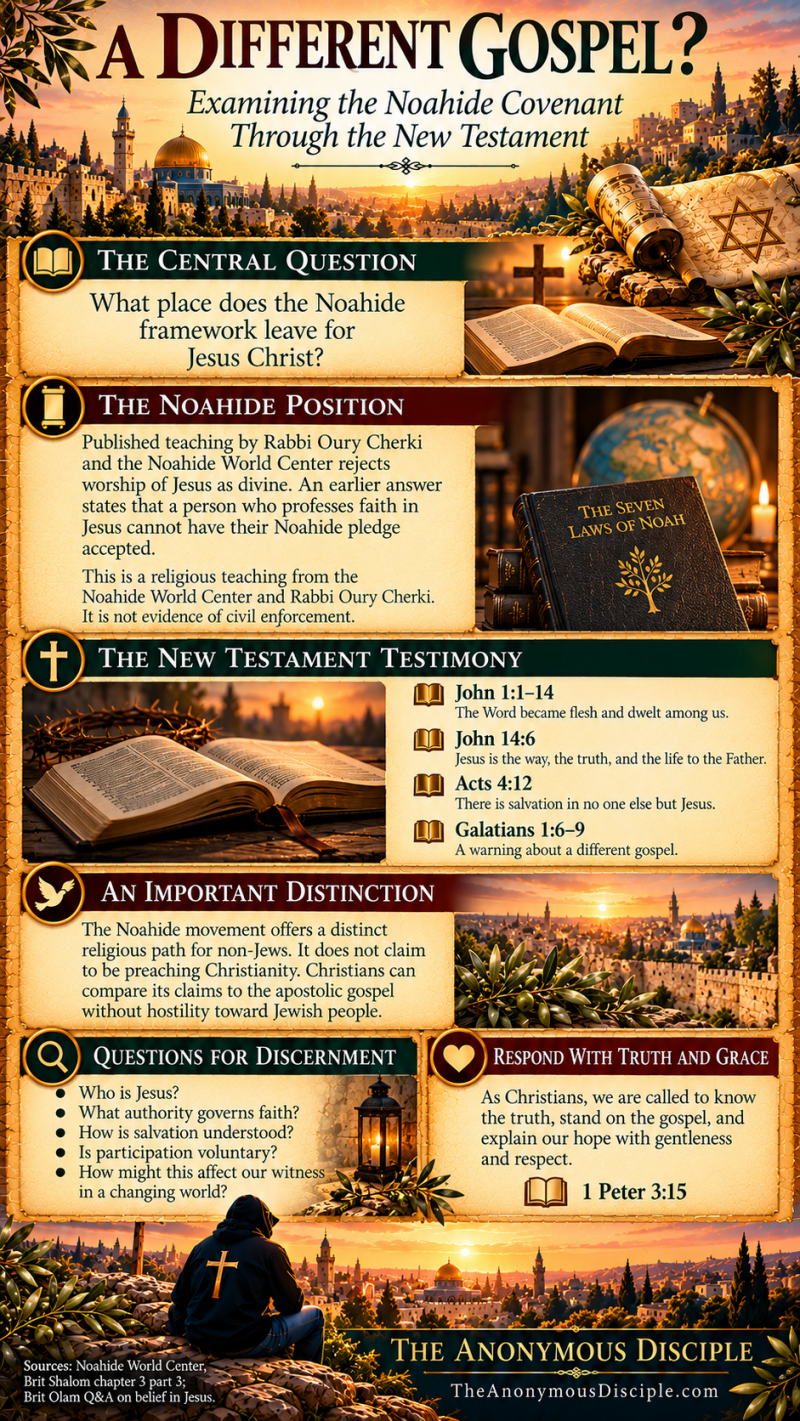
But what does this movement teach? How does it understand Jesus Christ? What would its proposed institutions mean for Christians, and where should we distinguish voluntary religious cooperation from claims of religious authority?
These are questions worth examining carefully.
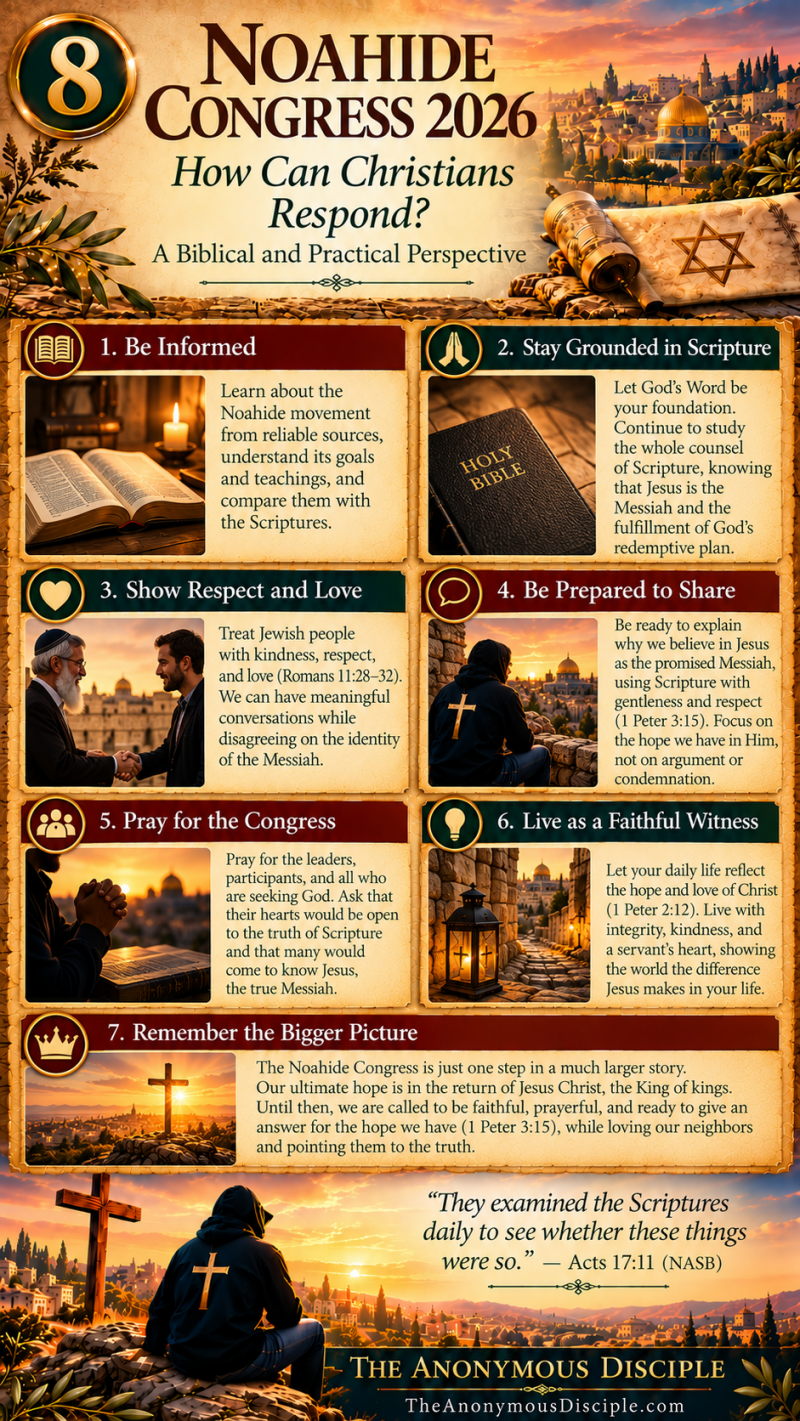
At The Anonymous Disciple, our purpose is not to promote fear, speculate about hidden agendas, or condemn people because of their religion. Our purpose is to investigate documented teachings and proposals, compare them with Scripture, and encourage believers to remain firmly grounded in Jesus Christ.
What You'll Find in This Study
Understanding the Congress and Its Teachings
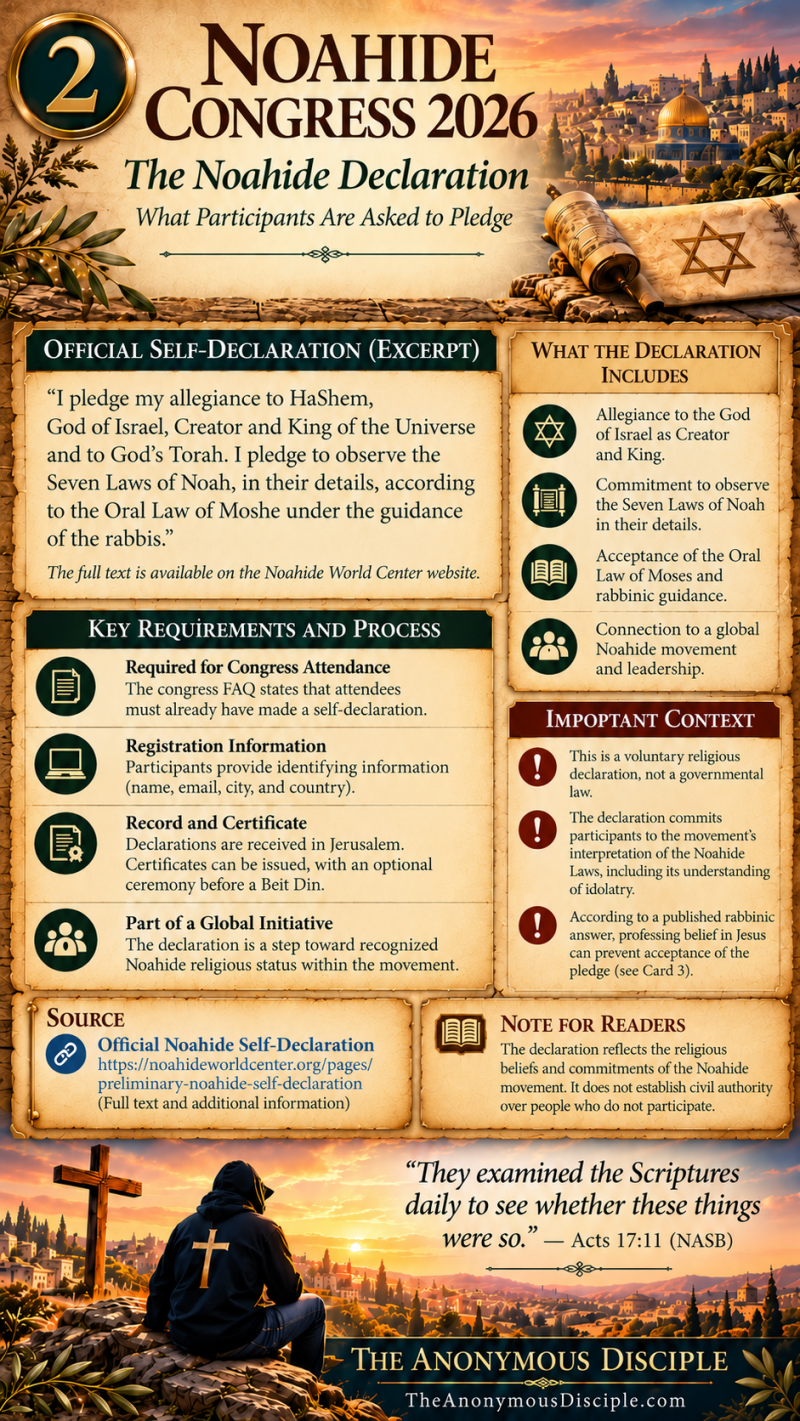
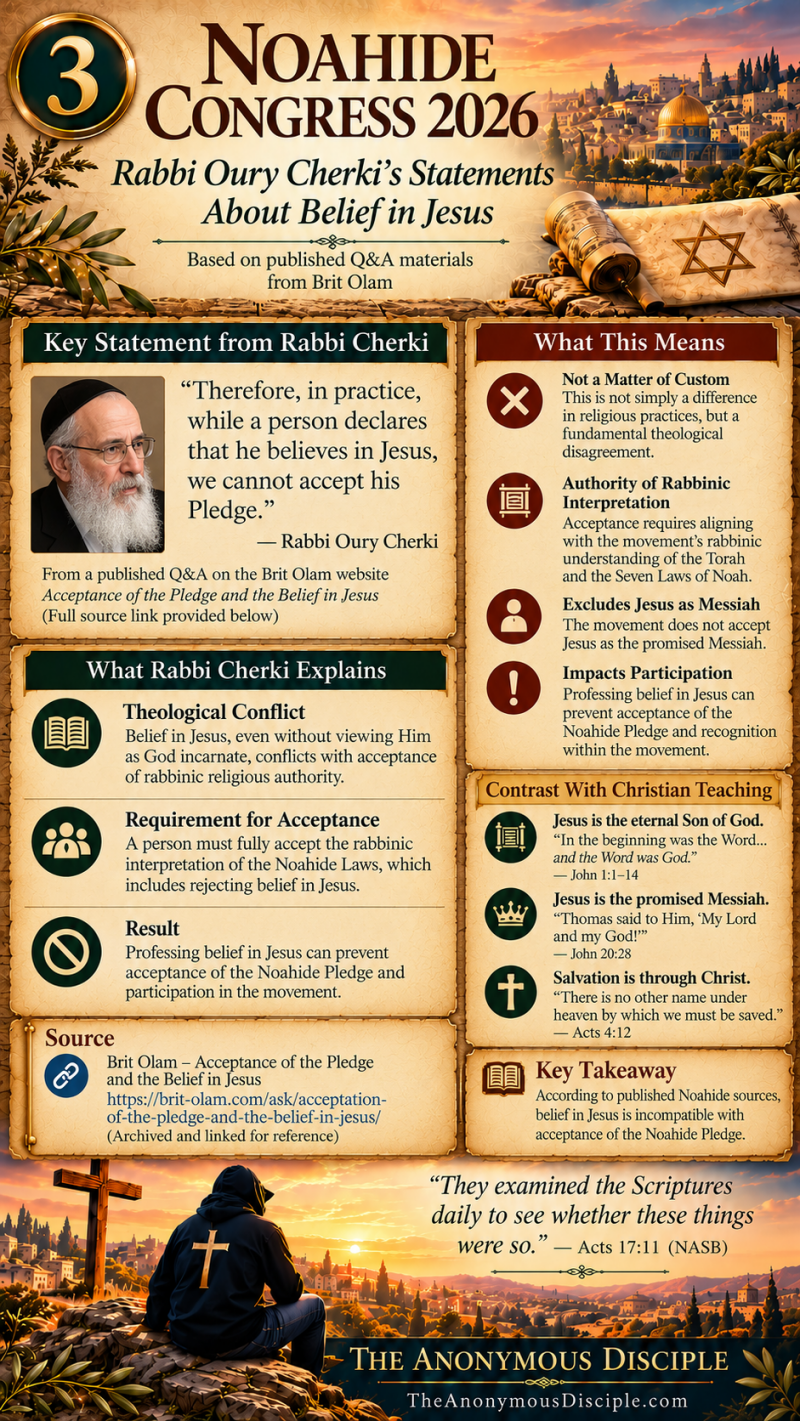
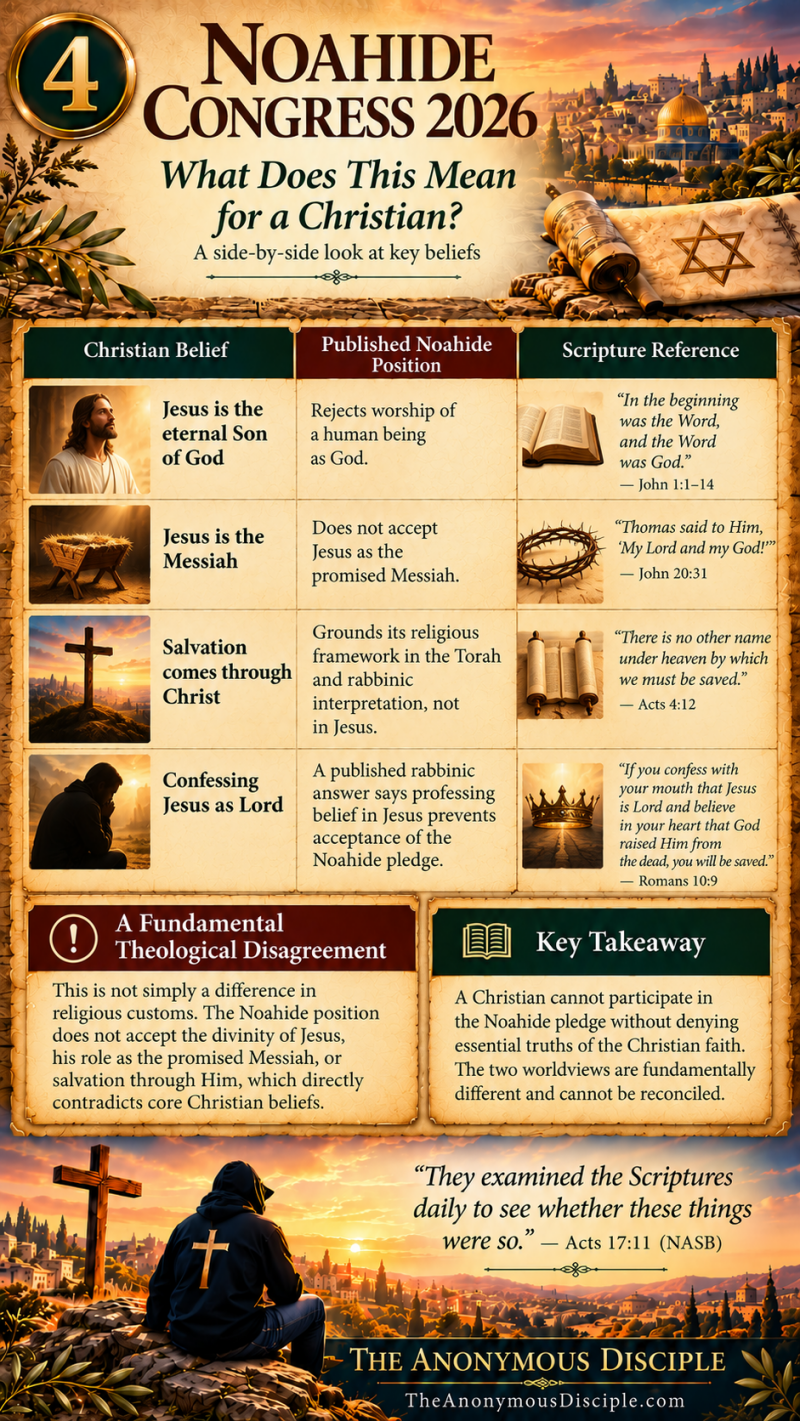
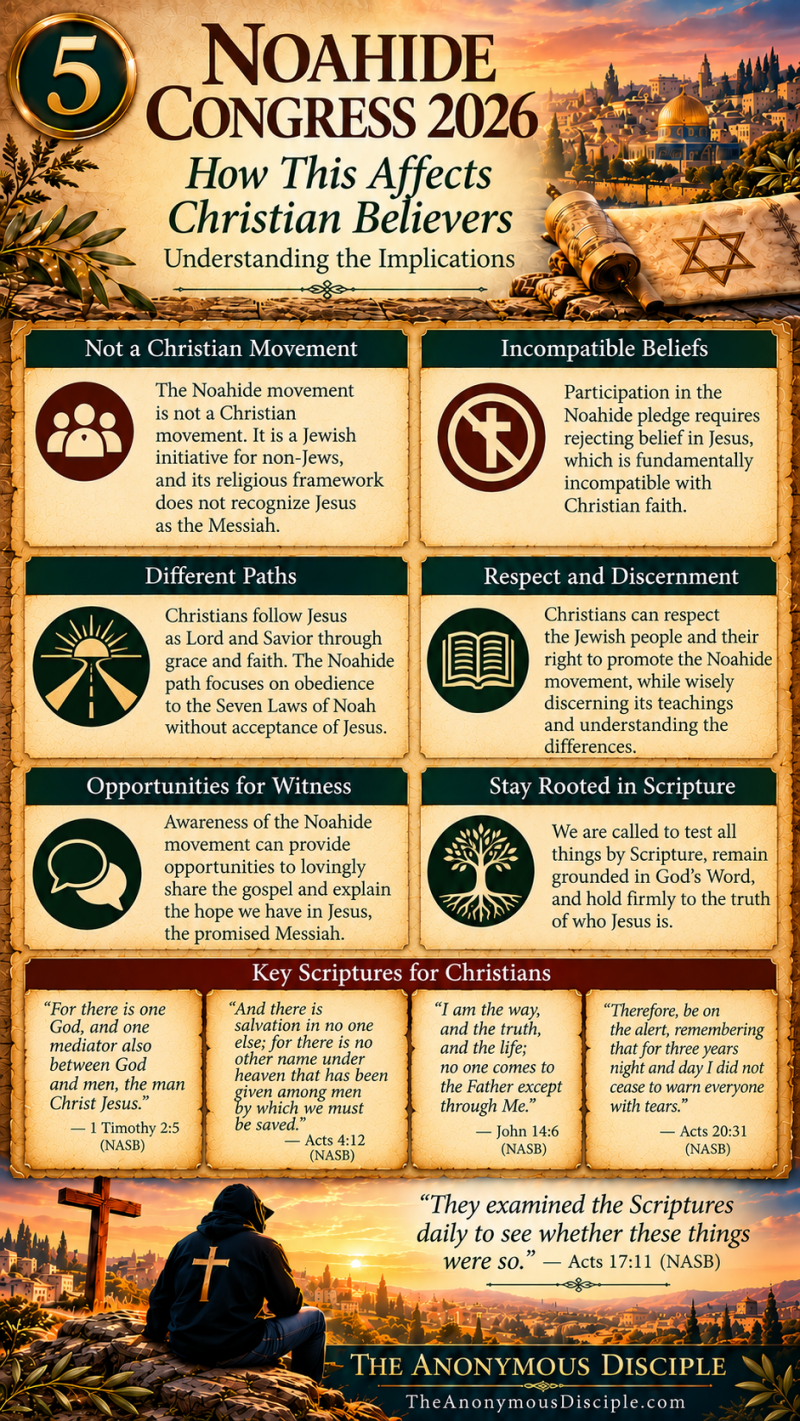
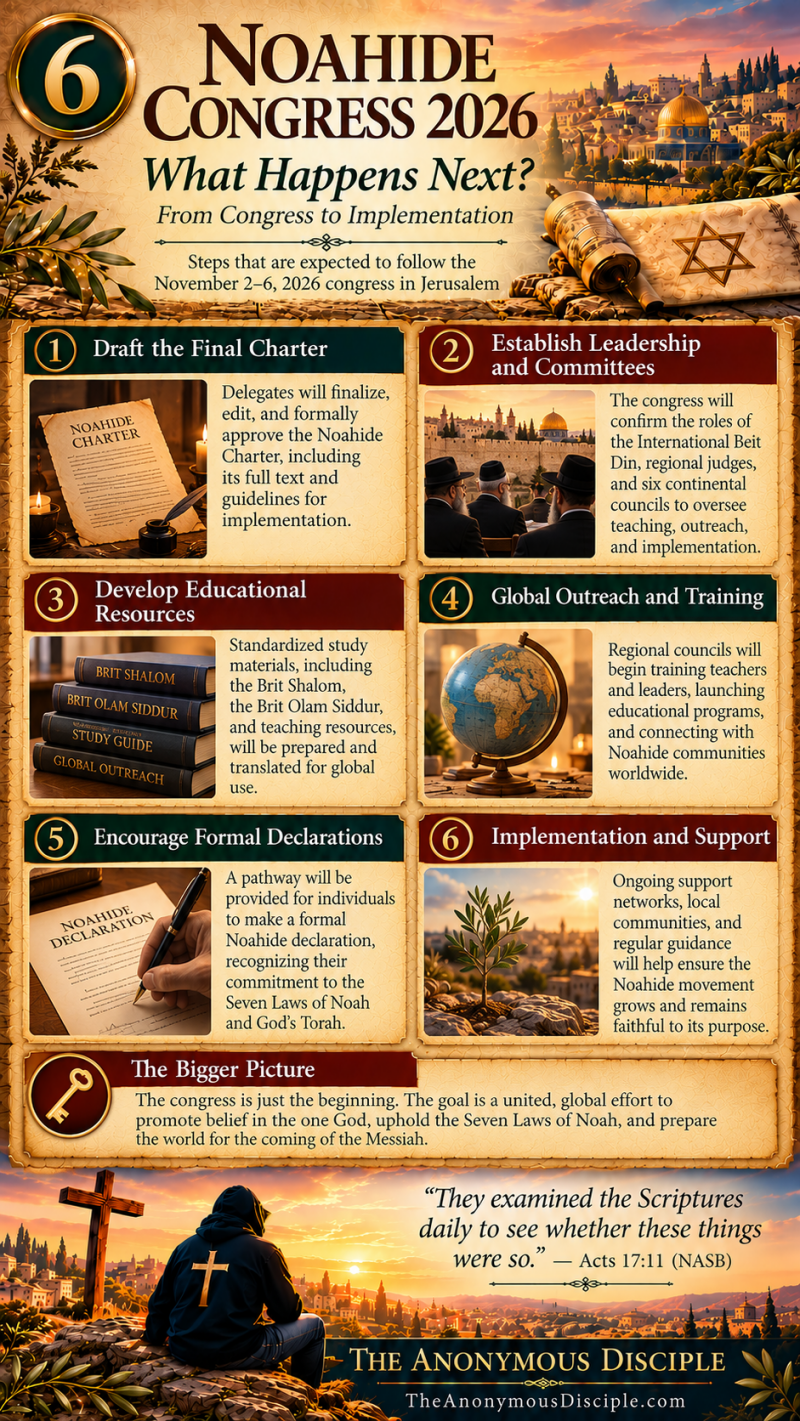
We begin with eight foundational cards examining the congress's stated goals, proposed institutions, Noahide declarations, Rabbi Oury Cherki's teachings concerning Jesus, the differences between Noahide theology and Christianity, possible implications for Christians, future plans, and how believers can respond with biblical discernment.
Religious Cooperation or Religious Authority?
Our companion studies explore the difference between peaceful interfaith dialogue and religious authority over others, including questions about religious liberty, government involvement, and the distinction between theological disagreement and legal coercion.
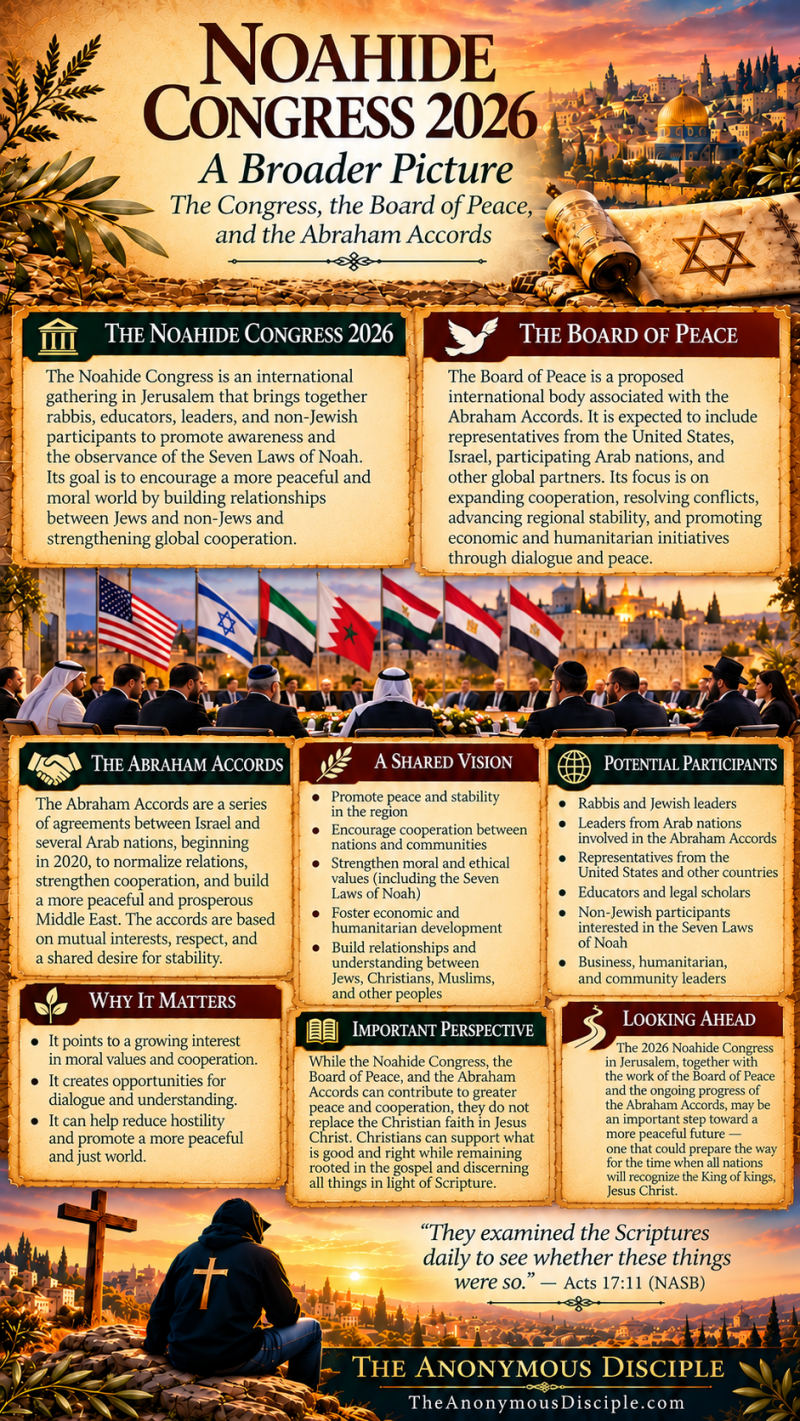
We also examine the Noahide movement's international outreach, its published engagement with Muslim communities, and questions surrounding the Abraham Accords and other international initiatives—carefully distinguishing verified connections from speculation.
The Nations and Their Religious Backgrounds
We examine the countries discussed in connection with the congress, their religious demographics, and the diversity of beliefs represented around the world. Announced participation and confirmed attendance are not necessarily the same, and demographic figures do not tell us what individual delegates believe.
Islam, Christianity & Civic Influence
Additional companion cards explore:
-
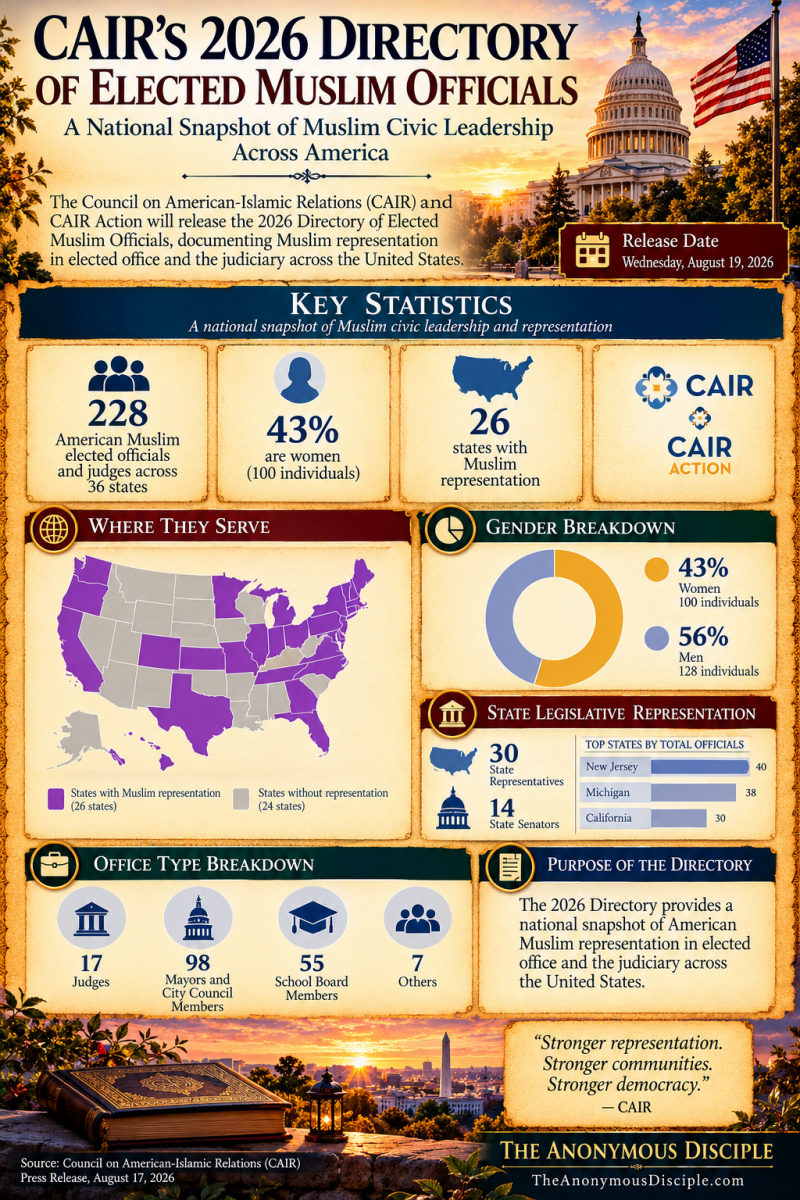
CAIR's 2026 Directory of Elected Muslim Officials in the United States.
-
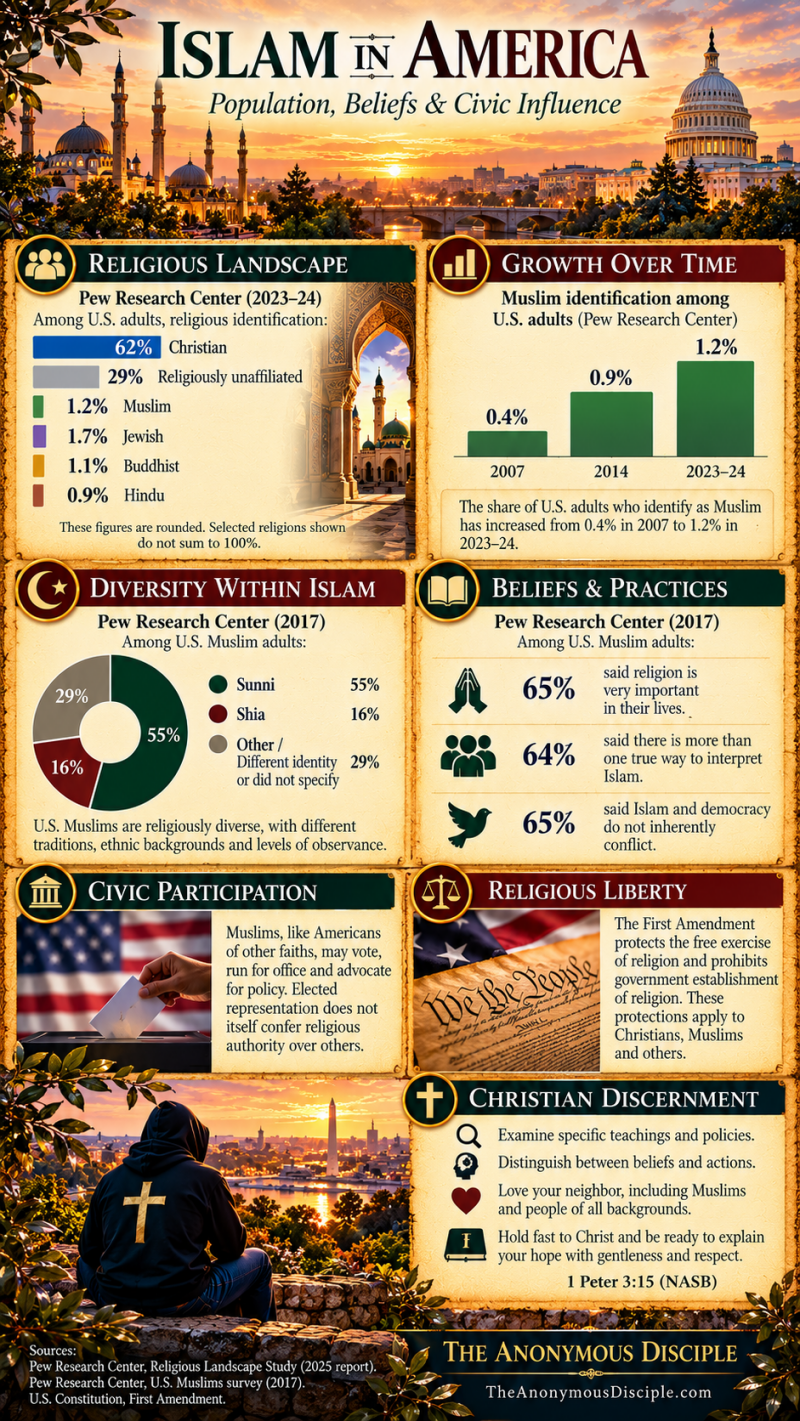
Islam in America: population, beliefs, religious diversity, and civic participation.
-
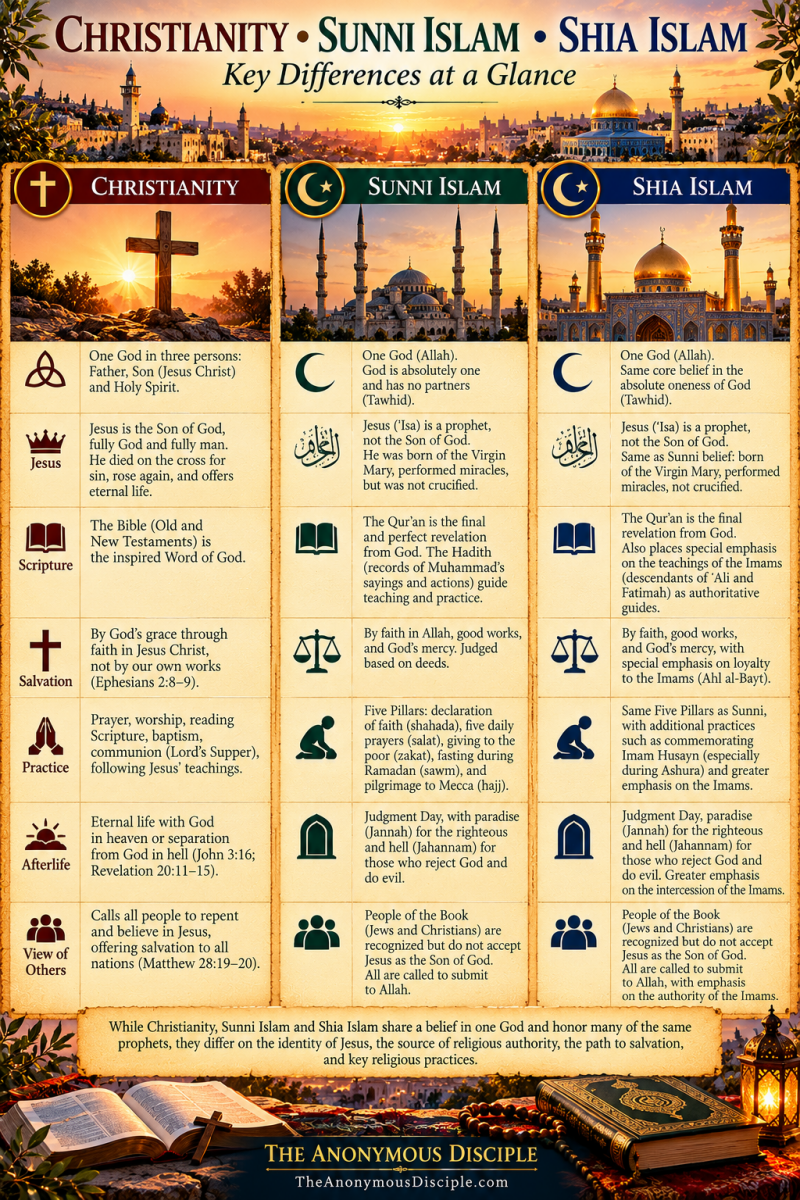
The principal theological differences between Christianity, Sunni Islam, and Shia Islam.
These comparisons help us understand religious beliefs and public participation without treating entire populations as though they share one political agenda.
Religious Freedom and the Persecuted Church
Our research also considers the broader realities of Christian persecution and religious liberty, including:
-
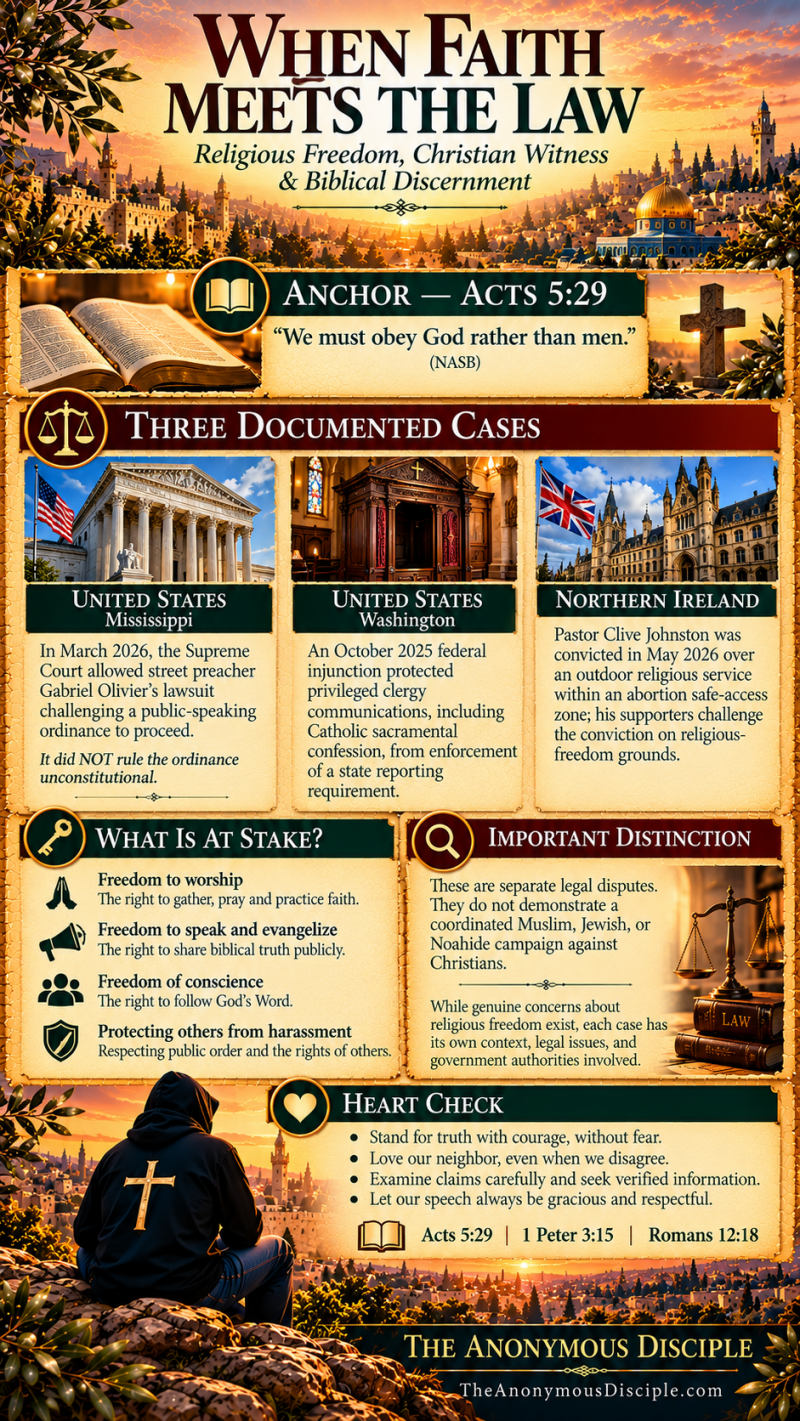
When Faith Meets the Law — documented religious-freedom disputes involving Christian worship, evangelism, and conscience.
-
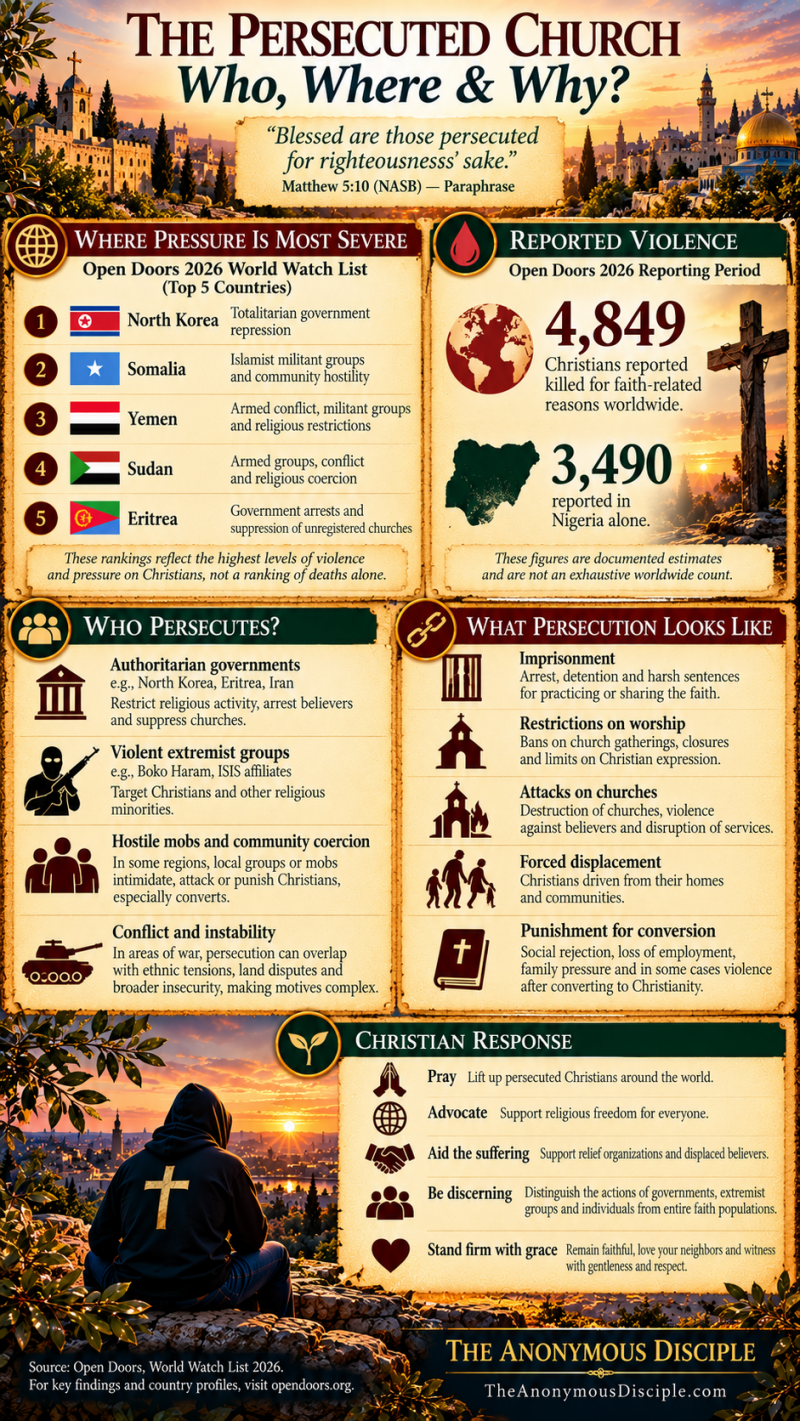
The Persecuted Church: Who, Where & Why? — countries facing severe persecution and the different sources of hostility toward Christians.
-
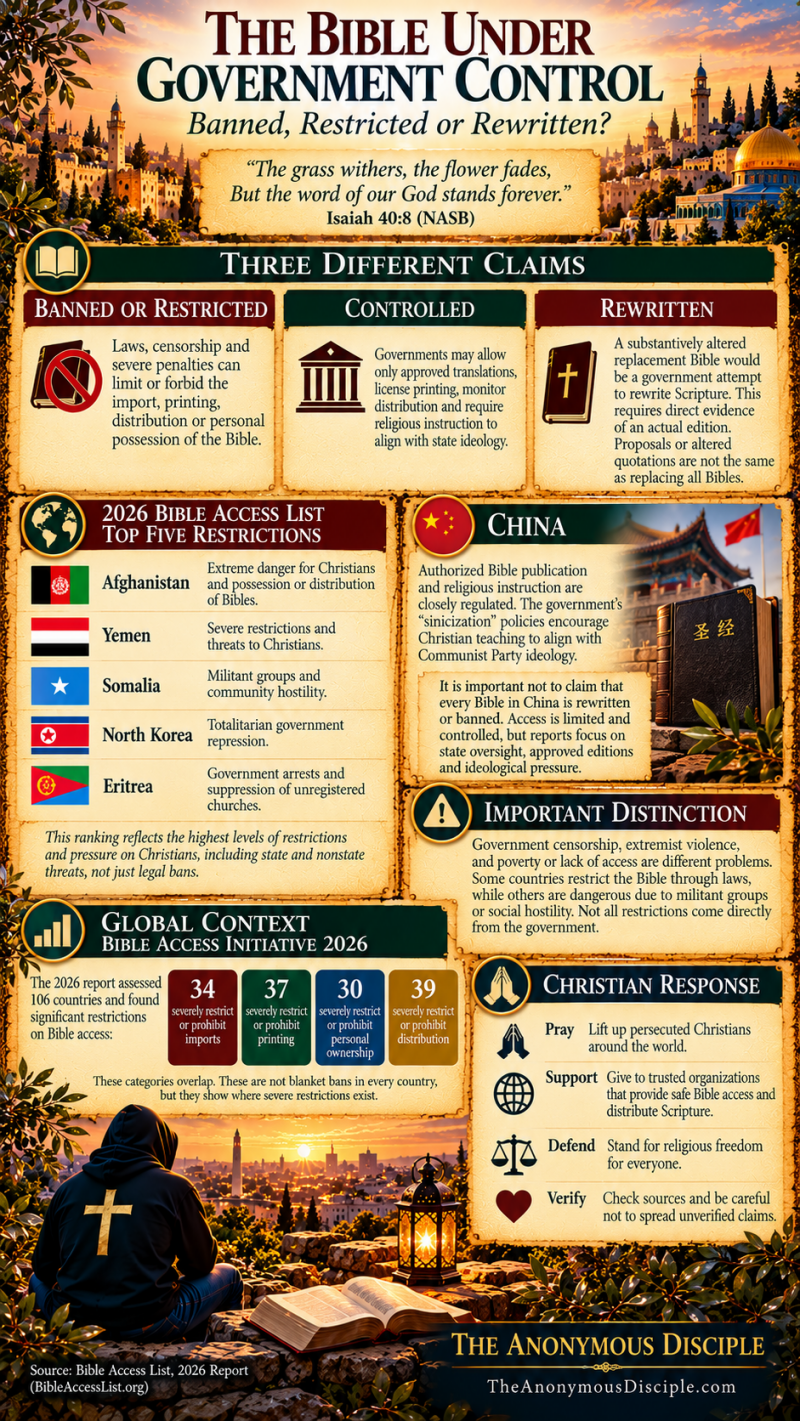
The Bible Under Government Control: Banned, Restricted or Rewritten? — restrictions on Bible ownership, publication, distribution, and religious teaching.
-
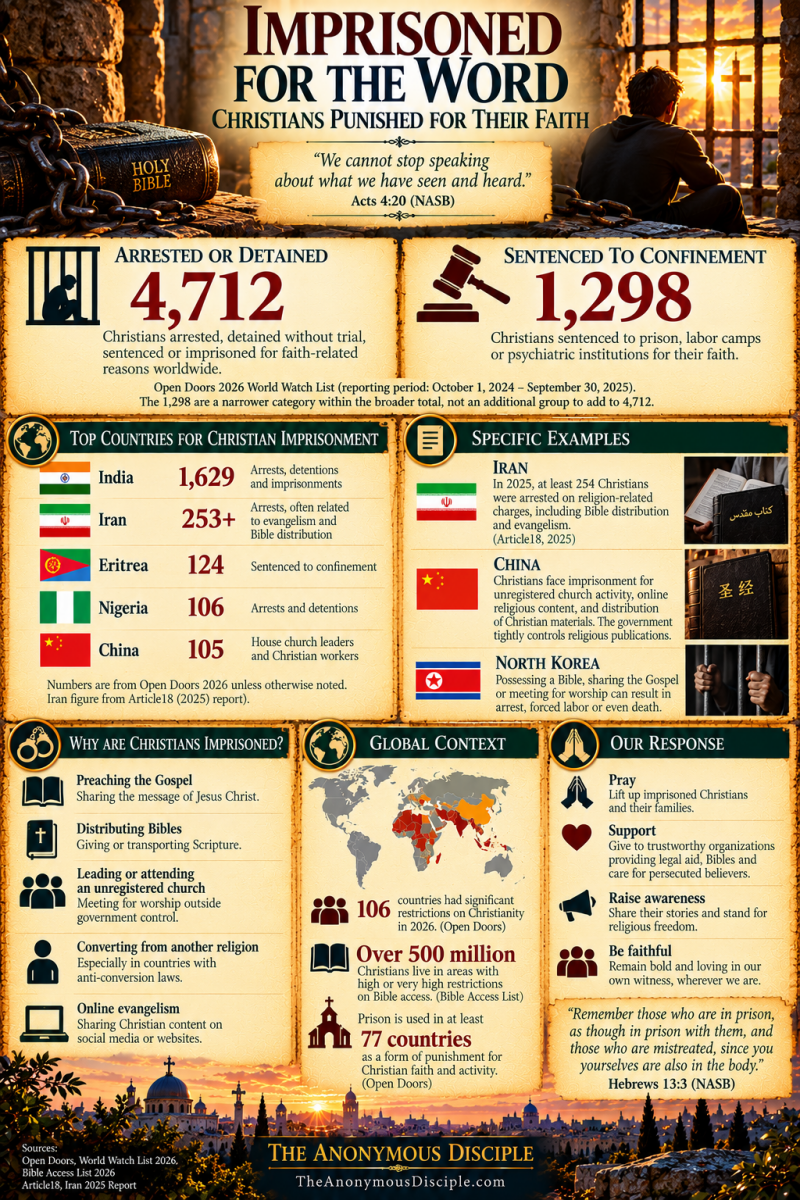
Imprisoned for the Word — documented arrests, detentions, and imprisonment of Christians for faith-related reasons.
These are broader studies of religious freedom worldwide. They do not establish that the Noahide Congress is responsible for these events.
Why This Matters to Christians
The central question for followers of Jesus is not simply whether different religious communities can cooperate peacefully. It is whether their teachings agree with the gospel.
Christianity proclaims that Jesus Christ is the Son of God, crucified and risen, and that salvation is found through Him.
The Noahide religious framework does not affirm these central Christian claims.
That theological difference deserves serious examination, but disagreement does not remove our responsibility to love our neighbors, defend freedom of conscience, and speak truth with gentleness and respect.
Our Foundation: Acts 17:11
The Bereans were commended because they received the message eagerly while examining the Scriptures to determine whether what they heard was true.
That is the spirit in which we approach this study.
We encourage readers to examine the original sources, distinguish established facts from proposed plans, test religious teachings against God's Word, and remember Christians who suffer for their faith throughout the world.
Our confidence is not in religious institutions, political alliances, or human authority. Our hope is in Jesus Christ.
May we remain watchful without becoming fearful, discerning without becoming hostile, and faithful without compromising the truth of the gospel.
The Anonymous Disciple
Studying Scripture. Seeking Truth. Following Christ.
TheAnonymousDisciple.com
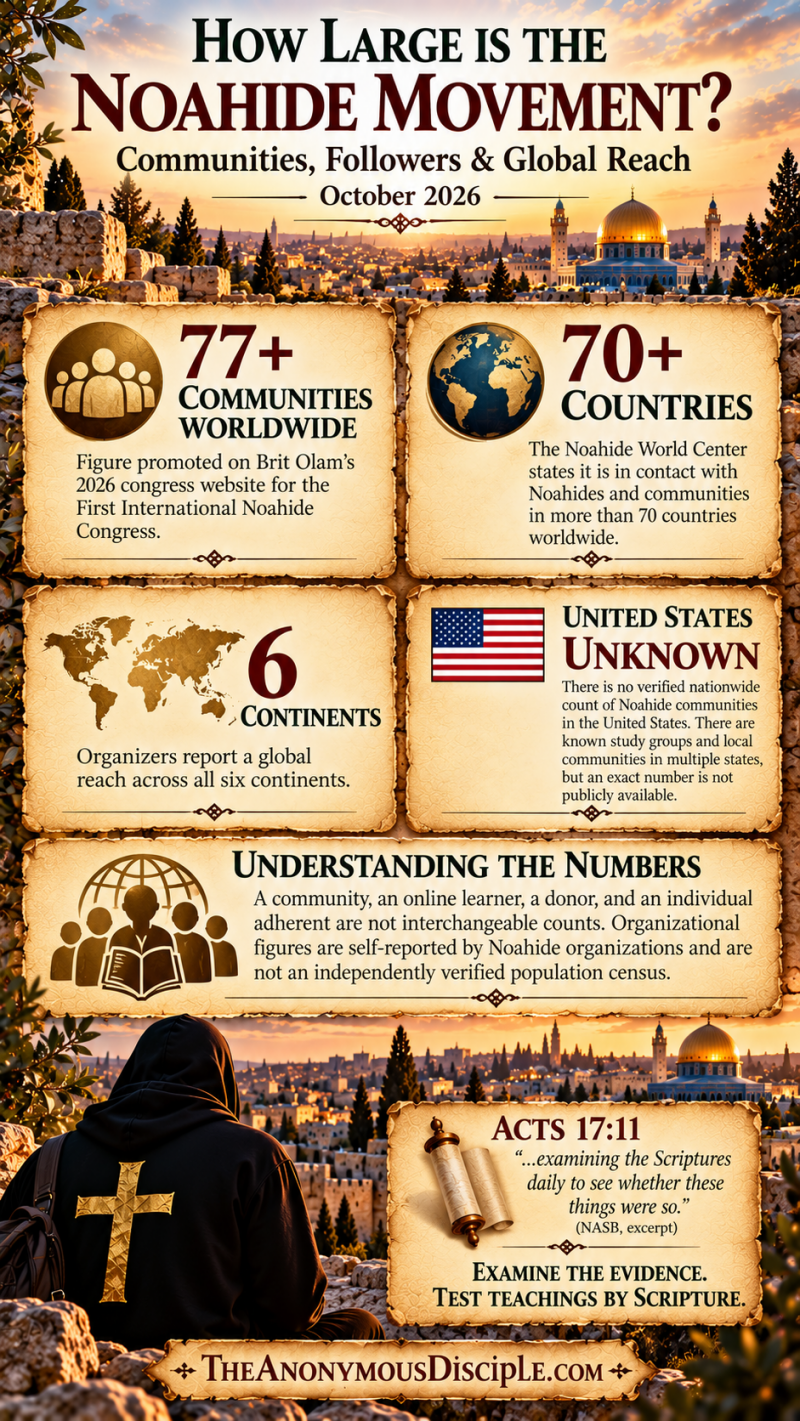
The best-supported picture is that organized Noahide communities exist across dozens of countries, but there is no reliable public census of how many communities or individual Noahides are in the United States.
What the organizations themselves report
Worldwide communities
Several hundred
Brit Olam estimate, July 2026Countries reached
70+
Noahide World CenterWeekly learners
~10,000
Brit Olam's study-engagement estimateUnited States communities
Unknown
No verified nationwide countSources: Brit Olam's published methodology and Noahide World Center's global outreach page. These are organizational self-reports, not independently audited census figures. (Noahide World Center+1)
An important distinction: Brit Olam counts its communities as local groups in ongoing contact with the organization. Its approximately 10,000 weekly learners include people engaging with online material—not necessarily formally affiliated Noahides.
What about the United States?
We have evidence of Noahide activity across multiple states, but not a defensible national total.
The Ask Noah International directory lists contacts across much of the United States, including Arizona, Texas, Florida, New York, California, and others. However, many are rabbis offering guidance rather than leaders of distinct Noahide congregations. (AskNoah.org)
An especially interesting historical detail: in an interview published around 2022, Rabbi Cherki described 65 families from Arizona seeking affiliation with Brit Olam. He also mentioned approximately 1,000 Noahides in southern India and around 100 in Congo. These are historical, self-reported examples—not verified 2026 totals.
Can we make an educated estimate?
We can describe the scale, but cannot in good faith publish a numerical U.S. estimate yet.
What we can responsibly say:
United States -- Multiple communities and study groups; nationwide total unknown
Worldwide -- Brit Olam reports several hundred groups in contact with it
India -- Historically documented organized communities, including a reported ~1,000 people in southern India
Congo -- A historical report described approximately 100 adherents in one community
Australia, Philippines, Kenya, UK -- Identifiable groups or community contacts, but no comprehensive national totals
There is also an interesting discrepancy: one Brit Olam congress promotional page says 77+ Noahide communities worldwide, while its July 2026 organizational report says several hundred. Those figures may reflect different counting criteria, but the sources don't clearly reconcile them.
For our study, we're currently thinking “several hundred communities worldwide, according to Brit Olam,” rather than inventing or guessing a precise figure.
“How Large Is the Noahide Movement? Communities, Followers & Global Reach.” We are trying to distinguish organized groups, online students, and individual adherents, with the source and date attached to each number.
One especially worthwhile question to investigate next is how many U.S. Noahide groups are actually meeting regularly, versus existing primarily online. That would tell us more about the movement's organizational presence than a raw membership estimate.


Add comment
Comments