

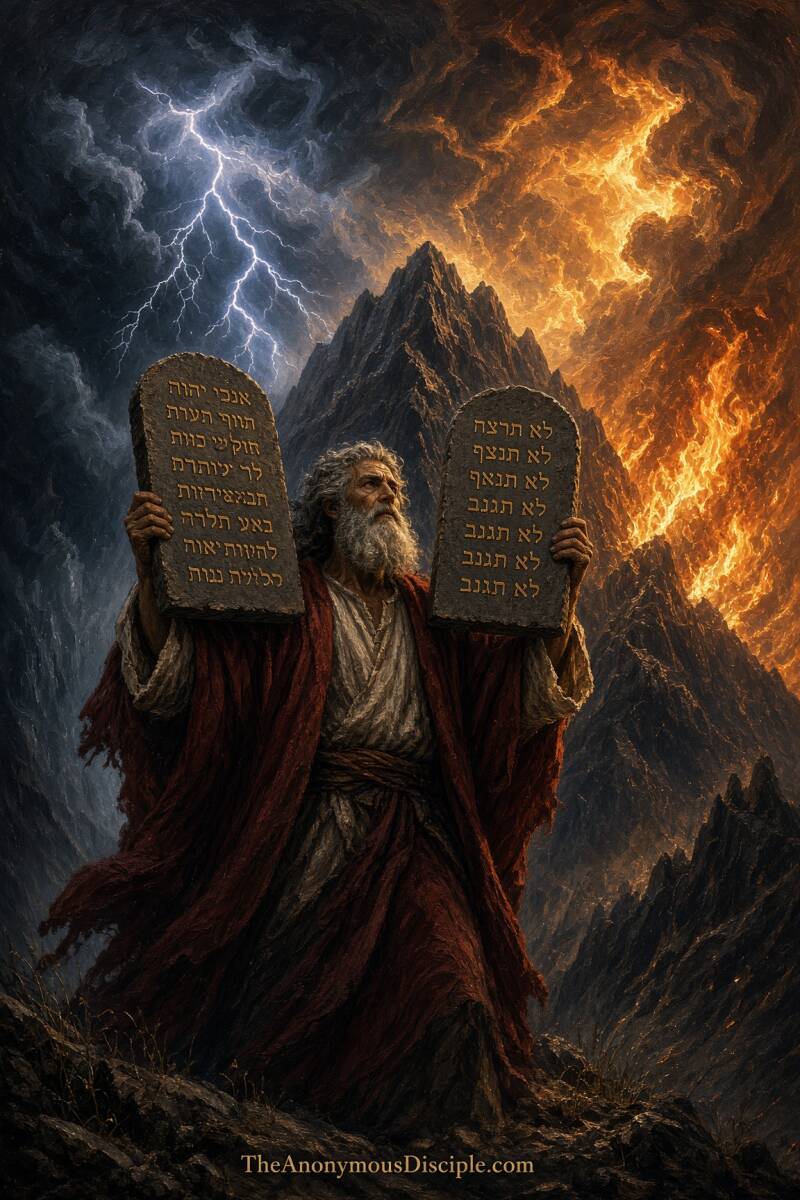
Today’s Study — Deuteronomy 10:12–15 | ⚓️ Verse 12
What does the Lord actually ask of His people?
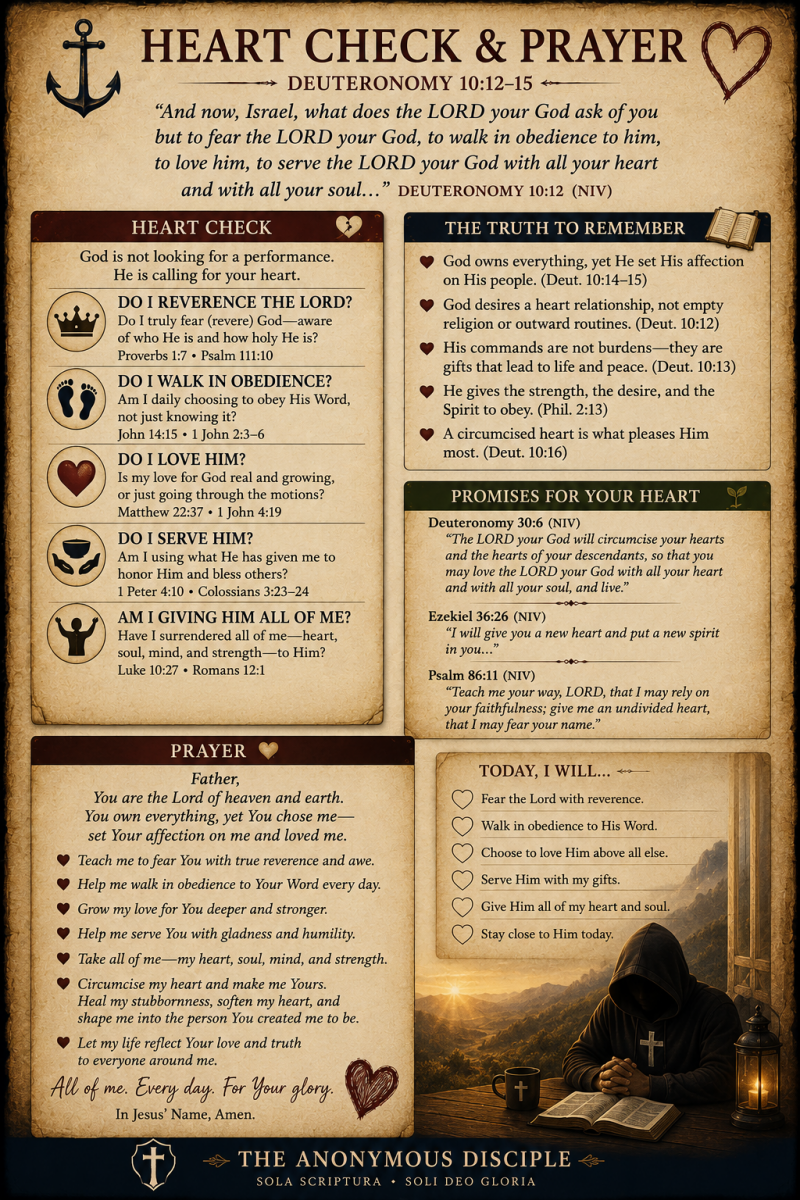
Moses’ answer is remarkably simple—and incredibly deep: fear Him, walk with Him, love Him, serve Him, and give Him your whole heart and soul.
This isn’t a checklist for earning God’s love. In fact, Moses reminds Israel that the heavens, the earth, and everything in them already belong to God—yet He chose to set His affection upon His people (Deuteronomy 10:14–15).
Today we’ll look at what it truly means to fear the Lord, why obedience flows from love, and why God has always desired more than outward religion. He wants a heart that belongs completely to Him.
Reverence. Obedience. Love. Service. Surrender.
Not part of me.
All of me. Every day. For His glory. ❤️🙏⚓️
King James Version (KJV)
12 And now, Israel, what doth the LORD thy God require of thee, but to fear the LORD thy God, to walk in all his ways, and to love him, and to serve the LORD thy God with all thy heart and with all thy soul,
13 To keep the commandments of the LORD, and his statutes, which I command thee this day for thy good?
14 Behold, the heaven and the heaven of heavens is the LORD's thy God, the earth also, with all that therein is.
15 Only the LORD had a delight in thy fathers to love them, and he chose their seed after them, even you above all people, as it is this day.
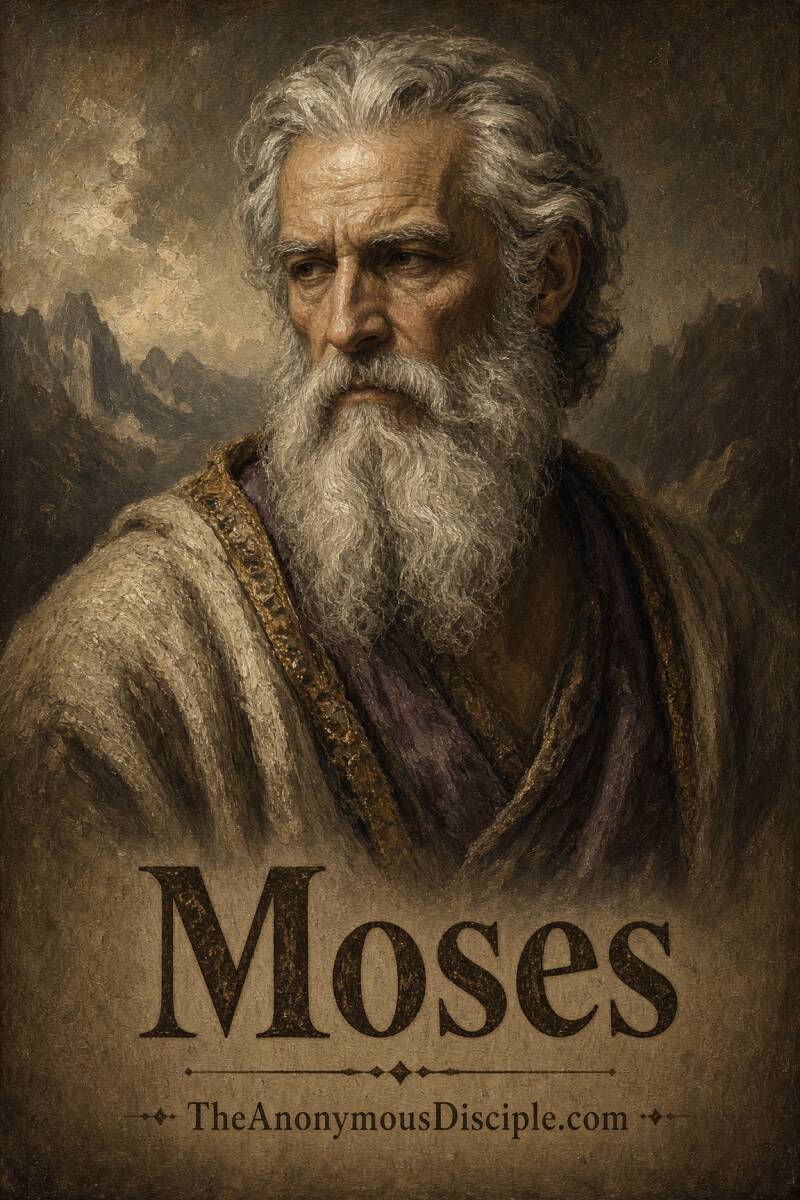
English Standard Version (ESV)
12 “And now, Israel, what does the Lord your God require of you, but to fear the Lord your God, to walk in all his ways, to love him, to serve the Lord your God with all your heart and with all your soul,
13 and to keep the commandments and statutes of the Lord, which I am commanding you today for your good?
14 Behold, to the Lord your God belong heaven and the heaven of heavens, the earth with all that is in it.
15 Yet the Lord set his heart in love on your fathers and chose their offspring after them, you above all peoples, as you are this day.
Who Wrote It?
The traditional and long-held biblical view is that Moses wrote Deuteronomy.
The book itself presents these words as Moses speaking to the people of Israel (see Deuteronomy 1:1, 1:5, 31:9, 31:24). Both the Old Testament and the New Testament treat Moses as the author of this material. The last chapter (about Moses’ death) was almost certainly added later, most likely by Joshua or another close associate.
Where Was It Written / Spoken?
These words were spoken on the plains of Moab, on the east side of the Jordan River.
Israel was camped there, right across from the Promised Land (near what is today the country of Jordan). They had finished their 40 years of wandering in the wilderness and were preparing to cross the Jordan River into Canaan under Joshua’s leadership. Moses himself would not enter the land.
When Was It Written?
According to the timeline given in the Bible itself, this took place in the 40th year after the Exodus from Egypt, specifically in the 11th month of that year (Deuteronomy 1:3).
Most conservative Bible teachers date this to around 1406 BC (or roughly 1400 BC). Moses was about 120 years old at the time and spoke these words only a short while before he died on Mount Nebo.
*A note on modern scholarship:
Many academic scholars today believe the book reached its final written form later (often linking a major stage of it to the time of King Josiah around 622 BC). However, the traditional view that Moses is the primary author, speaking these words on the plains of Moab just before Israel entered the land, remains the position held by many faithful Bible students and is consistent with how the rest of Scripture treats the book.*
___________________________________________________________________________________________________
Context
Moses is speaking to a new generation of Israelites. Their parents had come out of Egypt, seen God’s miracles, and then repeatedly rebelled against Him—especially with the golden calf and by refusing to trust God when it was time to enter the Promised Land. Because of that unbelief, almost that whole generation died in the wilderness over 40 years.
Now their children are grown. They are standing on the plains of Moab, looking across the Jordan River at the land God had promised. Moses himself will die soon and will not go in with them. Joshua will lead them instead.
So Moses is giving them his final, most important instructions. He is basically saying:
“You are about to go into the land. Don’t make the same mistakes your parents did. Remember how faithful God has been to you even when your parents failed Him. He still chose you. He still loves you. Now here’s what He wants from you in return…”
That is exactly when he speaks the words of Deuteronomy 10:12-15.
He reminds them that God owns everything, yet He set His heart on their ancestors and on them. Therefore, the proper response is not half-hearted religion, but wholehearted fear, love, walking in His ways, and serving Him with all their heart and soul.
In short, these verses are Moses’ loving, urgent call to a new generation:
God has been faithful to you. Now respond to Him with all that you are.
Here’s a simple, verse-by-verse breakdown of Deuteronomy 10:12-15 in everyday language, Sherri.
Verse 12
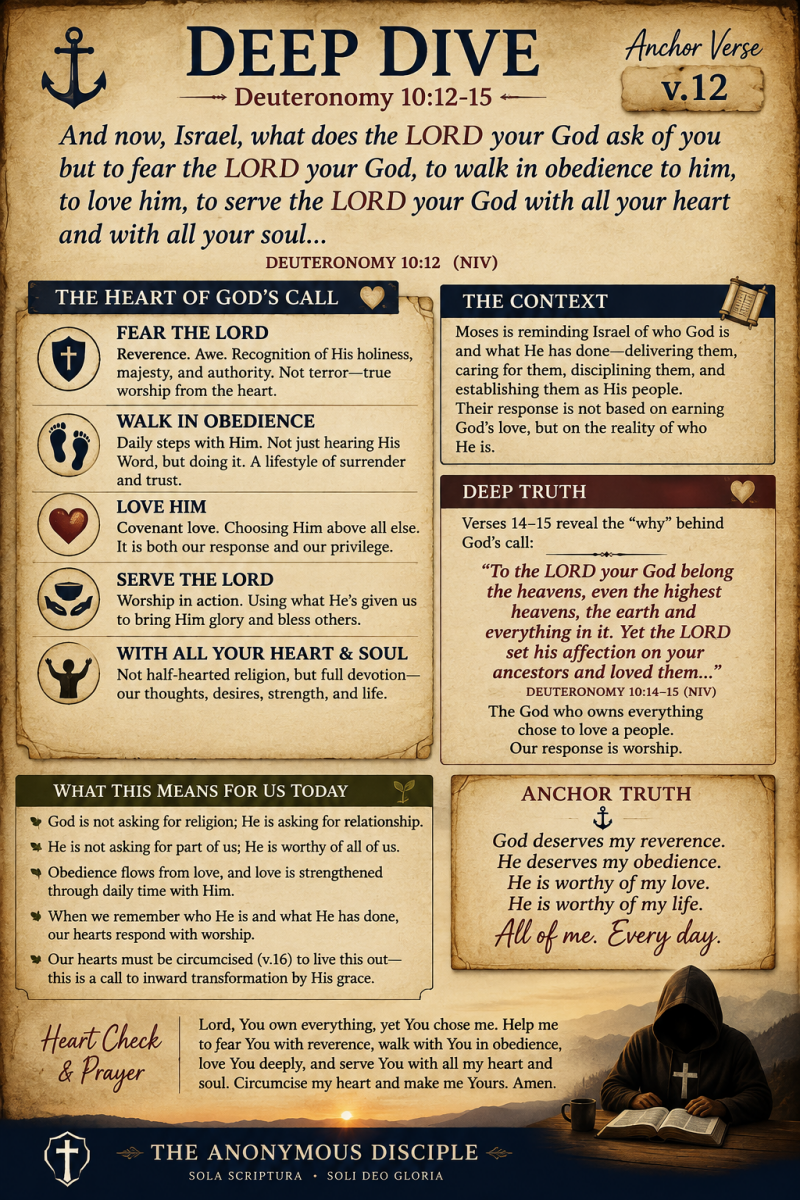
“And now, Israel, what does the Lord your God require of you, but to fear the Lord your God, to walk in all his ways, to love him, to serve the Lord your God with all your heart and with all your soul…”
God is basically asking: “What do I really want from you?”
It’s not a long list of complicated rules. He wants four simple things:
- Respect and reverence Him (that’s what “fear” means here — not being terrified, but treating Him with deep respect).
- Live the way He shows us to live.
- Love Him.
- Serve Him with everything you’ve got — your whole heart and soul, not just half-heartedly.
Verse 13
“…and to keep the commandments and statutes of the Lord, which I am commanding you today for your good?”
Keeping His commands isn’t meant to make life harder. God says He gives them “for your good.”
Obeying Him is actually what’s best for us. It’s like a loving parent giving instructions that protect and help their child.
Verse 14
“Behold, to the Lord your God belong heaven and the heaven of heavens, the earth with all that is in it.”
This is a big reminder of who God is.
Everything belongs to Him — the highest heavens, the earth, and everything in it. He is the owner of it all. He doesn’t need anything from us. He’s not asking us to obey because He’s lacking something.
Verse 15
“Yet the Lord set his heart in love on your fathers and chose their offspring after them, you above all peoples, as you are this day.”
Even though God owns everything and needs nothing, He still chose to love Israel’s ancestors (Abraham, Isaac, and Jacob) and then chose their descendants — including the people Moses was speaking to.
He set His heart on them. He picked them out of love.
That’s the heart of it: the God who owns the whole universe chose to love them (and us) on purpose.
In short, these verses show us that God wants a real relationship with His people — one marked by respect, love, wholehearted service, and obedience — not because He needs us, but because He loves us and wants what’s best for us.
Cross-References for the Whole Passage (Deuteronomy 10:12-15)
These verses help show the bigger picture of what God requires and why He chose Israel:
- Deuteronomy 6:4-5 – The well-known “Hear, O Israel” passage that calls for loving God with all your heart, soul, and strength.
- Deuteronomy 4:37 – God loved the fathers and chose their descendants.
- Deuteronomy 7:6-8 – God chose Israel not because they were the strongest, but because He loved them and kept His promise.
- Micah 6:8 – Another clear answer to the question “What does the Lord require of you?” (to act justly, love mercy, and walk humbly with God).
- Psalm 135:4 – The Lord has chosen Jacob as His treasured possession.
- 1 Peter 2:9 – Believers in Jesus are also called a chosen people, a royal priesthood, and God’s special possession.
Cross-References Specific to Verse 12 (Today’s Anchor Verse)
These focus on the four things God asks for: fear Him, walk in His ways, love Him, and serve Him with all your heart and soul.
On fearing the Lord and walking in His ways
- Deuteronomy 5:33 – Walk in all the ways the Lord has commanded so that you may live and prosper.
- Deuteronomy 6:2 – Fear the Lord by keeping His commands so that you and your children may live long.
- Deuteronomy 6:13 – Fear the Lord your God, serve Him only.
- Deuteronomy 8:6 – Observe the commands of the Lord by walking in His ways and fearing Him.
On loving God with all your heart and soul
- Deuteronomy 6:5 – “Love the Lord your God with all your heart and with all your soul and with all your strength.”
- Deuteronomy 11:13 – Love the Lord your God and serve Him with all your heart and with all your soul.
- Matthew 22:37 – Jesus said, “Love the Lord your God with all your heart and with all your soul and with all your mind.”
- Luke 10:27 – The same command quoted by the expert in the law when Jesus asked what is written in the Law.
- Mark 12:30 – Another place where Jesus quotes this as the greatest commandment.
On serving God wholeheartedly
- Exodus 23:25 – Serve the Lord your God, and He will bless your food and water.
- Joshua 24:14 – Fear the Lord and serve Him with all faithfulness.
- 1 Samuel 12:24 – Fear the Lord and serve Him faithfully with all your heart.
A close parallel
- Micah 6:8 – “He has shown you, O mortal, what is good. And what does the Lord require of you? To act justly and to love mercy and to walk humbly with your God.”
These connections show that what God asked of Israel in Deuteronomy is the same heart attitude Jesus later called the greatest commandment.
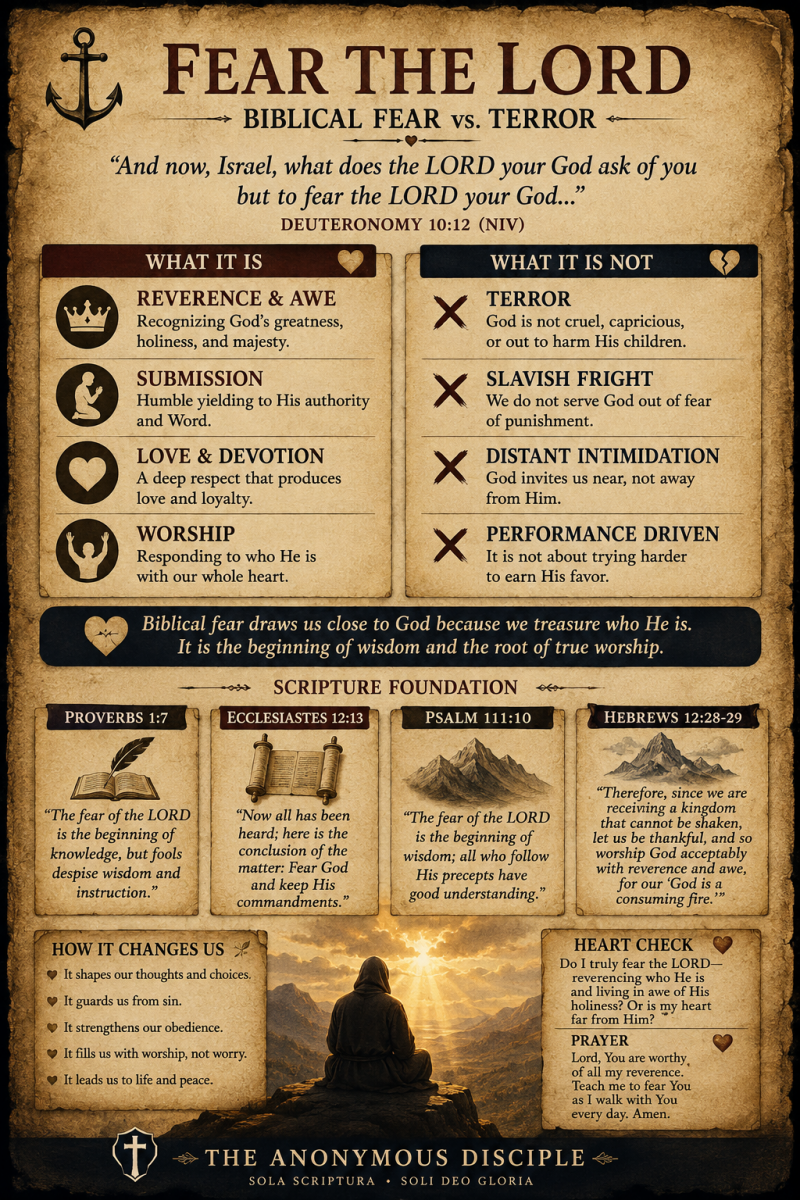
Here’s how Deuteronomy 10:12-15 still speaks to us today as followers of Jesus.
God’s heart has not changed.
Just as He told Israel, “What do I really want from you?” He still wants the same from us:
- To revere Him (that deep respect and awe we call the fear of the Lord)
- To walk in His ways
- To love Him
- To serve Him with our whole heart and soul
Jesus Himself confirmed this when He said the greatest commandment is to “Love the Lord your God with all your heart and with all your soul and with all your mind” (Matthew 22:37). He was pointing straight back to the same truth Moses spoke.
The good news for us is even richer.
Israel was chosen because God set His love on them—not because they earned it. In the same way, God has chosen us in Christ. He loved us first (1 John 4:19). Jesus obeyed perfectly where Israel (and we) failed, and through His death and resurrection He brings us into a new covenant. Now the Holy Spirit lives in us and actually helps us love and serve God from the heart.
So when we read Deuteronomy 10:12 today, it is not a heavy demand we try to meet in our own strength. It is an invitation from a Father who already loves us and has already given us everything in Jesus. Our response is simply to give Him our whole selves in return—day by day, with the help of His Spirit.
In short:
The same God who owned the heavens and still chose Israel is the God who owns everything and still chose you.
And what He wants most is still the same: your heart.
🪄Jenny🪄 -
Deuteronomy 10:12 (NIV)
“And now, Israel, what does the LORD your God ask of you but to fear the LORD your God, to walk in obedience to him, to love him, to serve the LORD your God with all your heart and with all your soul…”
Look at that progression:
FEAR Him → WALK with Him → LOVE Him → SERVE Him → give Him ALL of you. ❤️
And I think there’s something especially important for us to dig into this morning: “fear the LORD” does not mean being terrified of God. This is covenant language—reverence, awe, recognizing who He is, and responding accordingly.
Then verses 14–15 give the reason this is so astonishing: everything belongs to God... yet He chose to set His affection on them.
Deuteronomy 10:14–15 (NIV)
“To the LORD your God belong the heavens, even the highest heavens, the earth and everything in it. Yet the LORD set his affection on your ancestors and loved them…”
That little word “Yet” gets me. 🥹
The God who owns the highest heavens chose to love.
And knowing what follows, I really want to take this through verse 16, too, because Moses immediately says, “Circumcise your hearts…” That connects fear, love, obedience, covenant, and inward heart transformation—and eventually takes us straight toward the New Covenant.
Add comment
Comments