

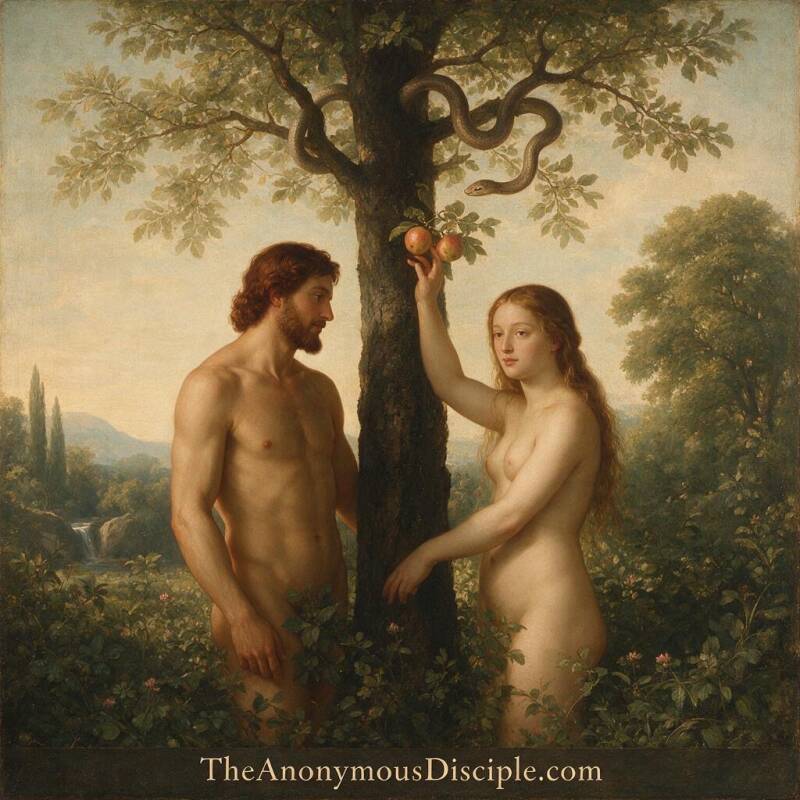
Before Adam and Eve ever left Eden, God had already announced that the serpent would not have the final word.
That's our study today. ❤️📜⚓️
And Genesis 3:15 is an incredible anchor because the first great catastrophe of Scripture contains, right inside God's judgment, the first glimmer of the rescue to come.
Today's study cards are listed below. Deep Dive is the main overview, then the companion cards are verse specific. Study notes are sprinkled within. Additional content buttons are off to the right. God bless & Happy Saturday!
📜 Deep Dive — Genesis 3:8–15
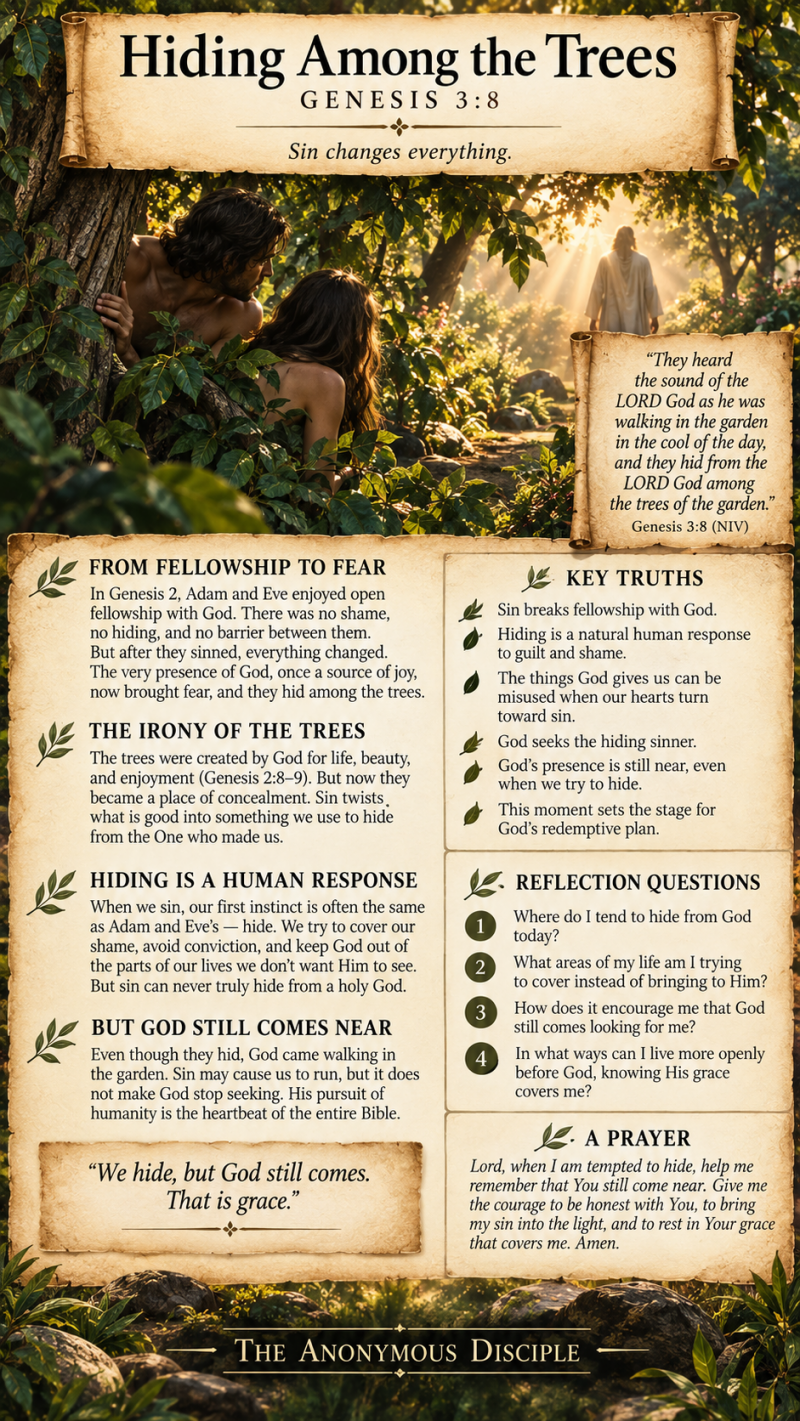
🌿 Hiding Among the Trees — what sin does to fellowship with God
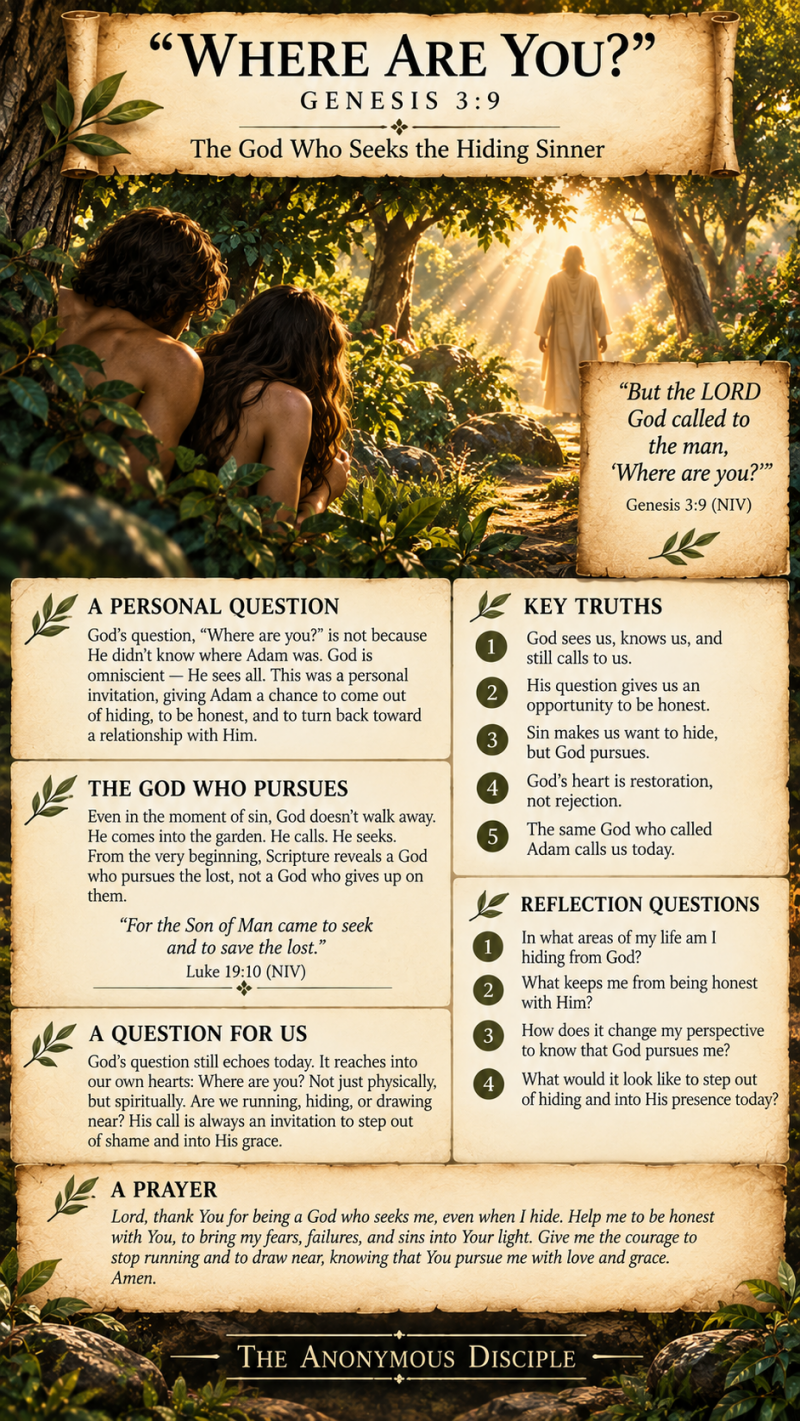
❤️ “Where Are You?” — the God who seeks the hiding sinner
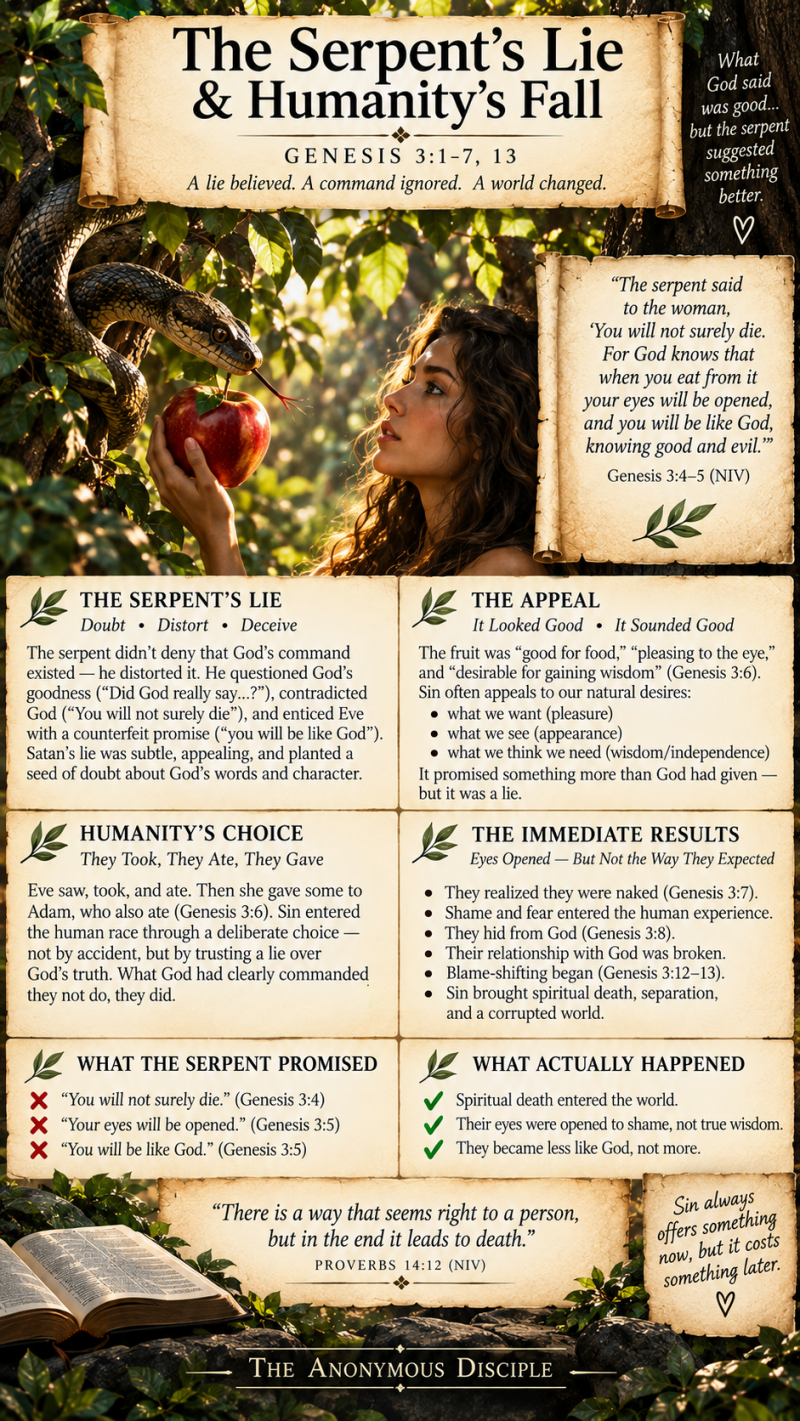
🐍 The Serpent's Lie & Humanity's Fall — deception, fear, shame and blame
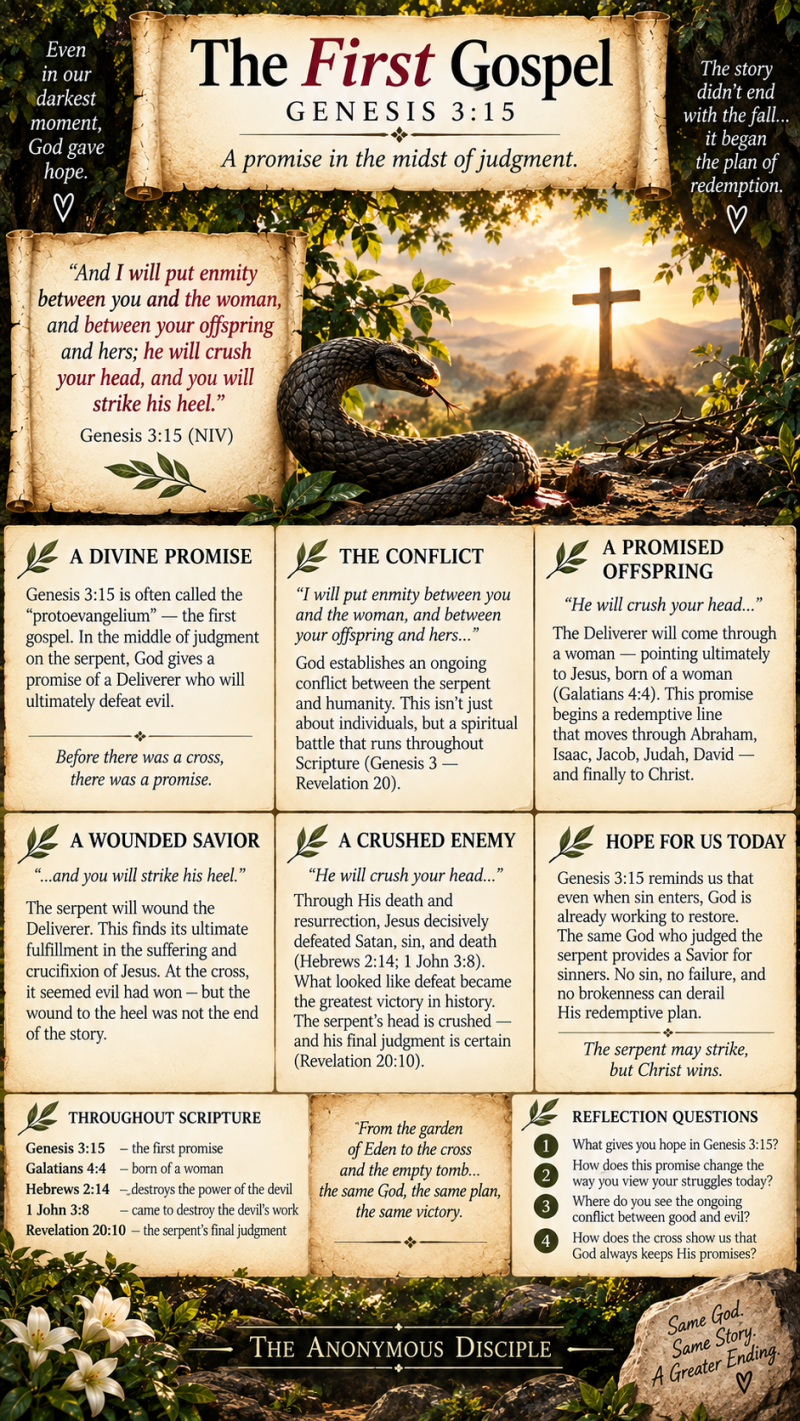
🌅 The First Gospel — Genesis 3:15 and the promise of a Deliverer
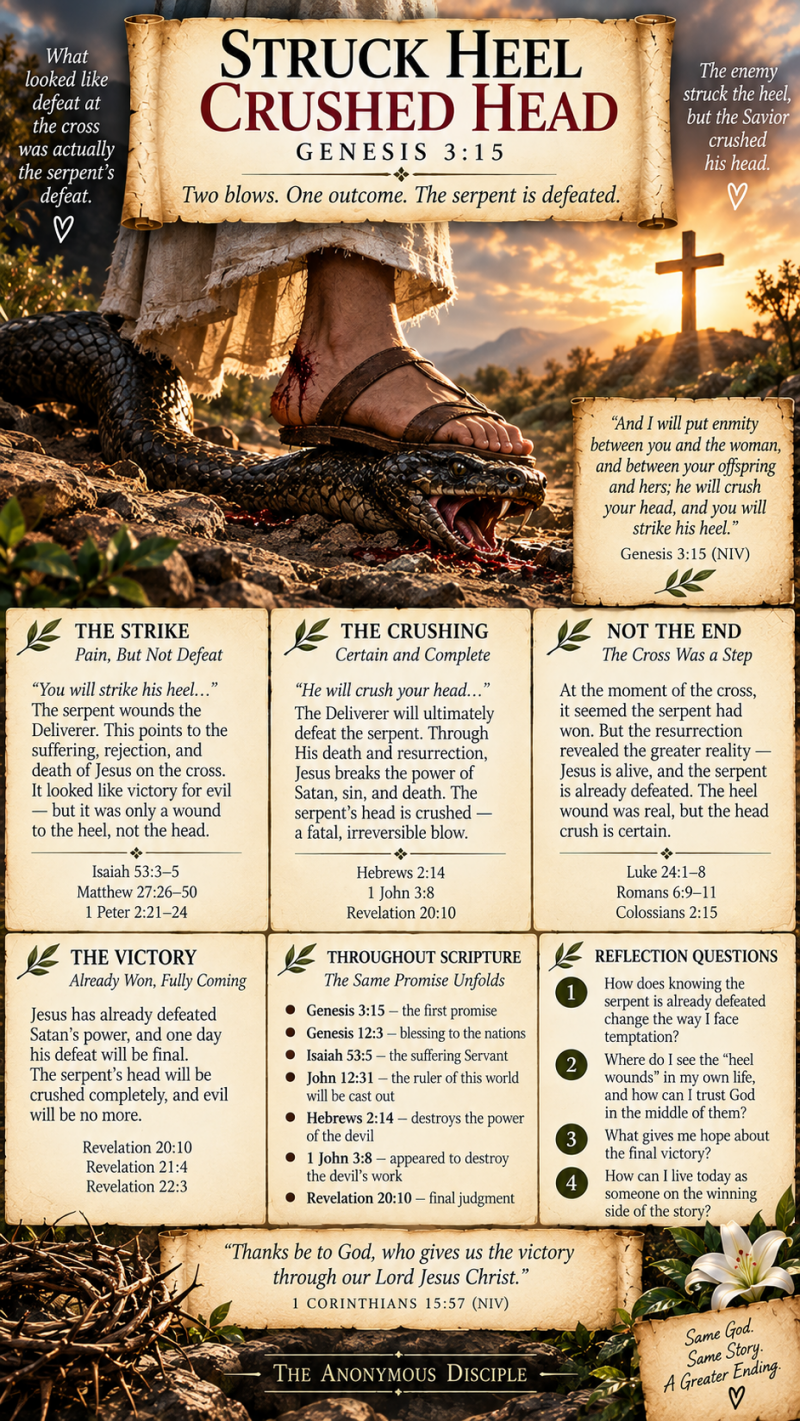
✝️ Struck Heel • Crushed Head — the Cross looked like defeat but became victory
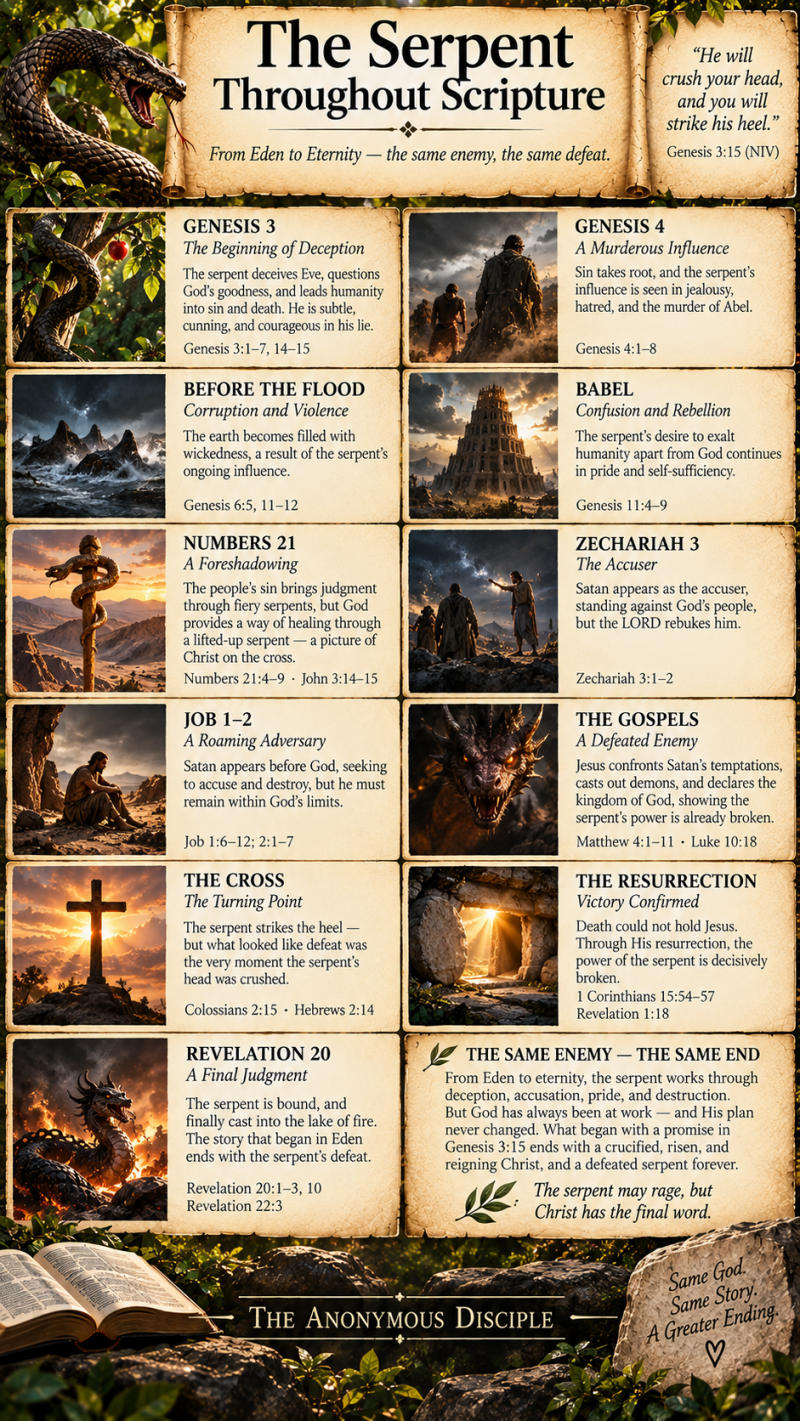
🧵 The Serpent Throughout Scripture — Genesis 3 → Revelation 20
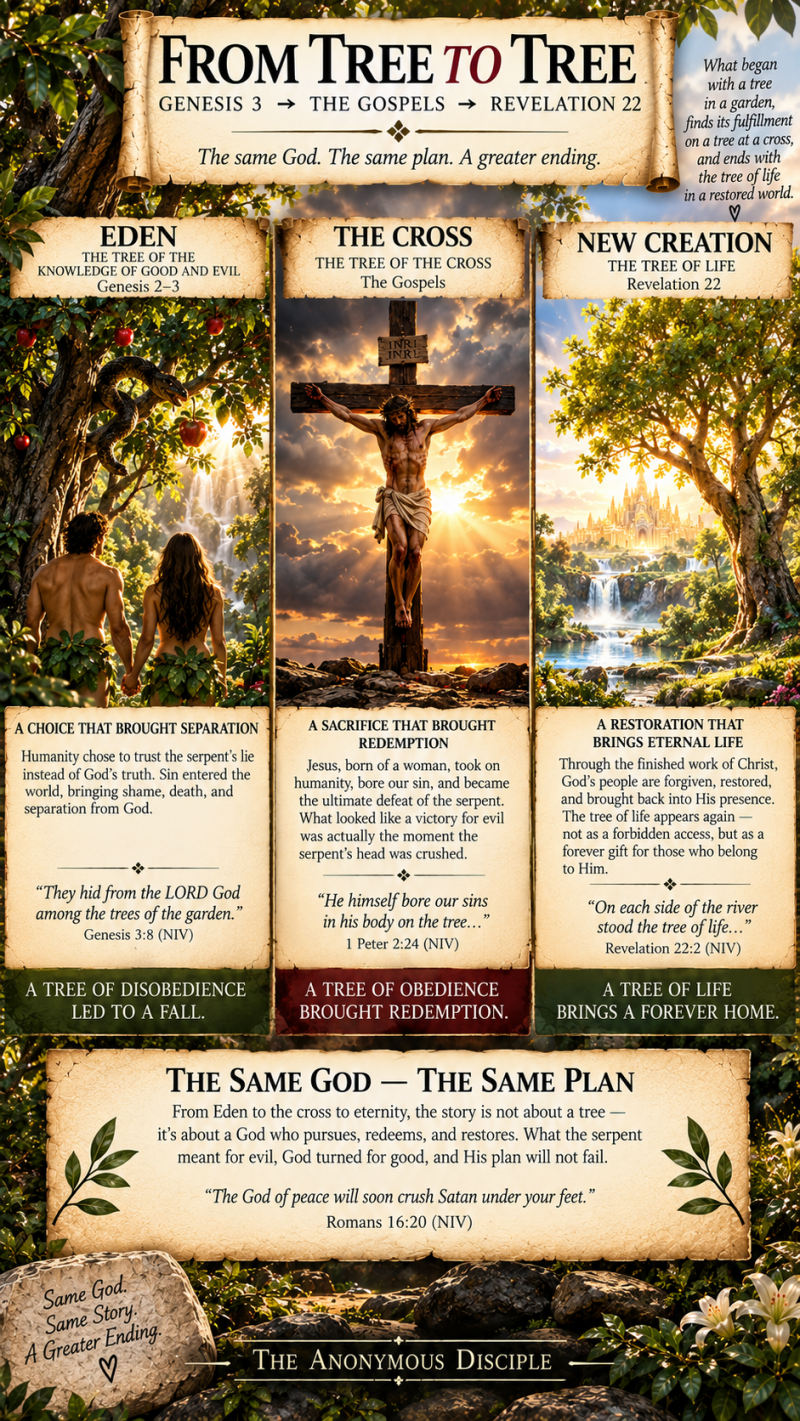
🌳 From Tree to Tree — Eden → Cross → Tree of Life
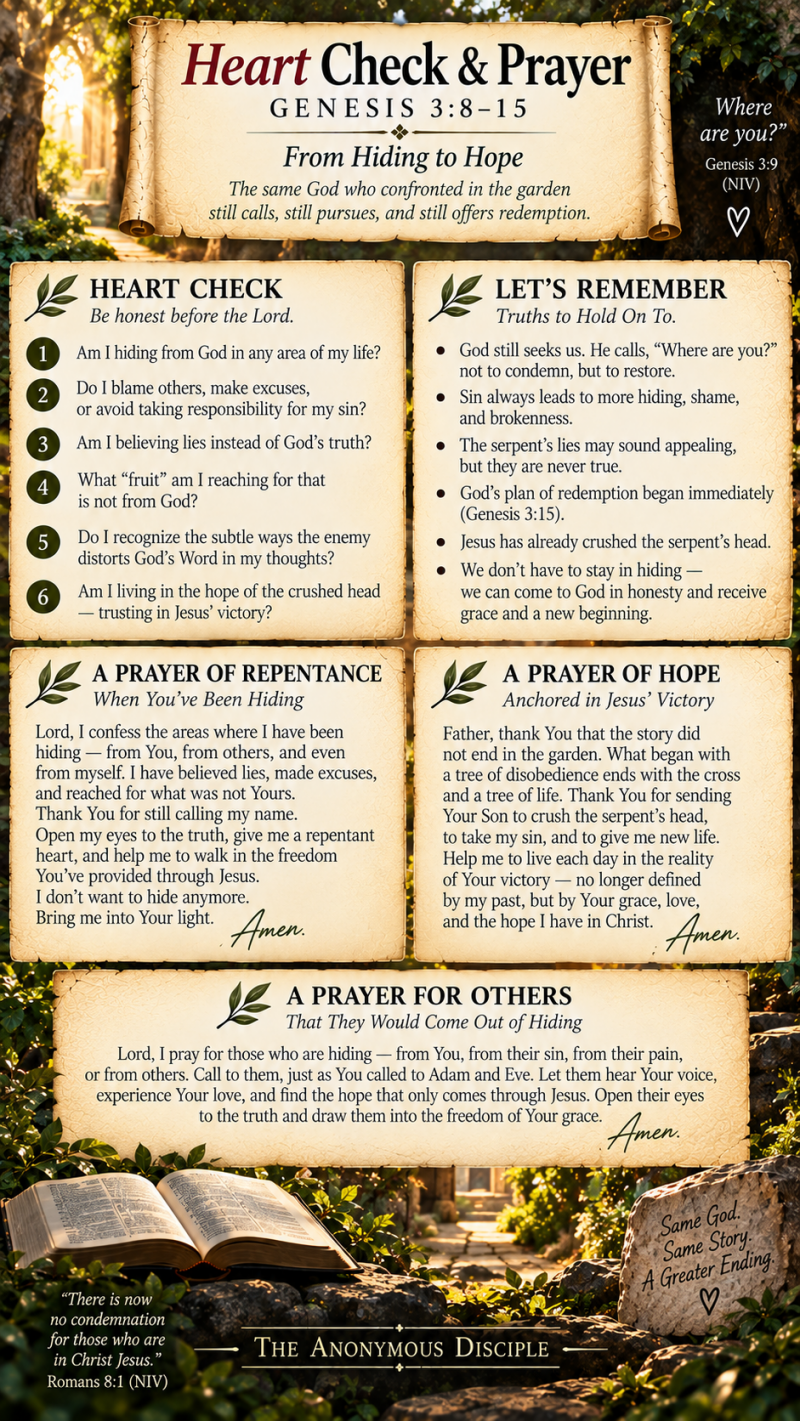
❤️ Heart Check & Prayer
🌿 Intro — Genesis 3:8–15 | From Hiding to Hope
Genesis 3:8–15 brings us into the heartbreaking aftermath of humanity’s first sin. Adam and Eve, once completely at peace in God’s presence, now hear Him walking in the garden and hide among the trees. Fear replaces fellowship. Shame replaces innocence. And when God asks, “Where are you?” (Genesis 3:9), blame and excuses begin to spill out.
But God does something extraordinary in the middle of judgment.
He gives a promise.
In Genesis 3:15, God declares that the serpent will strike the heel of the woman’s offspring—but that He will crush the serpent’s head. Christians have long called this the protoevangelium, or “first gospel,” because here, at the very beginning of Scripture, we see the first glimpse of the redemption that ultimately comes through Jesus Christ.
The serpent would wound.
But the Savior would win.
From the tree in Eden, to the tree of the cross, to the tree of life in Revelation 22, Scripture tells one unfolding story of a God who pursues sinners, keeps His promises, defeats evil, and restores what sin has broken.
Before Adam and Eve ever left the garden, God had already declared that the serpent would not have the final word. Jesus would. ❤️✝️🐍⚓️
📜Genesis 3:8-15📜
King James Version (KJV)
8 And they heard the voice of the LORD God walking in the garden in the cool of the day: and Adam and his wife hid themselves from the presence of the LORD God amongst the trees of the garden.
9 And the LORD God called unto Adam, and said unto him, Where art thou?
10 And he said, I heard thy voice in the garden, and I was afraid, because I was naked; and I hid myself.
11 And he said, Who told thee that thou wast naked? Hast thou eaten of the tree, whereof I commanded thee that thou shouldest not eat?
12 And the man said, The woman whom thou gavest to be with me, she gave me of the tree, and I did eat.
13 And the LORD God said unto the woman, What is this that thou hast done? And the woman said, The serpent beguiled me, and I did eat.
14 And the LORD God said unto the serpent, Because thou hast done this, thou art cursed above all cattle, and above every beast of the field; upon thy belly shalt thou go, and dust shalt thou eat all the days of thy life:
15 And I will put enmity between thee and the woman, and between thy seed and her seed; it shall bruise thy head, and thou shalt bruise his heel.
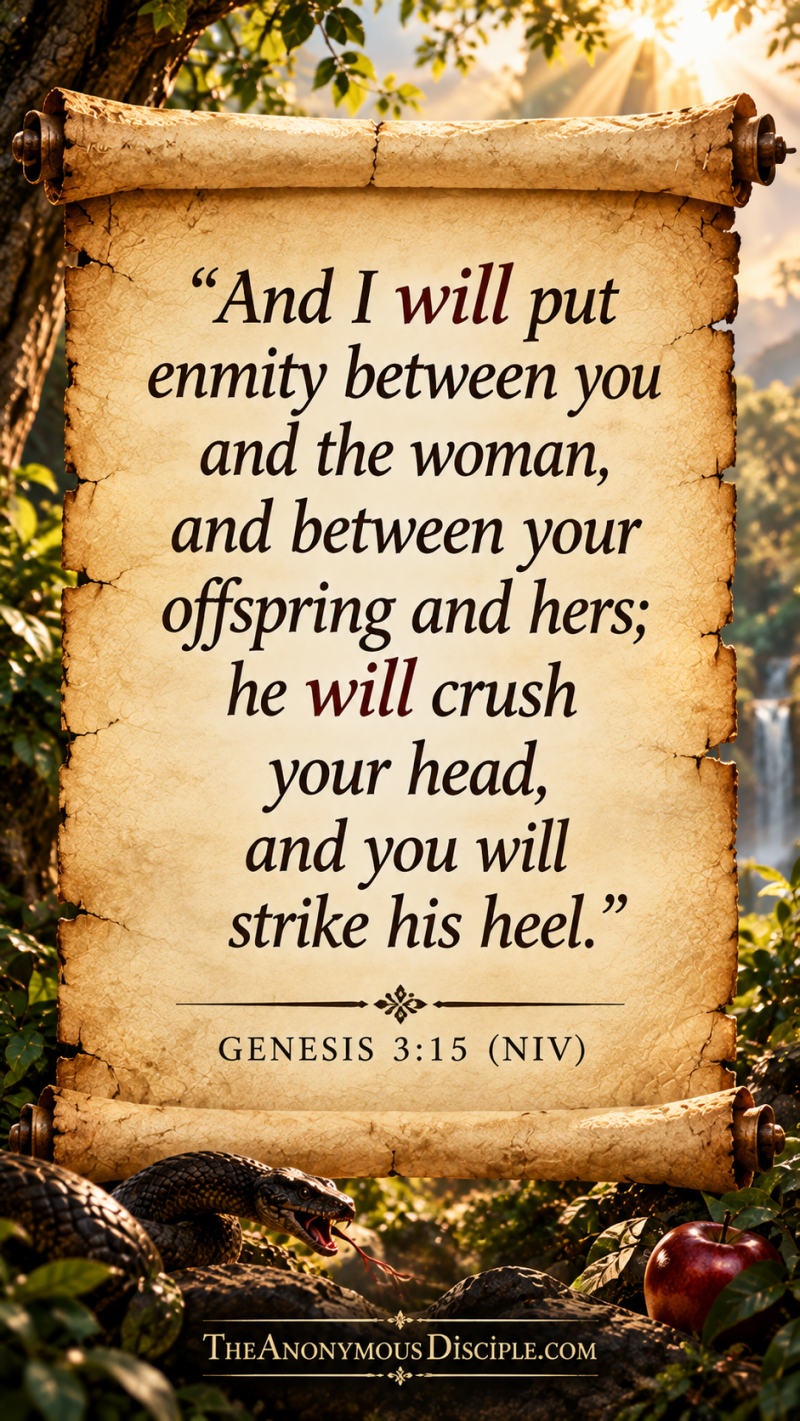
⚓verse 15⚓
The First Gospel - Protoevangelium
New International Version (NIV)
8 Then the man and his wife heard the sound of the LORD God as he was walking in the garden in the cool of the day, and they hid from the LORD God among the trees of the garden.
9 But the LORD God called to the man, “Where are you?”
10 He answered, “I heard you in the garden, and I was afraid because I was naked; so I hid.”
11 And he said, “Who told you that you were naked? Have you eaten from the tree that I commanded you not to eat from?”
12 The man said, “The woman you put here with me—she gave me some fruit from the tree, and I ate it.”
13 Then the LORD God said to the woman, “What is this you have done?”
The woman said, “The serpent deceived me, and I ate.”
14 So the LORD God said to the serpent, “Because you have done this,
“Cursed are you above all livestock
and all wild animals!
You will crawl on your belly
and you will eat dust
all the days of your life.
15 And I will put enmity
between you and the woman,
and between your offspring and hers;
he will crush your head,
and you will strike his heel.”
Who wrote it?
The Bible never names the author inside Genesis itself. The long-standing Christian and Jewish understanding is that Moses wrote Genesis (along with Exodus, Leviticus, Numbers, and Deuteronomy), guided by the Holy Spirit. Jesus treated “the Law of Moses” as Scripture and spoke of Moses writing about Him (see John 5:46; Luke 24:27, 44).
Some later scholars think Genesis was compiled from older sources and finished centuries after Moses. That is a common academic view. The church has historically held that Moses is the human author God used.
When?
If Moses wrote it, the most common conservative dates put it during Israel’s wilderness years after the Exodus—roughly the 1400s BC (early date) or the 1200s BC (later date). Either way, it is very old.
From where?
From the wilderness, most likely in the region of Mount Sinai / the Sinai desert, while Israel was camped between Egypt and the Promised Land.
Why?
To tell God’s people where they came from, how sin entered the world, why life is broken, and that God already promised a Rescuer (Genesis 3:15). Genesis explains:
- Who God is
- Who we are
- Why we need saving
- That God keeps His word
It is not just “how the world began.” It is the opening chapter of the story of redemption.
To whom?
First of all, to the Israelites who had just come out of slavery in Egypt. They needed to know their true history and the God who rescued them—not the gods of Egypt. Through them, it was written for all God’s people in every generation, including us.
So when you read Genesis 3:8-15, you are reading the earliest record of the fall and the first promise of Jesus—given to a newly freed nation so they (and we) would know both the problem and the hope.
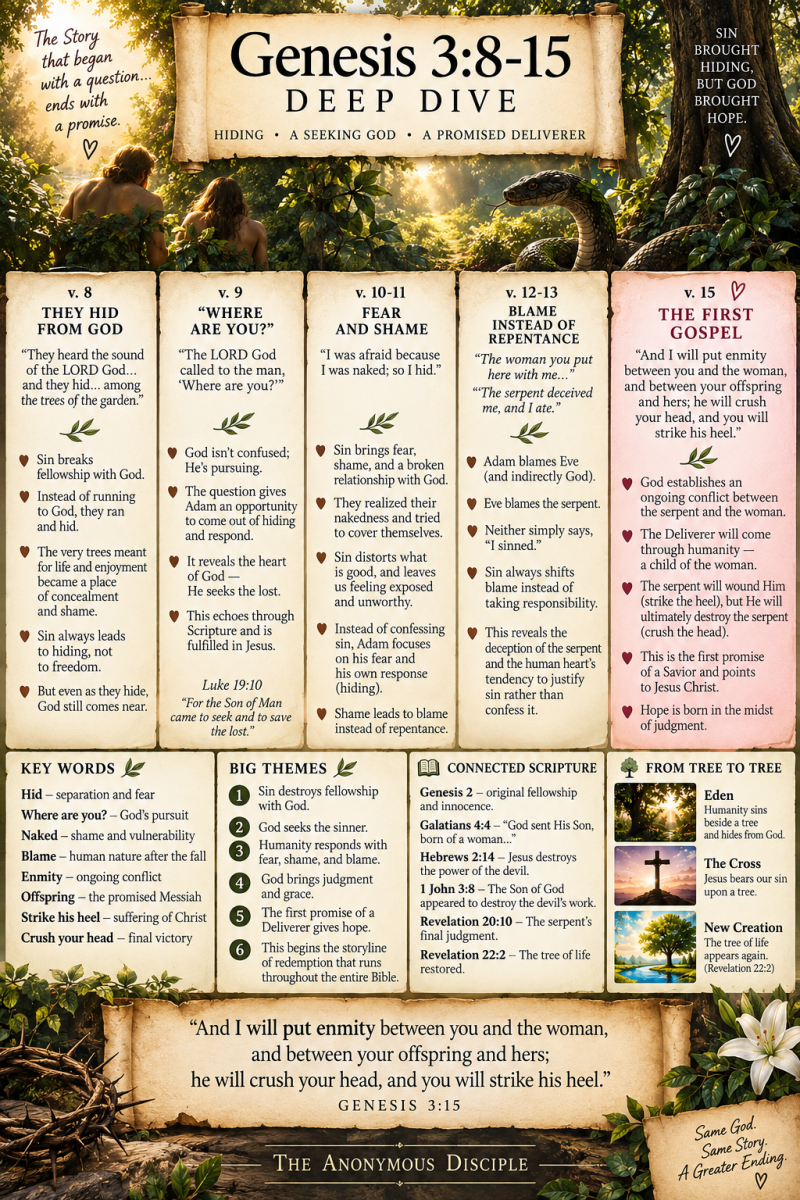
Verse by verse breakdown with 𝕏James𝕏
Verse 8
Then the man and his wife heard the sound of the LORD God as he was walking in the garden in the cool of the day, and they hid from the LORD God among the trees of the garden.
Today: After we sin, our first impulse is often the same—hide. We avoid prayer, church, honest conversation, even quiet time with God. He still comes looking for us.
Verse 9
But the LORD God called to the man, “Where are you?”
Today: God already knows where we are. The question is for us. He invites us to come out of hiding instead of leaving us lost in shame.
Verse 10
He answered, “I heard you in the garden, and I was afraid because I was naked; so I hid.”
Today: Fear and shame still make us cover up—with excuses, busyness, or pretending everything is fine. Nakedness here is more than clothes; it is feeling exposed before a holy God.
Verse 11
And he said, “Who told you that you were naked? Have you eaten from the tree that I commanded you not to eat from?”
Today: God goes straight to the heart of it. He doesn’t let us stay in vague guilt. He asks the real question: Did you do what I told you not to do?
Verse 12
The man said, “The woman you put here with me—she gave me some fruit from the tree, and I ate it.”
Today: Blame is still our favorite hiding place. We point at other people, our circumstances, even God—“the one You gave me.” Owning our part is the first step toward healing.
Verse 13
Then the LORD God said to the woman, “What is this you have done?”
The woman said, “The serpent deceived me, and I ate.”
Today: Eve tells part of the truth—she was deceived—but she still ate. Being tricked does not remove responsibility. We can be both victims of a lie and guilty of choosing it.
Verse 14
So the LORD God said to the serpent, “Because you have done this,
“Cursed are you above all livestock and all wild animals!
You will crawl on your belly and you will eat dust all the days of your life.”
Today: Evil does not get the last word. God judges the deceiver. The enemy is already under a curse; he is not an equal rival to God.
Verse 15
“And I will put enmity
between you and the woman,
and between your offspring and hers;
he will crush your head,
and you will strike his heel.”
Today: This is the first gospel promise. God Himself would send Someone from the woman’s line—Jesus—who would crush the serpent’s head even while being wounded. The fight is real, but the victory is already promised.
🔗Cross References🔗
For Genesis 3:8–15 as a whole
These verses show hiding after sin, God coming after us, blame, deception, and then judgment mixed with hope.
- Hiding from God: Job 31:33; Psalm 139:7–12; Jonah 1:3; Hebrews 4:13
- God calling the sinner: Genesis 4:9; Isaiah 65:1; Luke 15:4–7; Revelation 3:20
- Fear and shame after sin: Genesis 2:25 compared with 3:7–10; Exodus 3:6; Isaiah 6:5
- Blame instead of confession: Genesis 3:12–13; 1 Samuel 15:20–21; Proverbs 28:13; 1 John 1:8–9
- The serpent as deceiver: John 8:44; 2 Corinthians 11:3, 14; Revelation 12:9; 20:2
- God judging evil and still showing mercy: Psalm 89:14; Romans 5:12–21; 1 Timothy 1:15
For the anchor verse — Genesis 3:15
This is often called the protoevangelium, which simply means “the first gospel.” God promised a coming Offspring who would be wounded, yet would crush the serpent.
The two sides in the war
- Seed of the serpent: Matthew 13:38; John 8:44; Acts 13:10; 1 John 3:8–10
- Seed of the woman: Genesis 22:18; Isaiah 7:14; Galatians 3:16; Galatians 4:4
The wound and the victory
- The heel struck (Jesus suffers): Isaiah 53:5; Psalm 22; Luke 22:53; John 19:17–18
- The head crushed (Jesus wins): Romans 16:20; Colossians 2:15; Hebrews 2:14–15; 1 John 3:8; Revelation 12:9–11; Revelation 20:10
The line that leads to Jesus
- Genesis 12:3; 22:18
- 2 Samuel 7:12–13
- Isaiah 7:14; 9:6–7
- Matthew 1:21–23
- Luke 1:31–35
- Galatians 4:4
In plain words: the rest of the Bible is God keeping the promise He made in Genesis 3:15. Satan would hurt the Savior. The Savior would destroy Satan’s power.
Culture & Tradition Notes
Here are some interesting notes from the world around this passage—and from later Jewish and Christian tradition. I’ll keep Scripture first, and mark what is later tradition so we don’t mix the two.
1. “The cool of the day”
The Hebrew is closer to “the breeze of the day”—late afternoon or evening, when the heat breaks. In that world, kings and gods were pictured walking in palace gardens at that hour. Genesis uses that picture, but turns it: the true God is not a distant idol. He actually comes looking for His people.
2. Eden felt like a holy garden-temple
Ancient people often imagined the gods living in a watered garden or on a holy mountain. Genesis 3:8 says God was “walking about” in the garden—the same kind of language later used for God walking among Israel in the tabernacle. So when Adam and Eve hid among the trees, they were hiding in what should have been the place of worship. The biggest loss was not fruit. It was nearness to God.
3. Serpents meant more than “a snake”
In Egypt and Mesopotamia, serpents could stand for wisdom, chaos, death, or even stolen immortality. In the Gilgamesh story, a snake steals the plant of life. Genesis uses a talking serpent, then unmasks him. He is not a helper-god. He is a liar under God’s judgment. Revelation later names him plainly as Satan.
4. “Dust you will eat” was an insult
In the ancient world, “licking the dust” meant total defeat. Enemies of a king were pictured face-down in the dirt. God is saying the serpent will live in humiliation, not glory. Isaiah 65:25 even pictures the serpent still eating dust in the future peace—evil does not get restored to honor.
5. Jewish tradition about the serpent’s legs
This is tradition, not in the verse itself. Later rabbis said the serpent once walked upright and had its legs cut off. Some also said it wanted Adam dead so it could take Eve. That is colorful storytelling. The Bible itself only says: because of this, you will crawl and eat dust, and there will be war between your line and hers.
6. “Seed of the woman” sounded unusual
Family lines were normally counted through the father. “Her offspring” stands out. Christians have long heard in that the first hint that the Savior would come in a unique way through a woman (later fulfilled in Mary and Jesus). Jewish readings more often saw “her seed” as Israel, or the righteous, fighting the wicked. Both see a real war. The New Testament points the victory to Christ.
7. Hiding and blame fit an honor-shame world
Nakedness was not only about clothes. It was exposure, loss of honor. Instead of confessing, Adam blames “the woman You put here,” and Eve blames the serpent. That is still how fallen people talk: shift the shame, keep the face.
8. Early Christians named verse 15 the first gospel
By the 100s A.D., teachers like Irenaeus called Genesis 3:15 the protoevangelium—the first good news. Judgment on the serpent already contained a promise: a wounded Savior would give the killing blow.
The simple takeaway: the people who first heard this already knew gardens of the gods, talking-snake stories, and dust as disgrace. Genesis takes those familiar pictures and tells the truth: there is one God, sin really happened, hiding does not work, and hope starts in the same breath as the curse.
Deep Dive Study Notes with 🪄Jenny🪄
Ohhh, Genesis 3:8–15. This is such a foundational passage. We go from hiding among the trees to the first announcement that the serpent will ultimately be crushed—in only eight verses. And anchoring on Genesis 3:15 gives us what Christians have historically called the protoevangelium — “the first gospel.”
📜 Genesis 3:8–15 — From Hiding to Hope
🌿 Genesis 3:8 — They Hid From God
Genesis 3:8 (NIV) — “Then the man and his wife heard the sound of the LORD God as he was walking in the garden in the cool of the day, and they hid from the LORD God among the trees of the garden.”
That sentence hurts when you remember Genesis 2.
Humanity had been created for fellowship with God. There was no shame and no barrier between them.
Then sin enters.
And one of its first effects is hiding.
Notice the irony: the very trees God had made for them to enjoy become the things they try to use to conceal themselves from Him.
That pattern doesn't end in Eden.
Sin still whispers:
Hide. Cover it. Don't let God near this part.
But God comes looking.
❤️ Genesis 3:9 — “Where Are You?”
Genesis 3:9 (NIV) — “But the LORD God called to the man, ‘Where are you?’”
God isn't asking because Adam successfully disappeared. 😳
The omniscient God has not misplaced Adam.
The question gives Adam an opportunity to come out of hiding and answer God.
And this becomes an extraordinary biblical pattern.
Humanity sins and retreats.
God pursues.
We see echoes of it all the way to Jesus:
Luke 19:10 (NIV) — “For the Son of Man came to seek and to save the lost.”
Genesis 3 already begins showing us the God who seeks people who are hiding from Him.
😔 Genesis 3:10–13 — Fear, Shame & Blame
Adam answers:
Genesis 3:10 (NIV) — “I was afraid because I was naked; so I hid.”
Look what has entered the human experience:
Fear.
Shame.
Hiding.
Blame.
Broken relationship.
And when God confronts them, neither Adam nor Eve simply says, I sinned.
Adam:
Genesis 3:12 (NIV) — “The woman you put here with me…”
He blames Eve—and indirectly points back toward God.
Eve says:
Genesis 3:13 (NIV) — “The serpent deceived me, and I ate.”
What Satan promised would open their eyes has indeed opened them—but not to freedom.
Their innocence is gone.
⚓️ Genesis 3:15 — The First Gospel
Then God turns to the serpent.
Genesis 3:15 (NIV) — “And I will put enmity
between you and the woman,
and between your offspring and hers;
he will crush your head,
and you will strike his heel.”
The Bible has barely begun, and we're already being pointed toward Jesus. ❤️
There are several layers here.
🐍 “I will put enmity…”
God Himself establishes hostility between the serpent and the woman and between their offspring.
From this point forward, Scripture unfolds an enormous conflict between rebellion against God and God's redemptive purposes.
You can trace that thread through:
Cain and Abel → Noah → Abraham → Israel → David → Messiah → the Cross → Revelation.
👶 “Her offspring…”
This language becomes especially striking when read from the perspective of the completed biblical story.
The promised deliverance will come through humanity.
And Scripture gradually narrows the line:
Woman → Abraham → Isaac → Jacob → Judah → David → Jesus Christ.
Galatians 4:4 (NIV) — “But when the set time had fully come, God sent his Son, born of a woman…”
What Genesis introduces as a promise becomes clearer and clearer as revelation unfolds.
✝️ “You will strike his heel…”
The serpent will wound Him.
And at the cross, it certainly looks as though evil has won.
Jesus is betrayed.
Beaten.
Crucified.
Killed.
Buried.
But the wound isn't the end of the story.
Because then comes:
Sunday morning. ❤️
👑 “HE WILL CRUSH YOUR HEAD.”
This is the difference.
The serpent strikes the heel.
The woman's offspring crushes the serpent's head.
The New Testament gives us the fuller picture:
Hebrews 2:14 (NIV) — Jesus shared in our humanity “so that by his death he might break the power of him who holds the power of death—that is, the devil.”
And:
1 John 3:8 (NIV) — “The reason the Son of God appeared was to destroy the devil’s work.”
And the story that begins with the serpent in Genesis 3 reaches its conclusion in Revelation:
Revelation 20:10 (NIV) — “And the devil, who deceived them, was thrown into the lake of burning sulfur…”
🐍 Genesis 3: serpent appears.
✝️ Gospels: Christ defeats sin and death through His death and resurrection.
👑 Revelation 20: serpent's final judgment.
That's essentially the whole Bible's conflict stretched between Genesis and Revelation.
🌳 And there's another beautiful thread here
Look at the movement:
Genesis 3: Humanity sins beside a tree and hides from God.
The Gospels: Jesus bears humanity's sin upon a tree—the cross.
Revelation 22: Humanity is again in God's presence, and the tree of life appears again.
Revelation 22:2 (NIV) — “On each side of the river stood the tree of life…”
The Bible begins with paradise lost.
It ends with something even greater:
creation restored, God's people redeemed, and God dwelling with them forever.
Add comment
Comments