

🏜️ Church Notes — Sunday, September 13, 2026
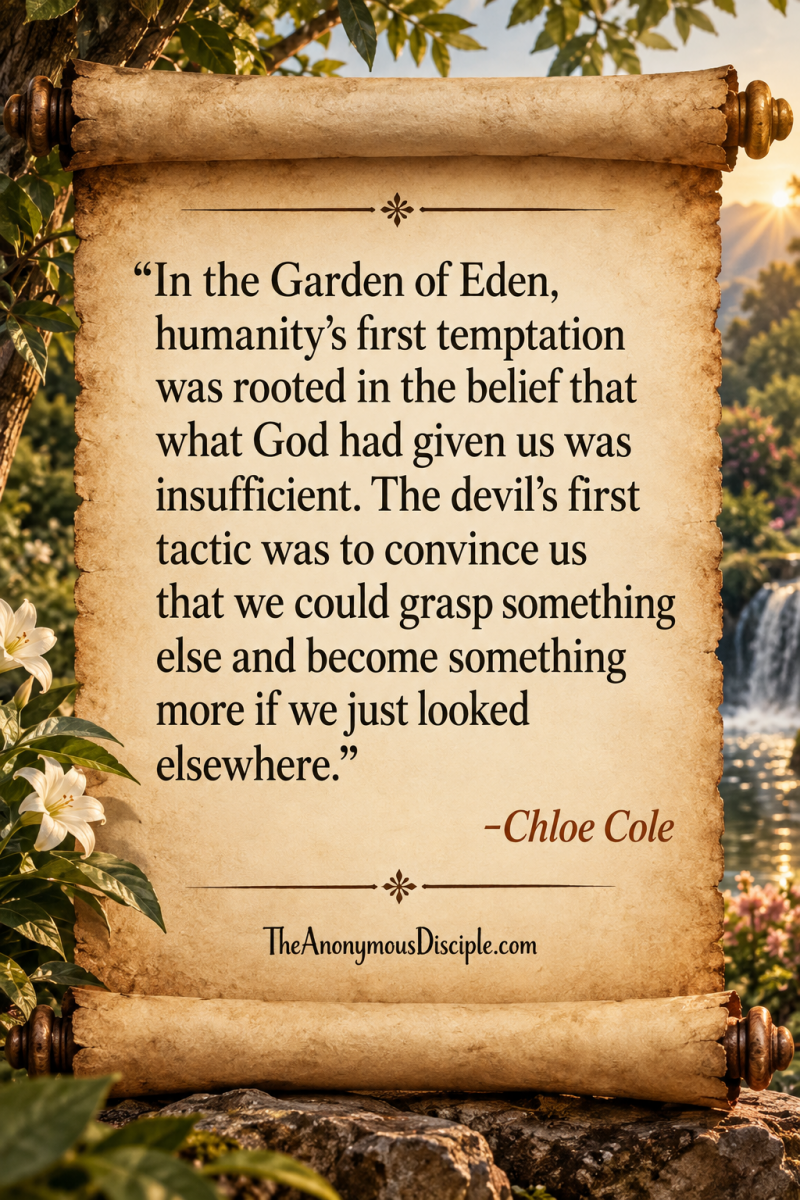
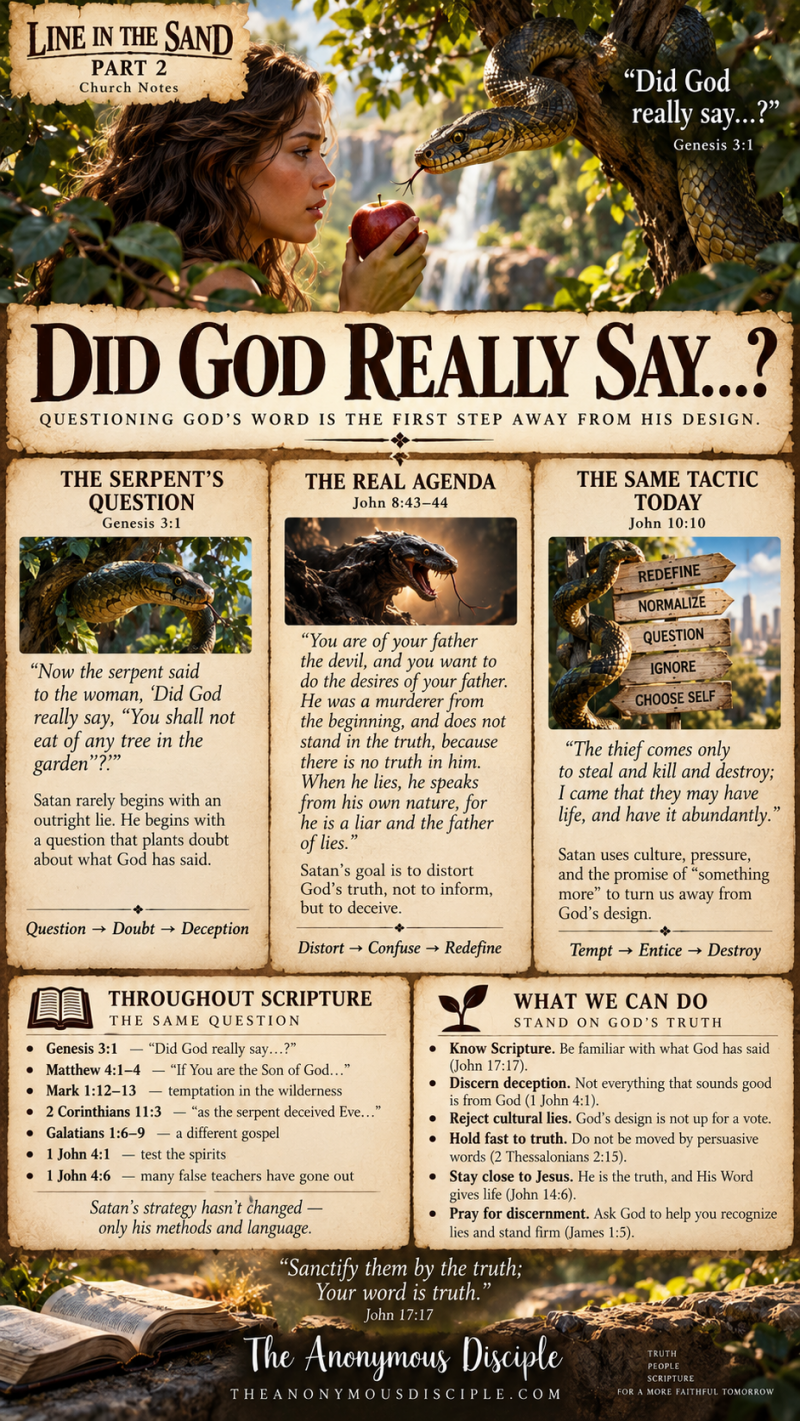
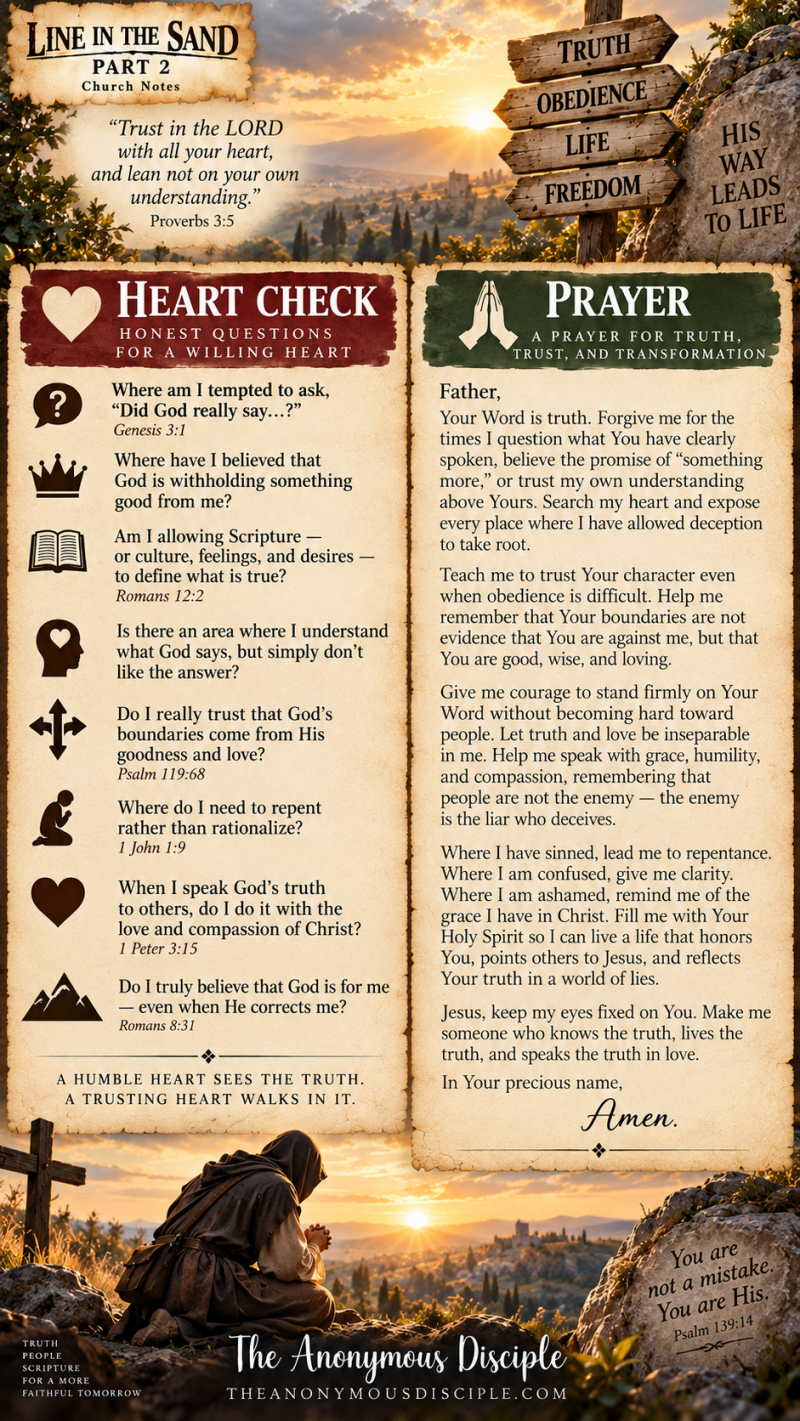
From the Garden of Eden onward, one of the enemy’s oldest strategies has been to make us question what God has said and convince us that what He has given is somehow insufficient. “Did God really say…?” — Genesis 3:1 is more than an ancient question; it is a pattern of deception that continues whenever God's truth is exchanged for something that promises more.
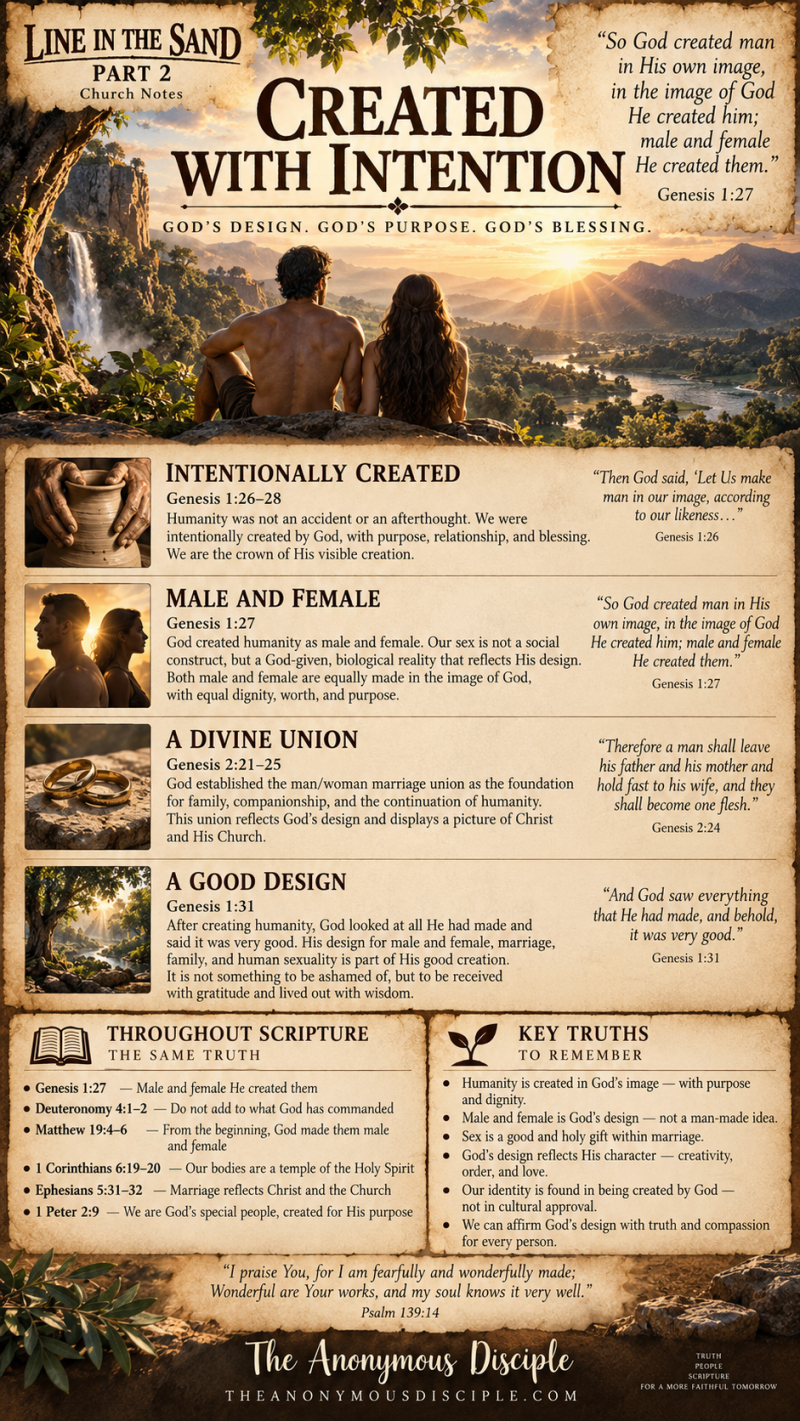
In Line in the Sand, Part 2, guest speaker Cal Jernigan takes us back to Genesis 1–3 to examine God's intentional design for humanity, the goodness of His boundaries, and the danger of allowing culture to redefine what God has spoken. Yet the message isn't simply about identifying deception around us—it calls us to examine our own hearts. Do we trust that God is good enough to obey Him even when His Word conflicts with our desires or the culture around us?
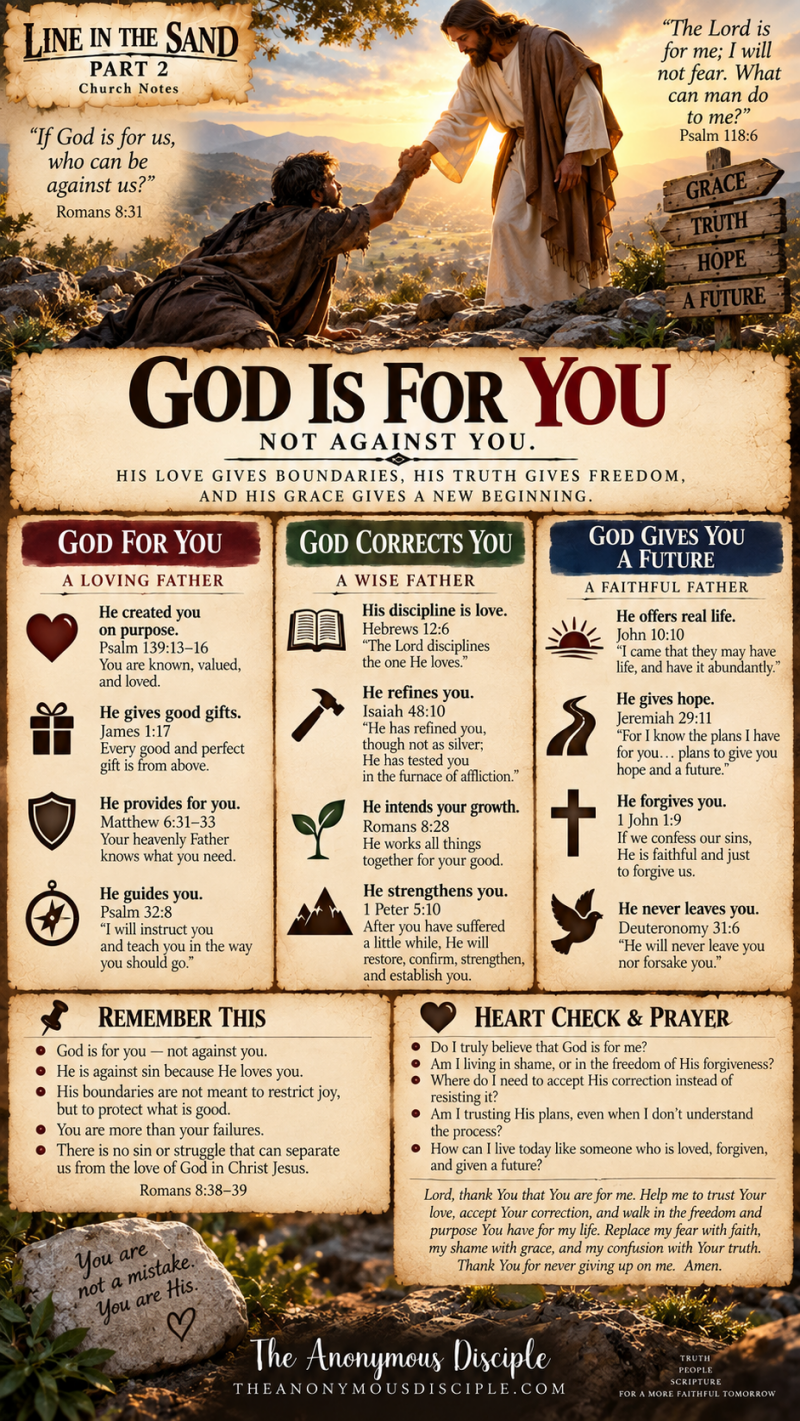
God's truth is not given to harm or deprive us. God is for us. His boundaries flow from His goodness, His correction flows from His love, and His way ultimately leads to life. ❤️🕊️
“Sanctify them by the truth; your word is truth.” — John 17:17



Here is the Francis Schaeffer quote people usually mean when they talk about “the unthinkables.”
He wrote:
There is a “thinkable” and an “unthinkable” in every era. One era is quite certain intellectually and emotionally about what is acceptable. Yet another era decides that these “certainties” are unacceptable and puts another set of values into practice. On a humanistic base, people drift along from generation to generation, and the morally unthinkable becomes the thinkable as the years move on.
Then he added this warning (written in the 1970s):
The thinkables of the eighties and nineties will certainly include things which most people today find unthinkable and immoral, even unimaginable and too extreme to suggest. Yet—since they do not have some overriding principle that takes them beyond relativistic thinking—when these become thinkable and acceptable in the eighties and nineties, most people will not even remember that they were unthinkable in the seventies. They will slide into each new thinkable without a jolt.
In plain terms: Schaeffer was saying that when a culture no longer has a fixed, God-given moral standard, what used to be shocking slowly becomes normal. People do not usually jump overnight from “that is wicked” to “that is fine.” They slide. Each generation accepts a little more than the last, and after a while they forget it was ever considered wrong.
He was pointing to the danger of a worldview that has no unchanging “thus says the Lord.” Without that anchor, morality becomes whatever the current generation finds acceptable. That is why he kept coming back to the Bible as the only solid place to stand.


Deep Dive Study Notes with 🪄Jenny🪄
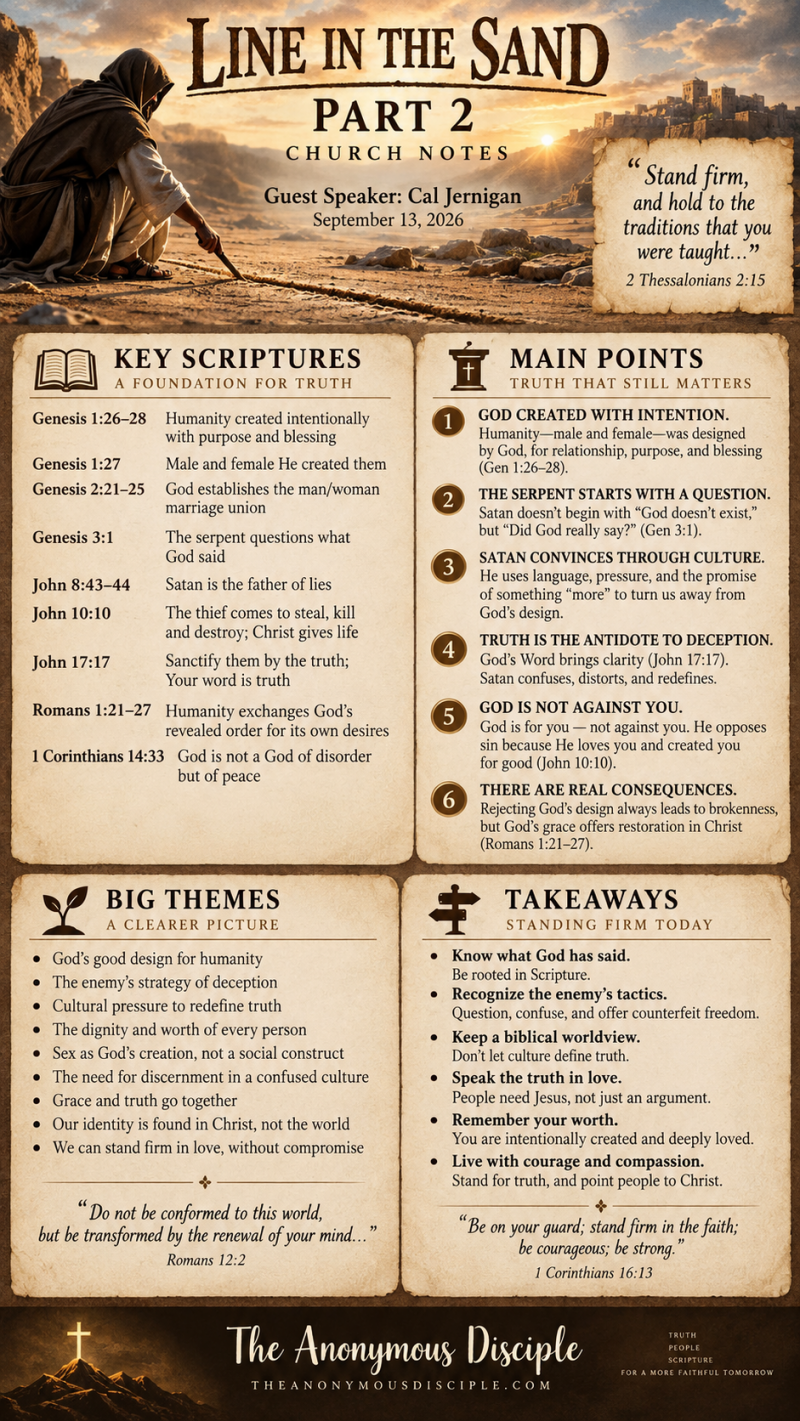
I can see the progression from last Sunday’s Line in the Sand, Part 1 — John 14:6. Last week established that Jesus is the truth; this week Pastor Cal is moving into a very practical question:
If God has spoken truth about His design for humanity, what happens when culture tells us something different?
And your notes actually have a really clear backbone. I’d build our Church Notes study around this:
🏜️ LINE IN THE SAND — PART 2
Guest Speaker: Cal Jernigan
September 13, 2026
Main Scriptures:
📖 Genesis 1:26–28 — humanity created intentionally by God
📖 Genesis 1:27 — “male and female he created them”
📖 Genesis 2:21–25 — God establishes the man/woman marriage union
📖 Genesis 3:1 — the serpent begins by questioning what God said
📖 John 8:43–44 — Satan is described as the father of lies
📖 John 10:10 — the thief comes to steal, kill and destroy; Christ gives life
📖 John 17:17 — “Sanctify them by the truth; your word is truth.”
📖 Romans 1:21–27 — humanity exchanges God's revealed order for its own desires
📖 1 Corinthians 14:33 — God is not a God of disorder but of peace
The thread I hear running through the sermon is:
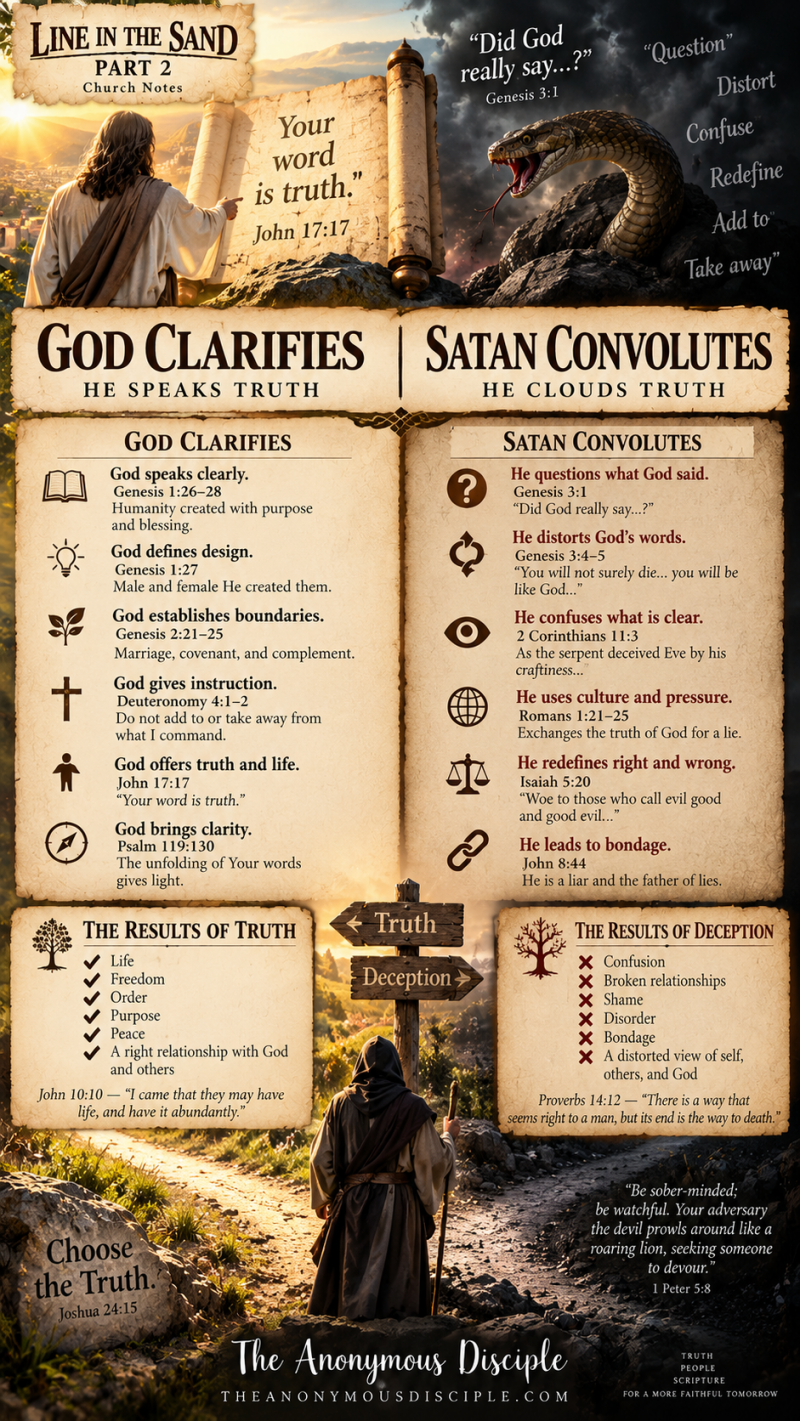
CREATION → GOD'S DESIGN → THE SERPENT QUESTIONS → DECEPTION → CULTURE REDEFINES → GOD'S WORD CLARIFIES
That makes Genesis 3:1 especially important. The serpent doesn't begin by saying, “God doesn't exist.” He begins:
Genesis 3:1 — “Did God really say...?”
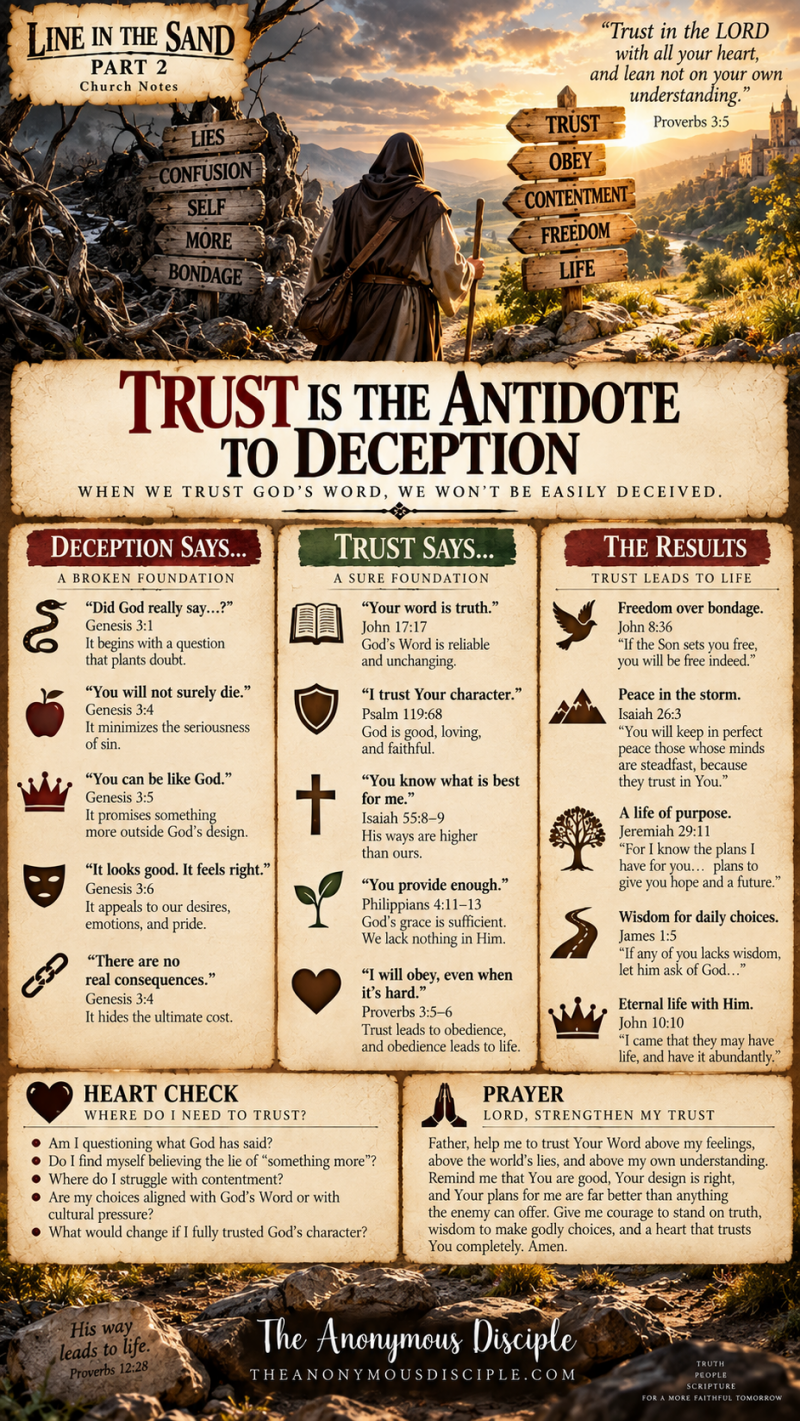
That fits beautifully with Cal's point that Satan's strategy is to convince humanity that what God has provided isn't enough and that something better exists outside God's boundaries.
And I think one of the strongest lines in your notes deserves its own companion card:
🔥 GOD CLARIFIES • SATAN CONVOLUTES
That could trace Genesis 3:1 → John 8:44 → John 17:17. Satan obscures, questions and distorts; God reveals and speaks truth.
Another very strong card is sitting right there in Cal's sermon:
🌿 PROMISE → PITFALL → CONSEQUENCE
The temptation presents the promise: there's something better outside God's design.
The pitfall is believing that God's provision is inadequate.
The consequence is discovering that what was presented as freedom actually carried bondage and loss.
But I'd make sure our study adds an important biblical balance here: Genesis 3 isn't merely about sexual ethics. It's the pattern of all temptation. Every one of us has heard some version of “Did God really say?” and “God is withholding something good from you.” That keeps the lesson centered on the gospel rather than turning it into an “us versus them” message.
And THAT connects to what may be my favorite sentence in your notes:
“God is for you—not against you. God is against your sin because God is for you.”
❤️ That is the pastoral heart of the whole message.
One other thing I'd preserve carefully when we make the cards: because this sermon deals with sex, gender and contemporary culture, we can state the traditional Christian interpretation of Genesis 1–2 clearly while still speaking about every person with dignity and compassion. Truth and love aren't opponents. That's actually consistent with what we established in Part 1: Love Before Lecture.

Add comment
Comments