

🕊️ Church Notes — Line in the Sand, Part 3: Hypocrisy
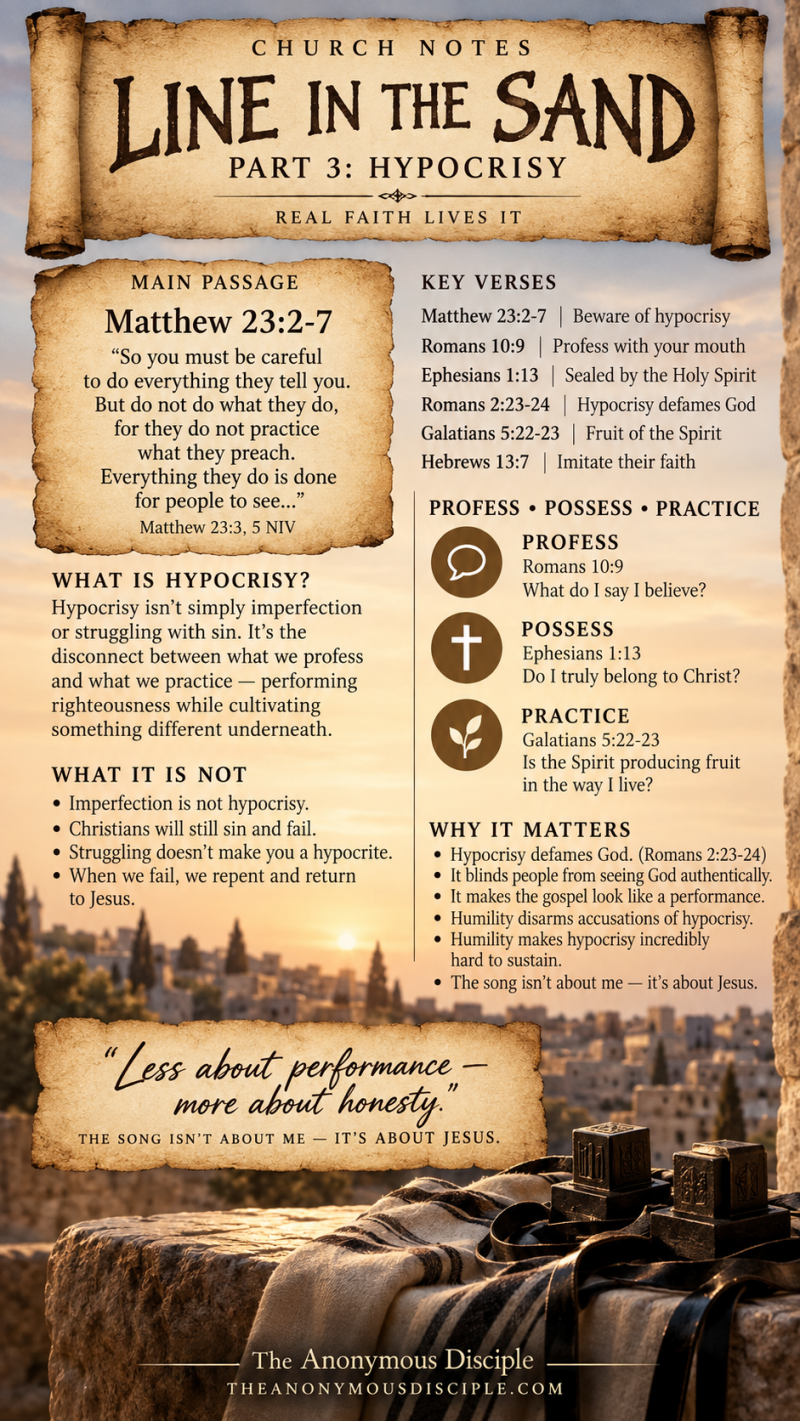
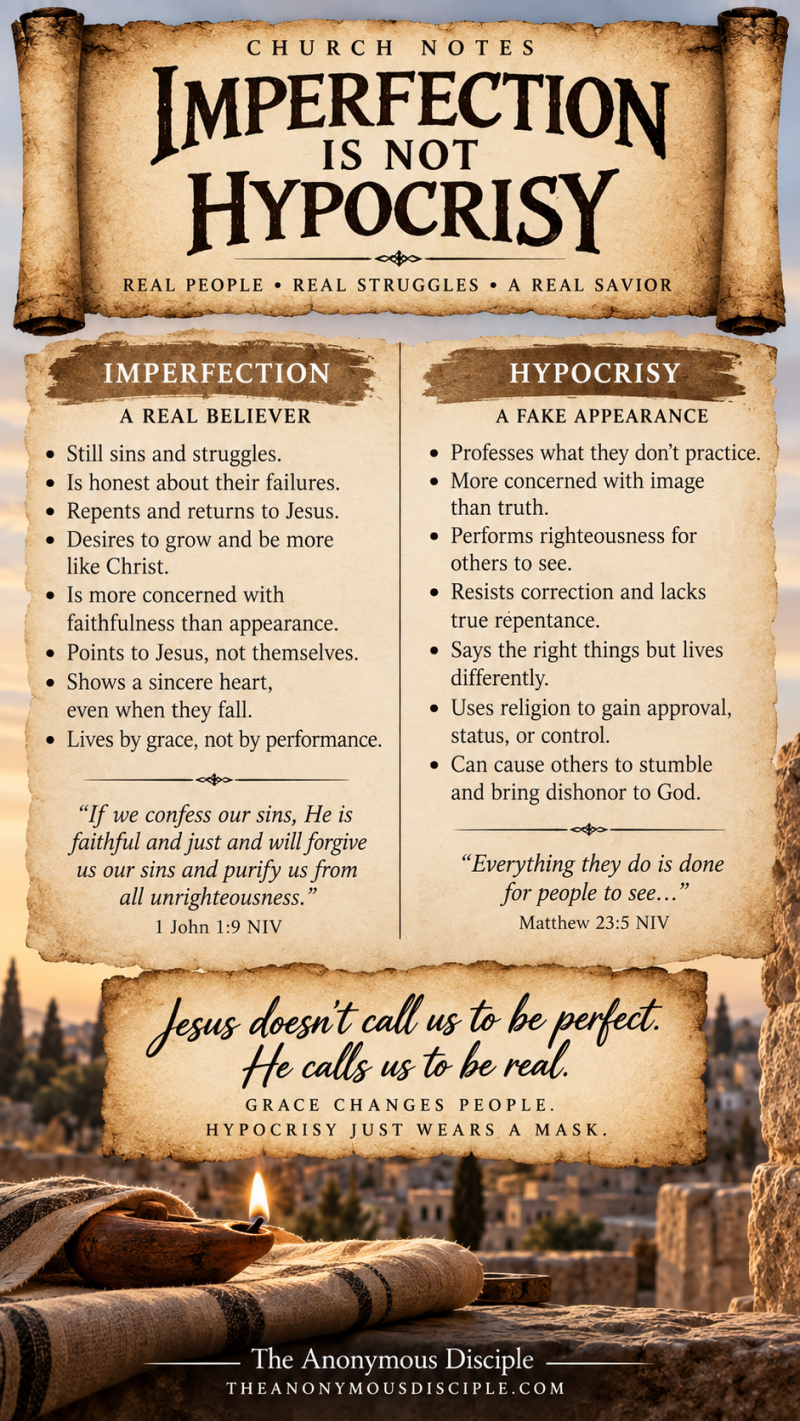
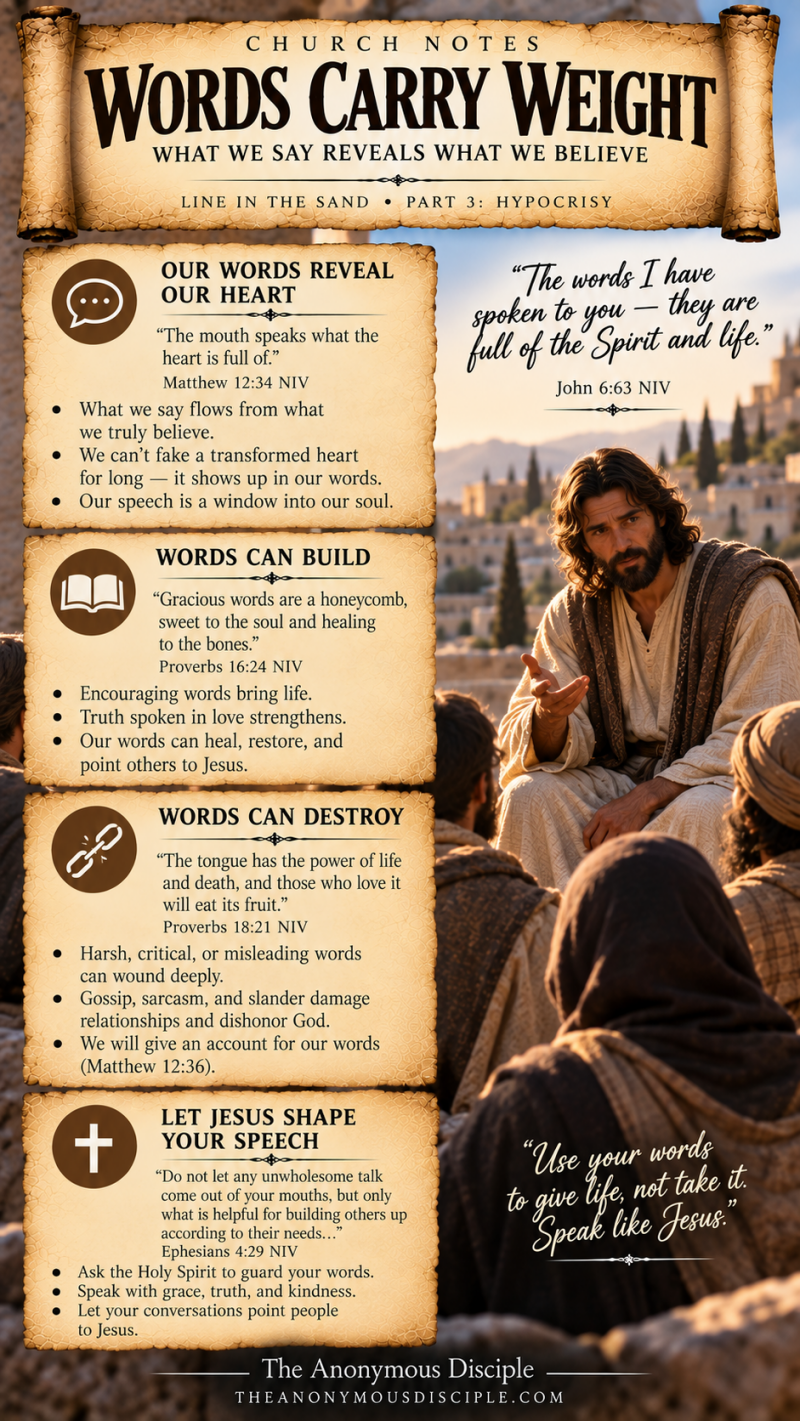
One of the easiest accusations to make against Christians is, “They’re all hypocrites.” But there is an important difference between hypocrisy and imperfection. Following Jesus does not mean we never stumble; it means we stop pretending we don’t. Hypocrisy is concerned with appearance—saying the right things, looking the part, and seeking the approval of people—while genuine faith allows God to transform what is happening inside the heart.
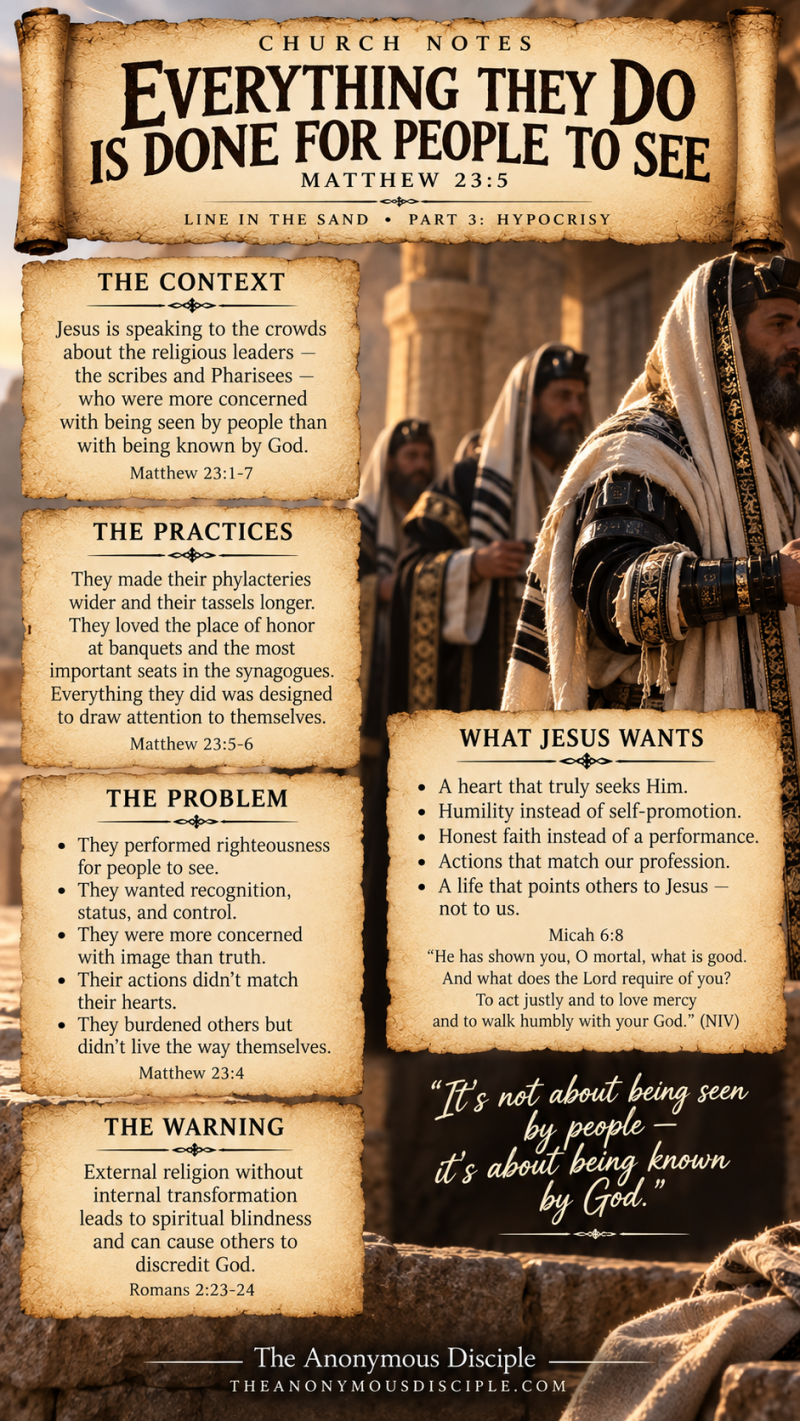
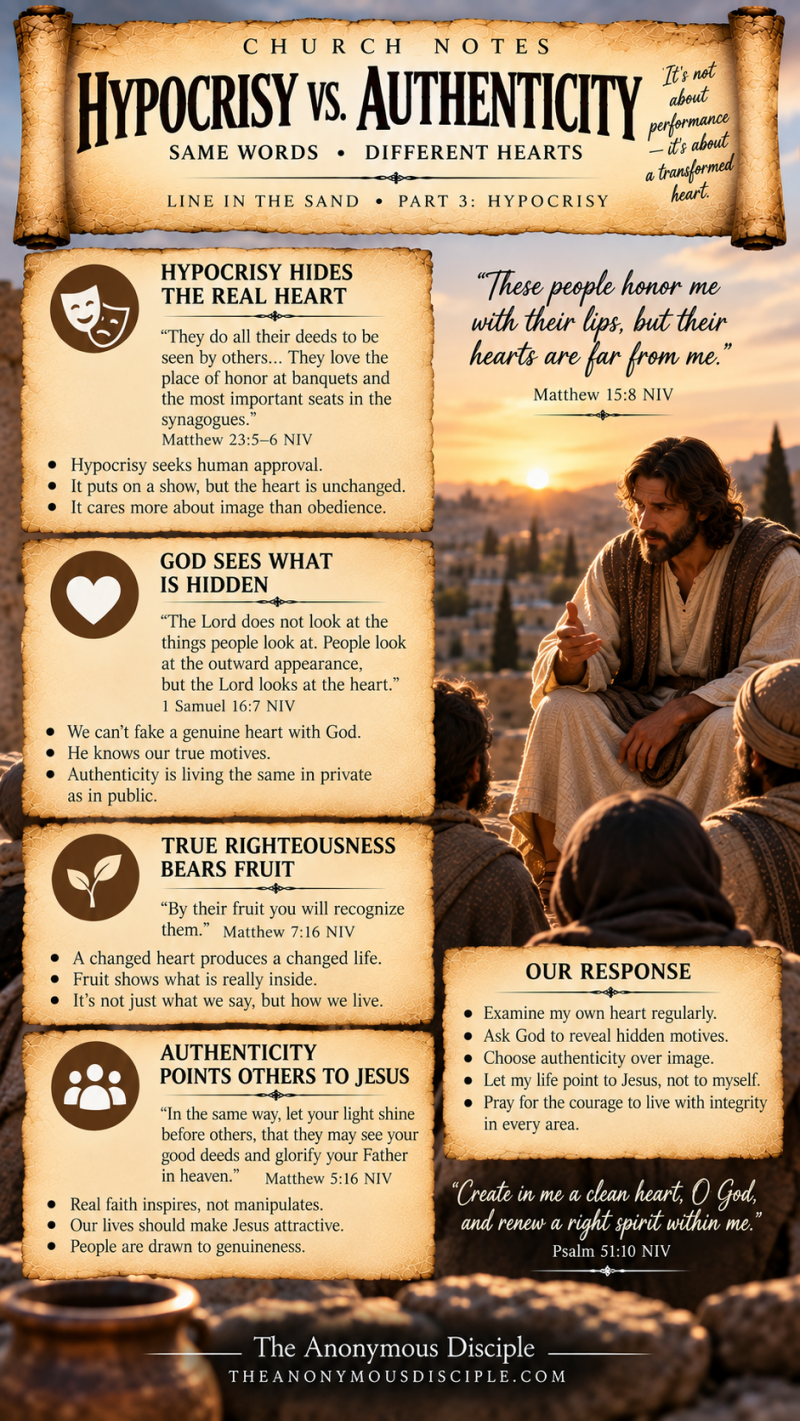
In Matthew 23:2–7, Jesus confronted religious leaders whose outward profession did not match their inward lives. Their problem wasn’t simply that they were flawed people; “Everything they do is done for people to see” (Matthew 23:5, NIV). Their faith had become a performance.
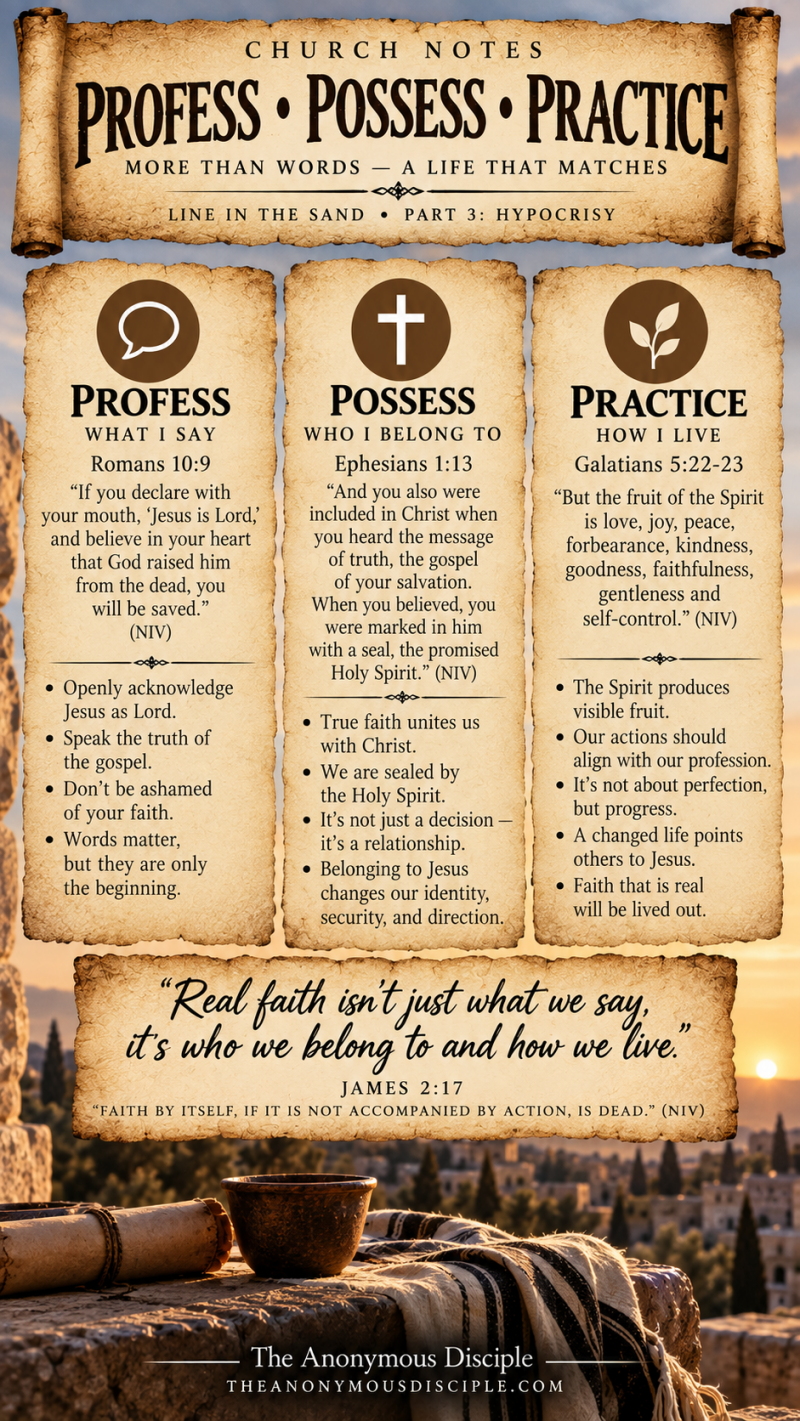
This study examines the relationship between what we profess (Romans 10:9), whom we belong to (Ephesians 1:13), and how that faith begins to appear in the way we live (Galatians 5:22–23). We’ll also look at why hypocrisy can damage our witness (Romans 2:23–24), why humility makes hypocrisy difficult to sustain, and why the failures of Christians can never invalidate the truth of Jesus Christ.
The goal isn't to become better at looking Christian. It is to walk so closely with Jesus that our private lives and public profession increasingly tell the same story.
Less about performance. More about honesty.
The song isn’t about me—it’s about Jesus. ❤️✝️🕊️

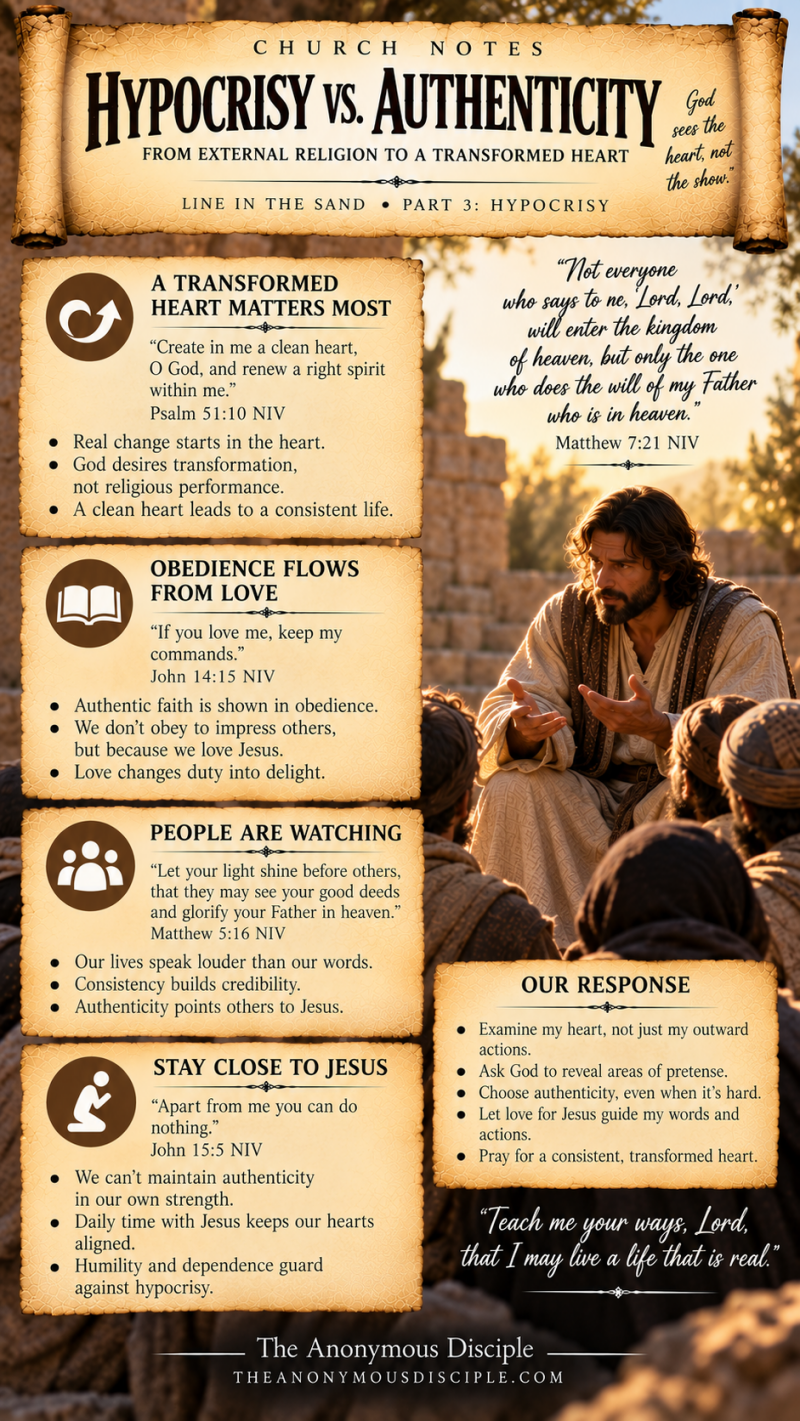
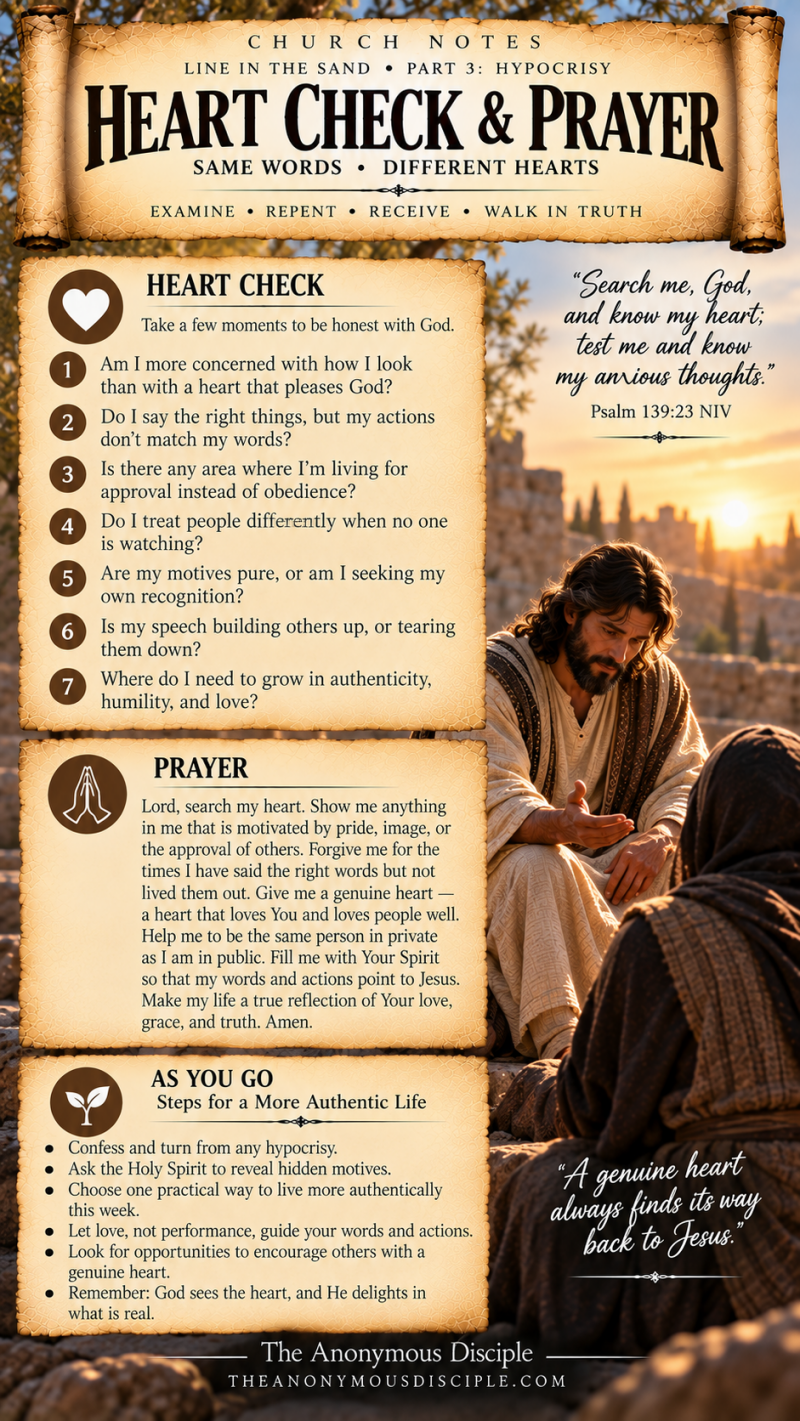
Here is the download for the church's Deep Dive for today's sermon.


📜 Core passage — Matthew 23:2–7
Jesus’ issue with the Pharisees wasn’t that they were imperfect people. It was the disconnect between what they professed and what they practiced.
Matthew 23:3 — “So you must be careful to do everything they tell you. But do not do what they do, for they do not practice what they preach.”
That gives us the backbone of the whole sermon:
Biblical hypocrisy is not simply failing to live perfectly. It is performing righteousness while cultivating something different underneath.
And your note about the phylacteries fits Matthew 23:5 beautifully. Jesus says, “Everything they do is done for people to see.” Their religious practices had become part of the performance.
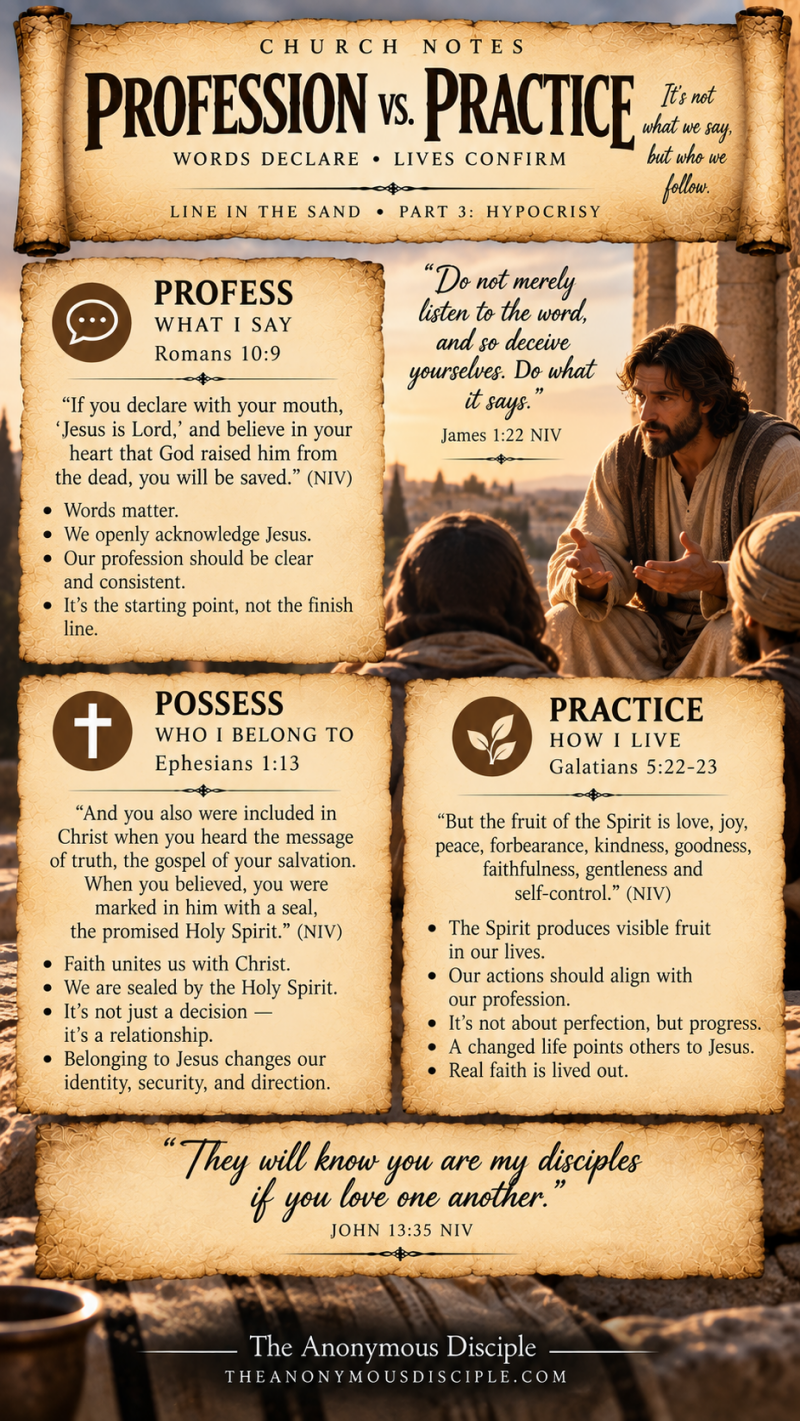
⚓ The three movements I see in Trevor’s message
PROFESS — Romans 10:9
What do I say I believe?
POSSESS — Ephesians 1:13
Do I actually belong to Christ—having believed the gospel and been sealed with the Holy Spirit?
PRACTICE — Galatians 5:22–23
Is the Spirit increasingly producing visible fruit in the way I actually live?
That doesn't mean:
Profess + Possess + Practice = Christian perfection.
It means our profession should increasingly become visible in our practice because Christ really does possess our heart. ❤️
And that makes one of your notes absolutely central:
“Imperfection is not hypocrisy.”
Peter failed spectacularly. David sinned terribly. Paul openly admitted his struggle with sin. The Christian isn't claiming, “Look at me; I never fail.”
We're saying, “Look at Jesus. And when I fail Him, I repent and return to Him.”
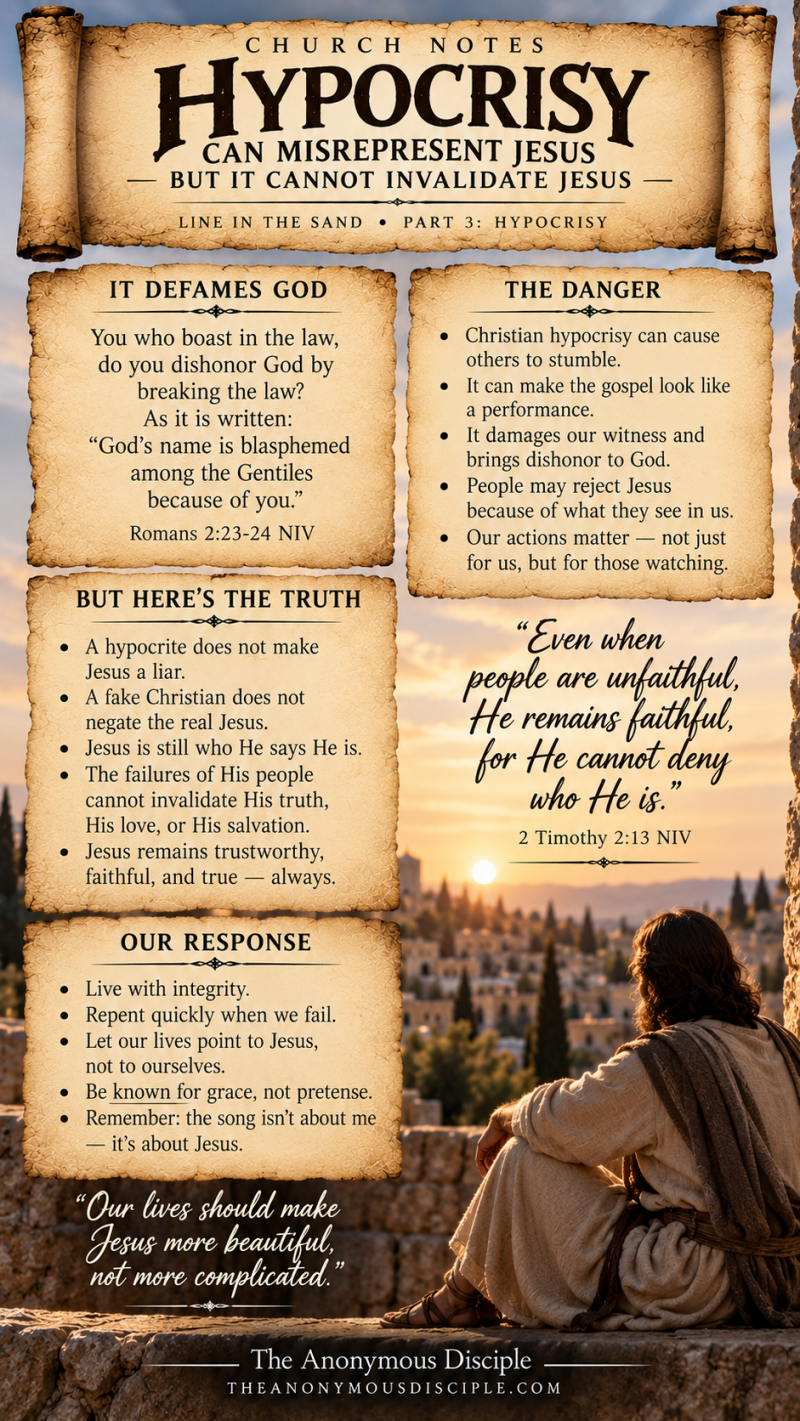
🔥 Romans 2:23–24 — why hypocrisy is so serious
Paul asks:
Romans 2:23–24 — “You who boast in the law, do you dishonor God by breaking the law? As it is written: ‘God’s name is blasphemed among the Gentiles because of you.’”
That connects directly to what you wrote:
“Hypocrisy defames God.”
That's the frightening part. Christian hypocrisy doesn't merely damage our reputation. When someone publicly carries Christ's name while repeatedly living contrary to Him without repentance, outsiders can associate our behavior with our God.
But I would add one important distinction to the sermon:
A Christian's hypocrisy can misrepresent Jesus. It cannot invalidate Jesus.
Jesus doesn't become less true because someone carrying His name represents Him falsely.
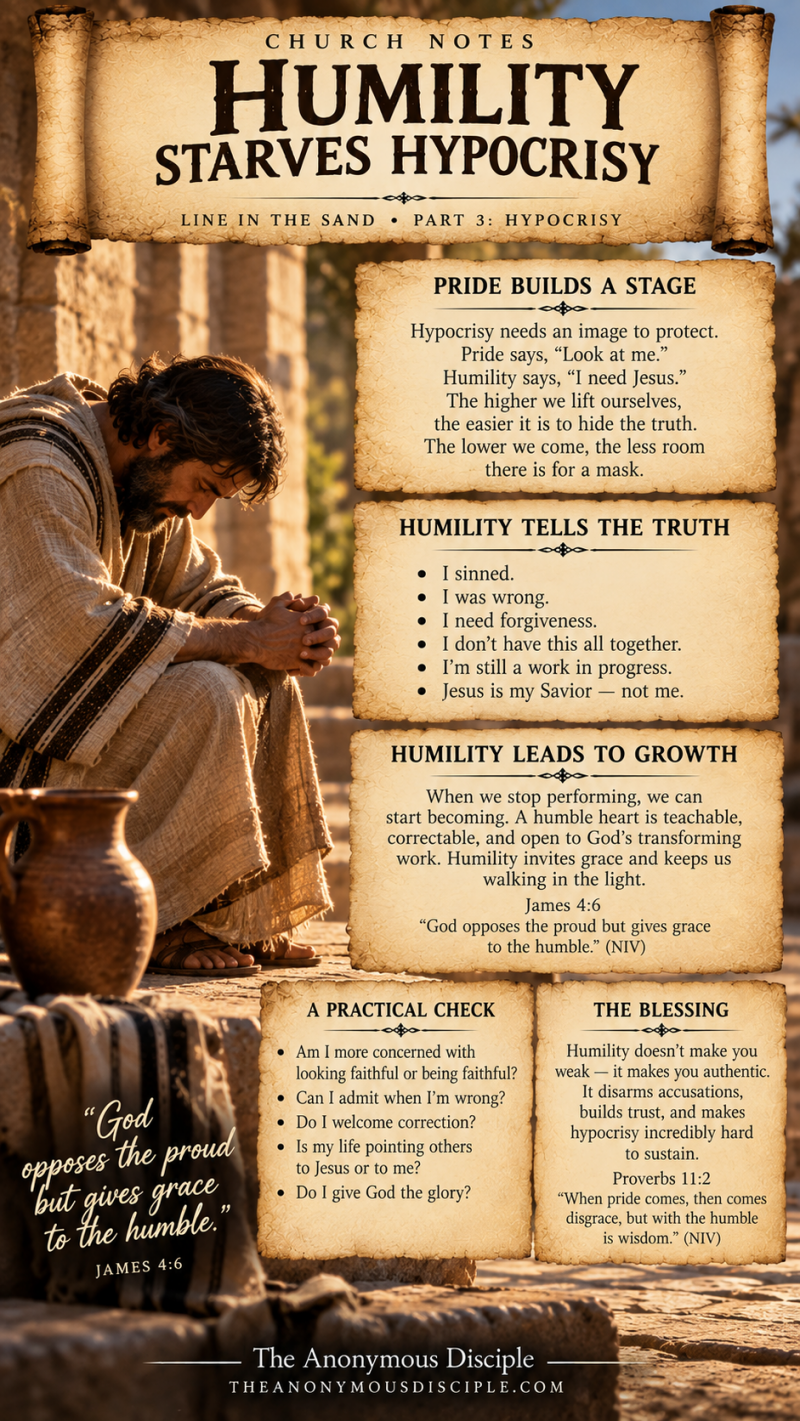
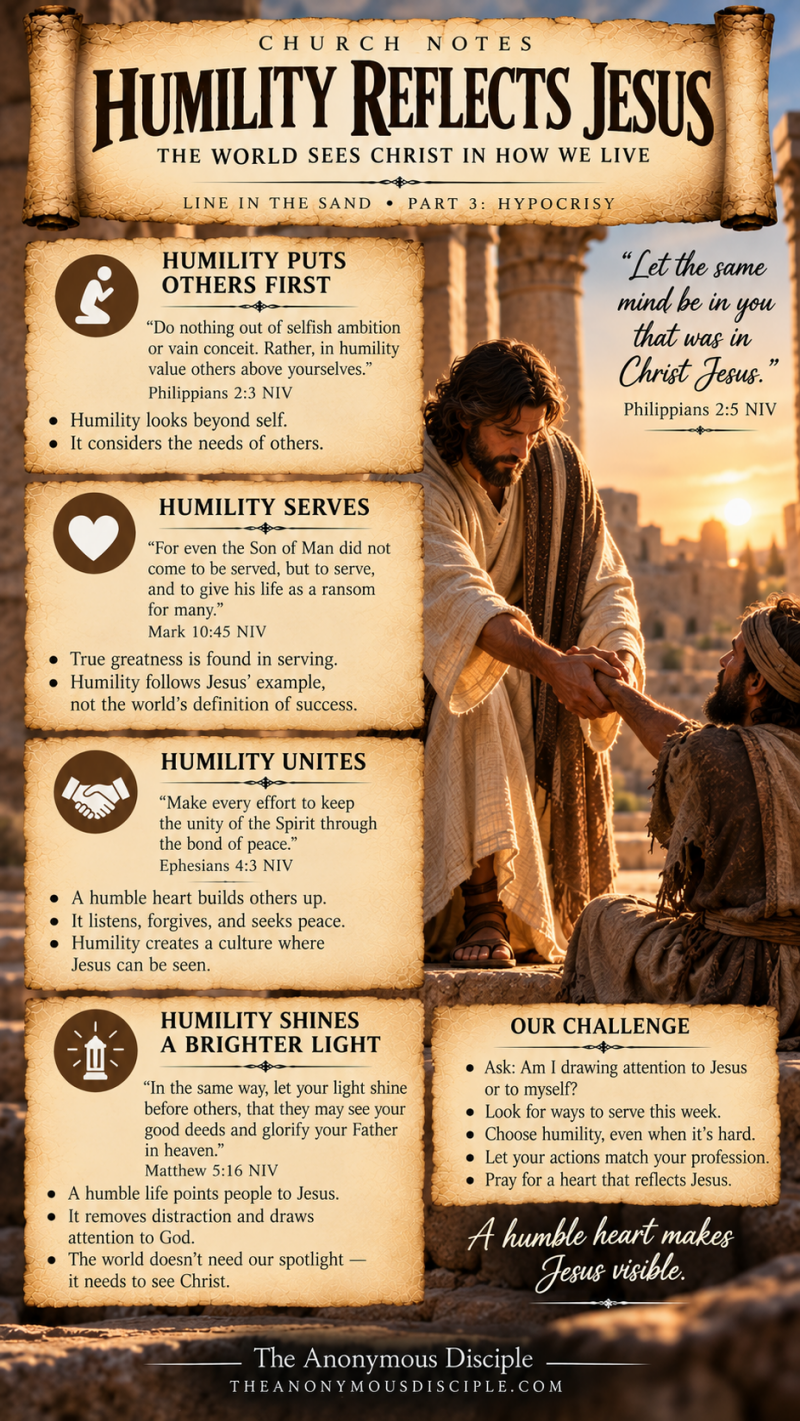
❤️ And humility is the antidote
I LOVE this line from your notes:
“Humility makes hypocrisy incredibly hard to sustain.”
Because hypocrisy needs an image to protect.
Humility can say:
I sinned.
I was wrong.
I need forgiveness.
I don't have this all together.
Jesus is the Savior—not me.
There isn't much room left for a mask after that.
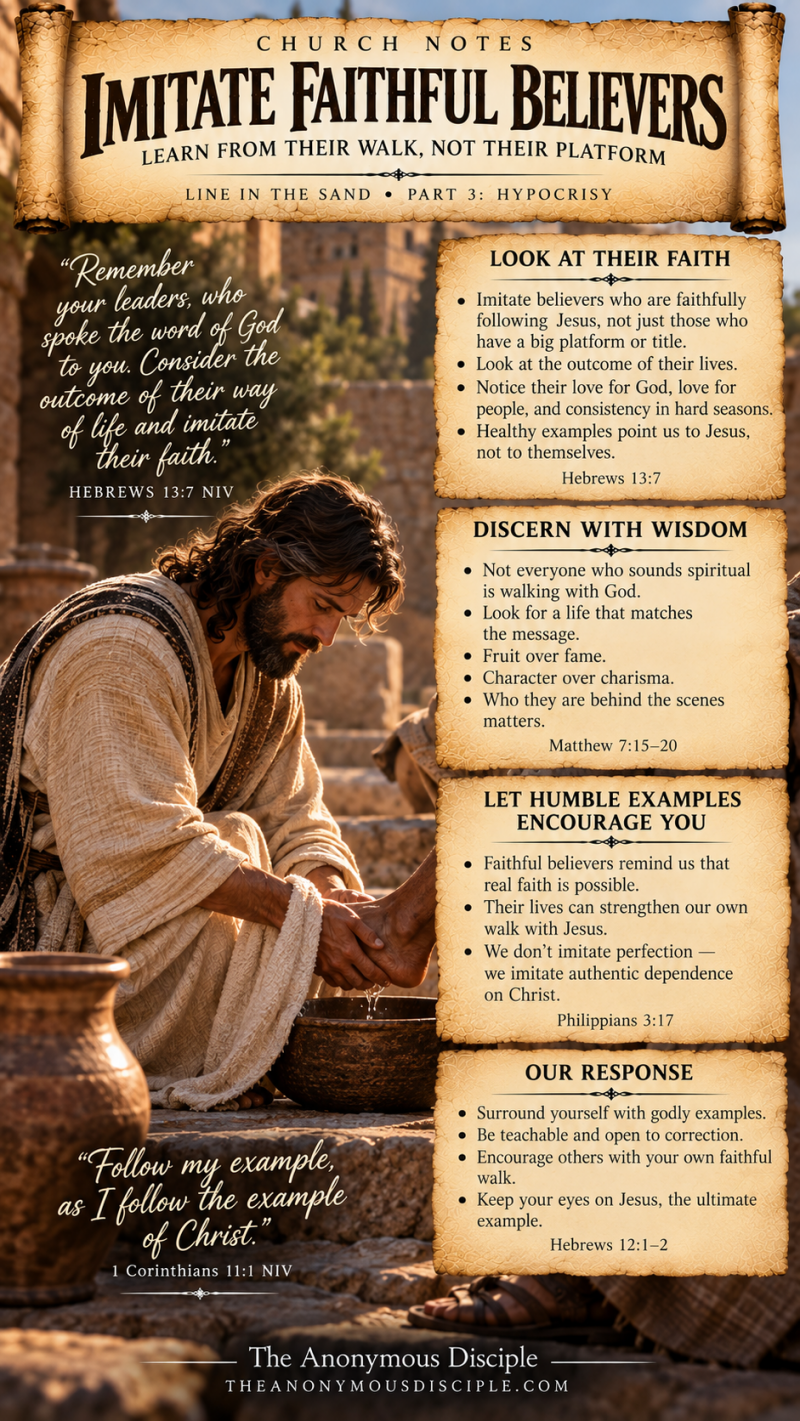
And then Hebrews 13:7 gives us another guardrail: imitate faithful believers as we consider the outcome of their way of life and imitate their faith. We don't imitate someone's religious celebrity, charisma, title, or platform. We imitate faithfulness to Christ.
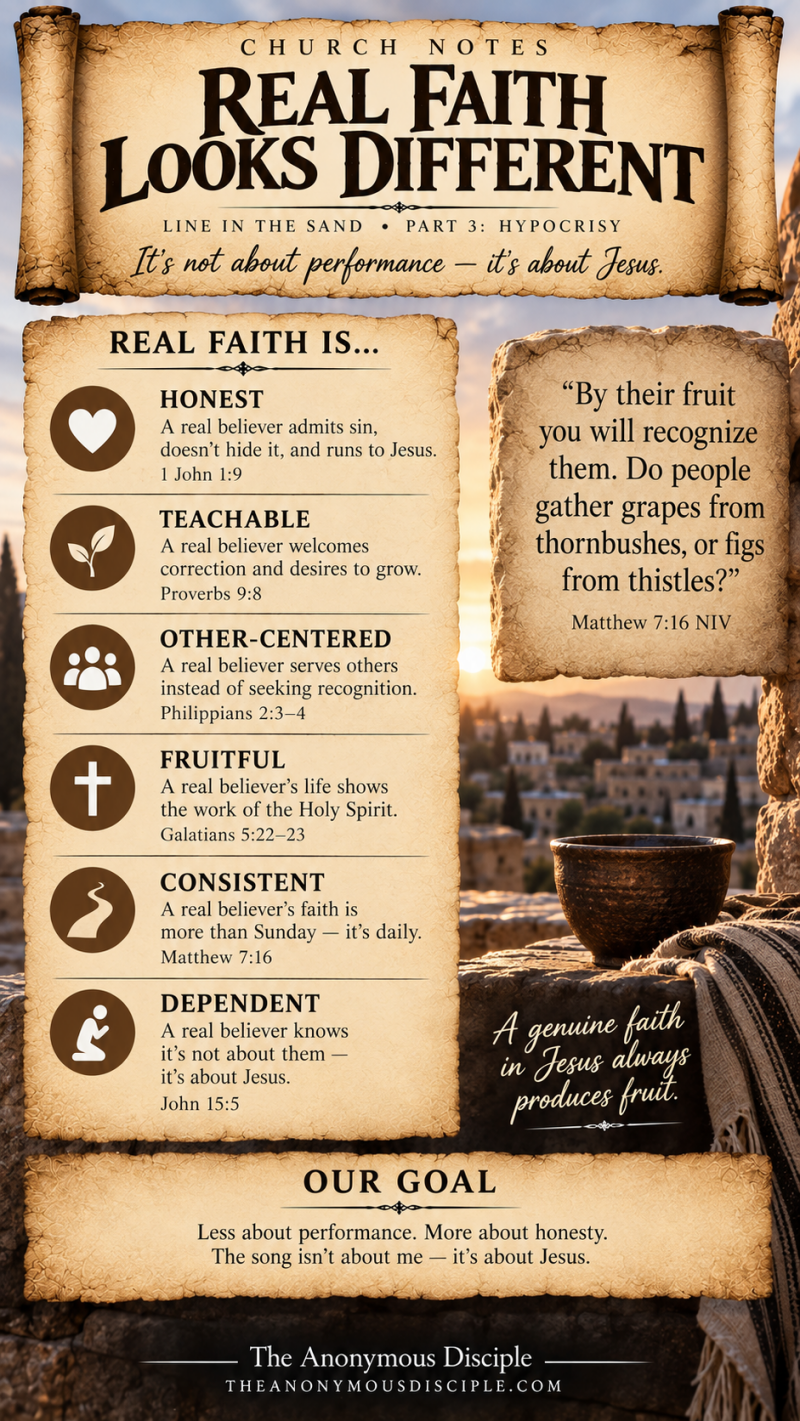
Which brings the whole thing beautifully into Galatians 5:22–23: love, joy, peace, forbearance, kindness, goodness, faithfulness, gentleness and self-control.
“Less about performance — more about honesty.
The song isn't about me — it's about Jesus.”
There it is. ❤️
The answer to hypocrisy isn't becoming better at looking Christian.
It's becoming less concerned with looking Christian and more concerned with actually following Christ.
Add comment
Comments